A little over a year ago I published an article on lifeinthearmy.com, titled “The Big Lie About the US Army – What the US Army is not telling the American People”. In it I talk about the standards being higher now, than ever, especially physical fitness, the Army Combat Fitness Test ( ACFT), how the army is attempting to improve soldiers overall health in the holistic health and fitness program (H2F), the much improved marksmanship training and standards, and how initial basic combat training is now more professional. I stand by that article those things are true.
This past August (2024), Wil Thibeau published an article on tomklingenstein.com, titled The Logic of the Woke Military. That article is also true. The US Army’s movement away from the top priority of being able to effectively overwhelm an enemy in combat, on the ground, to being a diverse reflection of it’s view of society, began around 60 years ago.
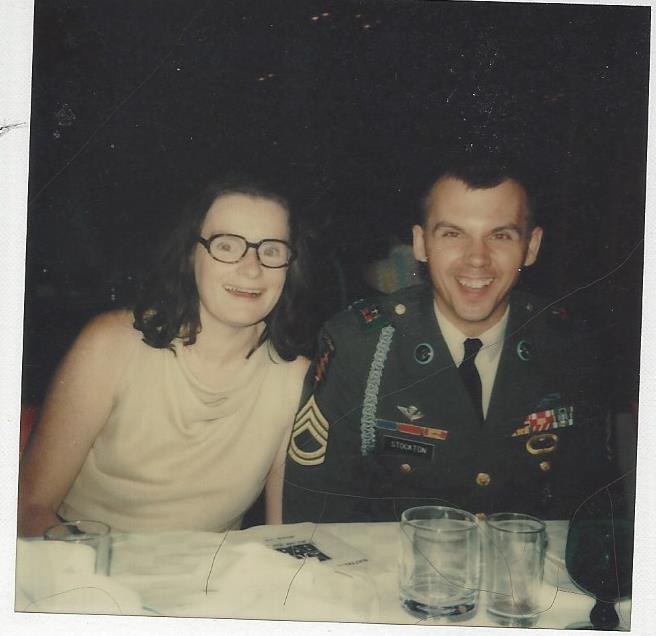
After I enlisted in the army in 1961, I became an infantryman (machinegunner) in a rifle company in the 82nd Airborne Division. I remember three 19 year-olds being promoted to sergeant. One retired as a lieutenant colonel, one as a major, and one as a Command Sergeant Major. That was when a company commander could identify a soldier as being smart enough, mature enough, and with enough leadership ability, he could promote that soldier, regardless of his age, time in service or time in grade. Company commander’s selections were approved by the battalion and brigade commanders. I don’t remember them promoting a bad apple. Now promotion to sergeant E5 and staff Sergeant E6 are automatic. There are some administrative hoops, but I frequently hear stories of soldiers being forced to attend promotion boards, and if they refuse or do poorly, they will probably be barred from reenlistment. Every soldier is a leader or is out. Absurd.
In the early 1970’s, I was present when our engineer battalion commander had a conversation with the Division Chief of Staff. He was complaining about the new up or out policy. He said; “I’ve got an E5, specialist five, road grader operator. He is the best road grader operator I have seen. He doesn’t want to be in charge, he just wants to be a road grader operator. He has 13 years in service, and now I’m going to have to deny his reenlistment if he doesn’t want to get promoted?”
By the time the Vietnam war ended the army was so race conscious that a black female soldier had an open road up the promotion chain, ahead of anyone else. That was common knowledge throughout the army.
When I worked in division headquarters, I saw staff officers working 14 hour days. That hasn’t changed. I still see comments of young officers afraid to go home until the boss leaves. That hasn’t changed. And we’re concerned about retention.
Last year the Army Times investigated and discovered that our armor units were literally being worked to death, i.e., the highest suicide rate. I certainly hope that there were sufficient mission adjustments, after that exposure.
- Stop considering DEI in all promotions, promote on merit. I don’t think firing general officers will fix the problem of using DEI to promote someone less qualified. I had a close association with several generals, I knew them from the time they were colonels, and a handful of them retired with four stars. They were all smart, capable, very approachable common people, but they also followed orders. I think the military DEI problem lies solely in the White House.
- Eliminate the enlisted up or out policy.
- Stop the automatic promotions to E5 and E6. Put those promotions back in the hands of commanders. HRC can adjust. I read that the policy was instituted to eliminate the possibility of commanders showing favoritism for one specialist over another. Well duh! Why in the world would a company commander favor one soldier over another? It couldn’t possibly be that one is better than the other. That is part of the commander’s job.
- Put more trust in (and authority to) brigade, battalion, and company commanders. Give them more latitude. One of my observations in eight decades of life is that most people are capable of more than they actually do. I have seen many people, both in and out of the military, placed in leadership positions, given the responsibility of people and production and given the authority to act, develop (grow) into very capable, effective, and productive leaders. I have also seen people placed in those positions and not given authority to act on their own initiative, simply so with the flow and “punch their ticket”. I think much of the junior officer corps now falls into the later category.
- Take women out of infantry, combat engineers, cavalry scouts, armor, and combat medics attached to the infantry. Artillery is questionable, in my mind. Whether or not women can do the job is not the issue, they can. Many are currently serving as both enlisted and officers, and they have proven they can handle themselves under fire, i.e., Leigh Ann Hester in Iraq and Monica Lin Brown in Afghanistan, both silver stars. Some women are fully capable and want those jobs. But, armor is four soldiers crammed in a tank. Infantry platoons, with their attached combat engineers, medics, and forward observers, live together, in the dirt and the grime and eventually the blood and body parts. When a patrol has to set up a night defensive position, everyone digs a hole – deep enough to get your head below the ground surface – two soldiers to a hole – so one is always awake (you hope and pray). So if possible you place the holes close enough to not create gaps. If you’re in Indian country after dark, no one moves, makes noise, or leaves their hole. If you have to pee, it’s in the hole. If you have to take a crap, you try to scrap out a smaller hole, in your hole, do it and cover it up. That’s life in the infantry. Plus, men have an inherit instinct to protect women. Putting young men and women together in that scenario reduces that units combat effectiveness.
- Review enlisted professional military education (PME), BLC, ALC, SLC, MLC, and SMC. Some could be shortened, moved to local instruction, or eliminated.
- Review how civilian education is pushed and applied. Soldiers advancing their education is great, if in fact they do advance their education, in accumulating college semester hours. It is a promotion points game, the subject doesn’t matter, and in many unit’s there is someone being paid to complete the online classes for others. College doesn’t make you smarter, it teaches you new skills. If people don’t acquire new skills in completing college hours, then those hours are wasted.
 What Life in the Army is really like.