Category Archives: New things in the Army

The Big Lie about the US Army. What the US Army is not telling the American People.

In September 2023, I was in conversation with an intelligent business man, who had no experience with the military. He said that a person who said that he “trained soldiers for combat” at Fort Leonard Wood, Missouri, told him that trainees could hold up a card “if you were too mean to them” and you had to back off, and that basic training was so easy now that it is a joke. The businessman told me that his 17 year old son could probably benefit from military service, “like it used to be”, but not now, that he would never recommend his son going in the army, in the shape it is now. It was like a slap in the face. His perception is that the US Army is currently easy and  undisciplined almost slovenly.

IN THIS ARTICLE:

First; The flash cards.

Second: Some history. The “old” army. How tough was it? What were the standards?

Third: What’s not being told about the army holistic health and fitness program, the new marksmanship program and the new basic combat training.

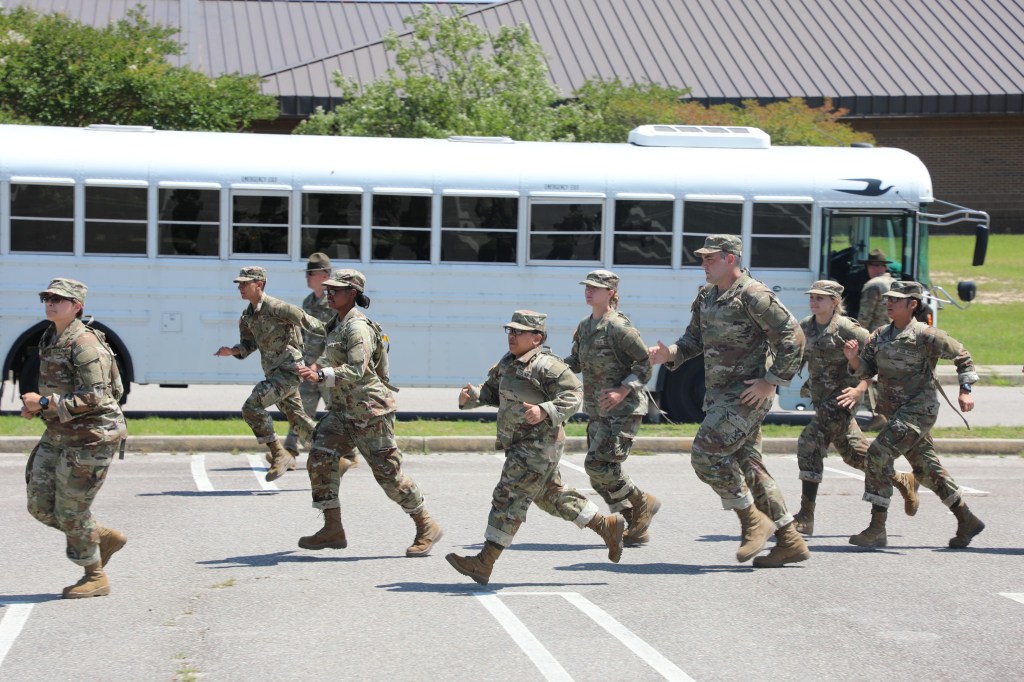
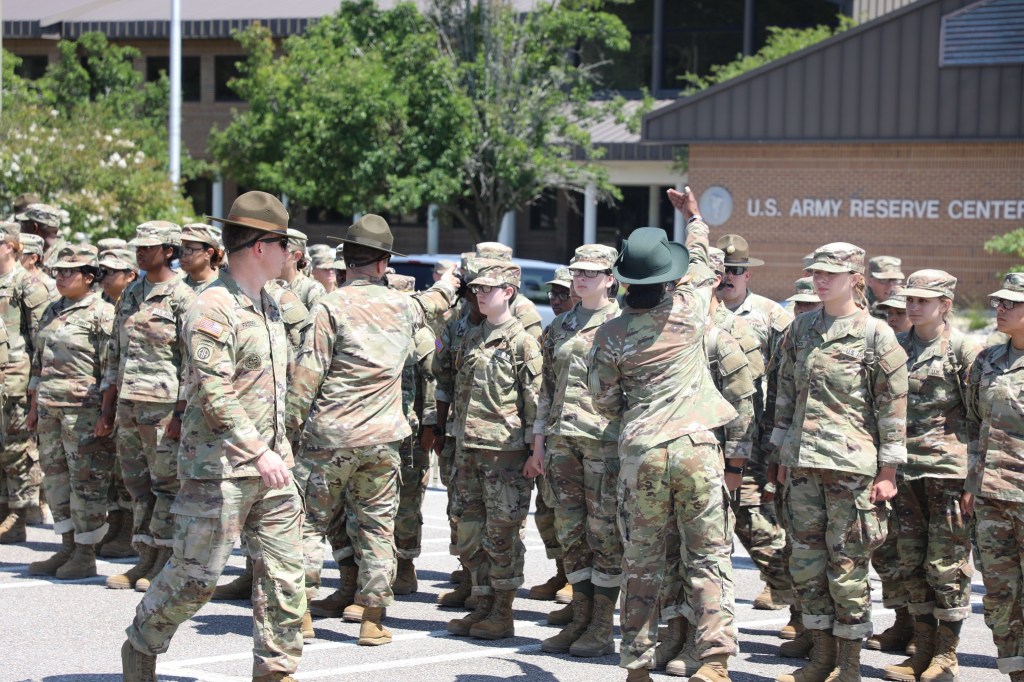
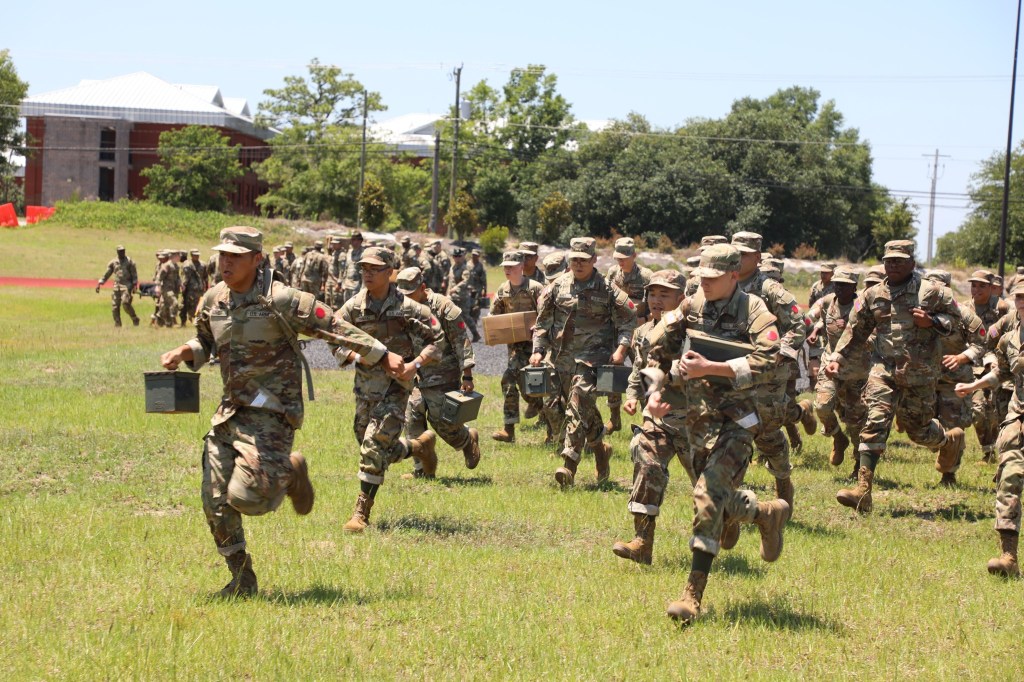
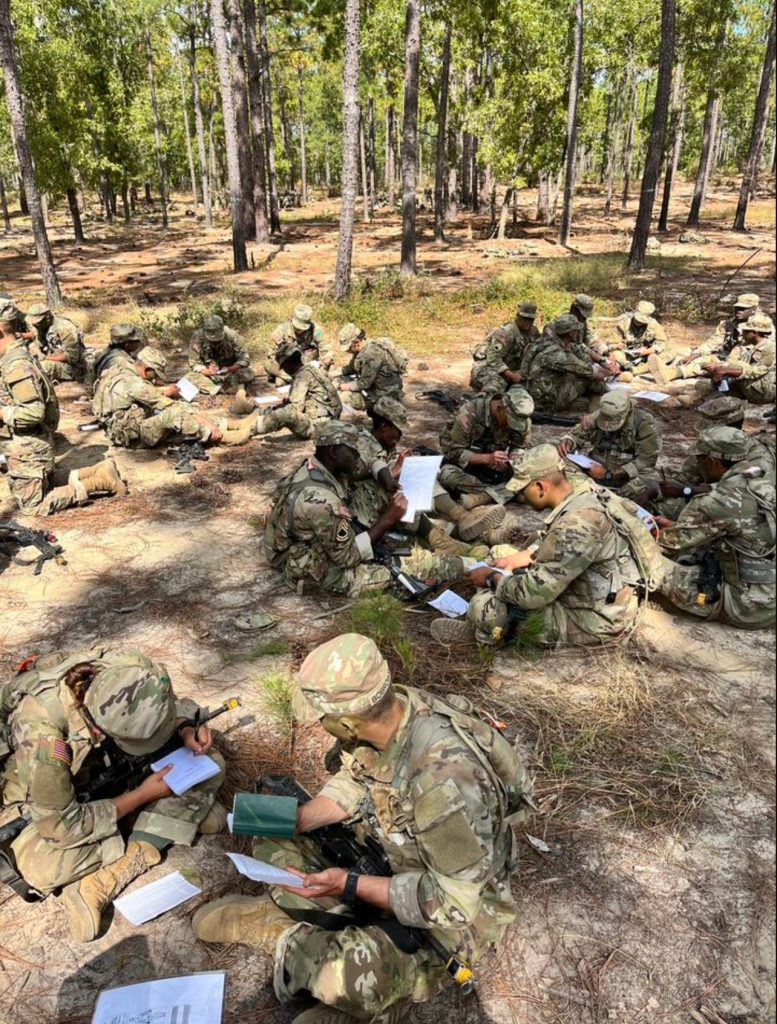
Fourth: A complete pictorial look at a basic training cycle this past summer, 2023, at Fort Jackson, South Carolina.

Civilian perceptions: 

The “old army” was tougher.  Yes – sometimes it was, but sometimes only if you think personal abuse, harassment and unwarranted punishment made people tougher.  [The standards were higher] . No – they weren’t. They weren’t tougher 60 years ago, 40 years ago, 30, or 20, or 10.

Basic Training is so easy now, it is a joke.  Not true.  Army Basic
Combat Training is now as physically demanding as it has been since WWII, and the trainees learn a hell-of-a-lot more now than anytime in the past.

If those are the lies, what is the truth?

I retired after 21 years in the army, it was the high point of my life. I follow the army daily, but what is the news of the army?

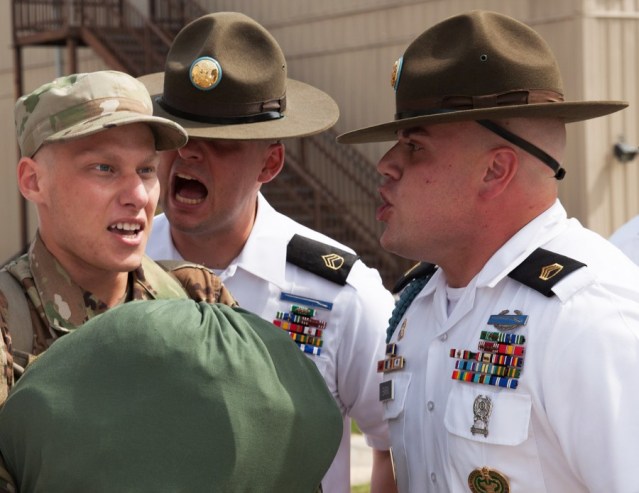
What is the news about the army? The past few years Fort Hood, Texas (now named Fort Cavazos) has had murders, kidnappings, prostitution rings and other disciplinary problems on the national news. The army conducted a big investigation and fired several soldiers, starting with a two star general, but neither the US Congress nor the American people will allow a “General Patton” to go in and clean up the place. The country simply will no longer allow a hardcore, butt kicking commander to operate with enough freedom to be effective. A couple years ago the army announced that army-wide it was eliminating the “shark attack” by drill sergeants on the day trainees arrived at their basic training company and the national news reported that the army was going “soft”.

Congress is grilling military and civilian defense leadership that the military is going “woke”, promoting inclusiveness over merit. That the most qualified are being passed over in favor of the most diverse. In many of those incidences I don’t have an argument. There is now a Defense Office for Diversity, Equity and Inclusion, and an Army Equity and Inclusion Agency. Administrations have used the US Army for social experiments, in the past. The army experienced some serious racial tensions toward the end of the Vietnam War. It was an unpopular war fought by draftees who didn’t want to be there. Plus, McNamara’s 100,000 (which became 350,000) morons didn’t help. The army conducted mandatory race relations classes called HUFF and NUFF. Honkey up front and Ni…r up front. You can imagine how those were accepted.

So the news is not good.  What about the troops on the line. The “low rent district” as we used to call ourselves in an infantry rifle company. Away from the generals and secretaries defending DEI (Diversity, Equity, and Inclusion) before congress in Washington, DC. There are many comments posted by veterans who left the service because of poor leadership. Happiness in the military depends on leadership. Life in two companies in the same unit can be very different because of the different commanders. That is life in the military.

            First: The Flash Cards; 

Knowing that the card flashing wasn’t true, but having heard the rumor over 30 years ago, I dug into the story.

The trainee flash card story appears to have started in the 1990’s.  “We are the Mighty” is a veteran digital publishing organization that dug into the rumor and published a story titled “The truth behind basic training “Stress Cards””, in December 2022. In the 1990’s, the Navy issued a “Blues Card” to trainees telling them how to get help if they were depressed.

US Army V Corps also issued a “stress” card.

History; How the army arrived at now.

World War II is considered the birth of the modern Army.  When WWII started each branch (Infantry/Cavalry/ Artillery, etc) prescribed the training for that branch.  There was no basic training and then skill training. Combined basic/Infantry training went from 8 to 12 to 13 to 15 to 17 weeks at the start of 1944, and it fluctuated from post to post.  Trainees were graduated at 15 weeks as a result of the Philippine invasion in the summer of 1944, then it went back to 17 weeks, then the Battle of the Bulge casualties brought it back to 15 weeks.

When the draft started in September 1940 all men age 21 to 35 were required to register, as the war went on that increased to 18 to 65. Initially the requirements to be accepted were; Be over 5’0” tall and weigh at least 105 pounds. Not have flat feet, hernia, or venereal disease. Be functionally literate. Have at least 12 teeth. Have vision correctable with glasses. Initially about half were rejected for one reason or another. Almost 20% because of literacy, they couldn’t read or write. As the war continued men under 5’ tall were accepted, those who had VD were treated with penicillin and inducted, they could be toothless, be missing ears and fingers just so they had a thumb and a trigger finger on one hand. The literacy requirement settled at being able to read and write at a fourth grade level. My uncle, on my mother’s side, was blind in one eye. He was inducted and served in an engineer unit.

The training was physically hard and intense.  There was very little pure harassment to get their attention.  Most were draftees and everyone knew they were going overseas to the war. Getting in good enough physical condition to withstand the rigors of combat and learning soldier skills might save their life. Harassment wasn’t necessary. My father was 27 when he was drafted in July 1944 and sent to Camp Robinson, Arkansas just outside Little Rock, for seventeen weeks of basic/infantry training. He wrote to my mother almost everyday. Upon arrival, he wrote about the homesick young boys who would do anything to get out of there and back home. One said that he was going to throw a fit when they were outside the next day, to see what they would do. One wet the bed at night, the doctor “gave him hell” about it and he didn’t do it anymore. He wrote about the runs and the four or five mile hikes at night. He wrote about their rifle weighing 9 pounds and the helmet 7 with a total load of about 65 pounds, before water and ammunition. He wrote that the sergeants had all been overseas and knew what it was like, and that they were “really good fellas”. He said that their lieutenant did everything that they had to do. Leading by example.

            The physical fitness test in WWII was called the AGFT (Army Ground Forces Test). If the test was conducted indoors, the shuttle run and squat thrusts were substituted for the 300 yard run.

WWII Fitness Test Scoresheet

PointsPullupsSquat
Jumps
Pushups2-MIN
Situps
300
Yard Run
Indoor Shuttle Run60
SEC Squat Thrusts
EXCELLENT10020755479444141
Good741250396247.54435
Fair589393151504631
Poor42730264152.54827

After the war basic training was separated from individual skill training. It settled in at 8 weeks, and stayed at 8 weeks through the Vietnam War. Combat soldiers, infantry, artillery, armor, combat engineers, went to a “second eight” and training for support jobs varied.  The “second eight” was and is still called Advanced Individual Training (AIT).

            Immediately after WWII the United States went from 12,000,000 men in uniform to around1.5 million in the space of about a year. The army “kicked back”, basic was easier as was all training, if training was conducted at all.  Units polished their vehicles, including tanks and basked in the glow of victors. They had “whipped the world”, the war was over.  Then in June 1950 North Korea invaded South Korea and we went to help – totally unprepared. Troops weren’t trained, units weren’t trained, equipment wasn’t ready and the supply system didn’t work. It was a rout, the US Army retreated, some units were overrun. Morale was nonexistent. When the 3 star general commander on the ground was killed in a vehicle accident, the army sent a new 3 star, Matthew B. Ridgway. In just a matter of weeks he turned the situation around and started on the offense. To do so he fired colonels, one, two, and three star generals and replaced them, but this time (unlike WWII) he was told to keep it “low profile”, just move them to another job. Army leadership was afraid congress would get upset at the firings.

            Basic training became more intense during and after Korea, but then was standardized throughout the training bases and again became more relaxed.

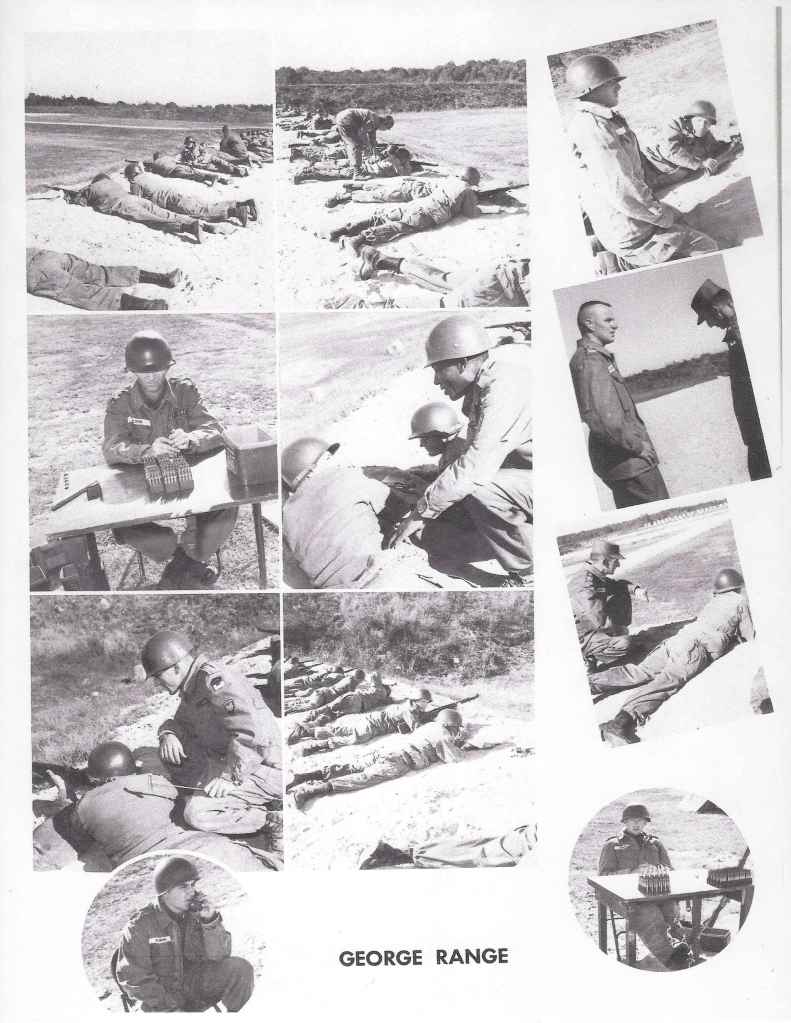
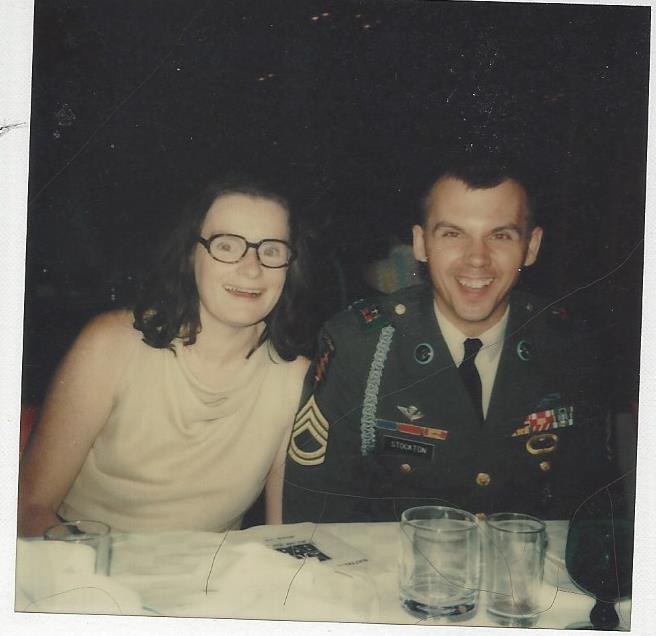
            I went through basic training in September and October 1961 at Fort Knox, Kentucky. The 6th Armored Cavalry Regiment was reduced to cadre strength (just officers and sergeants) and given the mission of conducting basic training.  There weren’t drill sergeants then, just sergeants assigned to the job of long hours and no extra pay.  They weren’t bad sergeants, but at that time, it was a bad job.  It seemed that the only fun they had was coming in after lights out and a few drinks, getting us up and dumping our foot lockers then telling us to be ready for an inspection in the morning. That happened once.  Our Platoon Sergeant was a Sergeant First Class with a Staff Sergeant and a Sergeant as assistants.  The staff sergeant and sergeant came in drunk around midnight, dumped our foot lockers and told us those lockers would be inspected at first call – 04:30. After our Platoon Sergeant heard about it, it never happened again. The army fitness test then was called the Physical Combat Proficiency Test (PCPT). It consisted of a 40 yard low crawl, horizontal ladder, dodge-run-jump, and 150 yard man carry or a hand grenade throw.

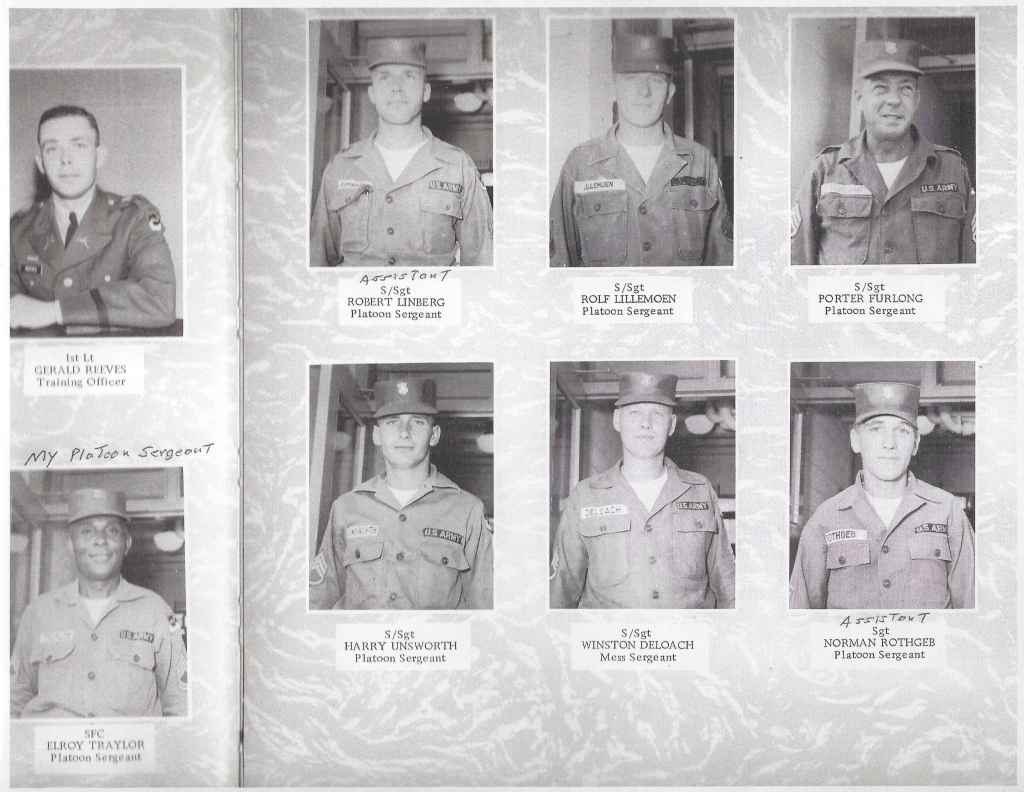
Some pages from my basic training class book, graduating November 3rd 1961.
WWII era M1 Garand rifles.

            The following is from the artofmanliness web site where they have a good article on the test. It was started in 1959, made mandatory once a year in 1965, and codified into a field manual in 1969.

I then went to Fort Gordon, Georgia for eight weeks of infantry training. Most of the sergeants had just returned from Europe or Korea and didn’t really want to be pushing trainees. Sometimes it would be too cold to do PT (physical training) in the morning (Augusta, Georgia). I think we spent as much time drinking beer at the PX on the other side of the parade field as we did in any kind of physical exercise. We were overweight and out of shape when we graduated from infantry school in January 1962.

            Drill Sergeants were created in 1964 with the first Drill Sergeant School established at Fort Leonard Wood, Missouri. That was also the start of the build-up for the Vietnam War. When the casualties started piling up in Vietnam and the draft increased, army basic training changed. Unlike WWII there was nothing popular or assumed necessary about the war in Vietnam. Public protests against US involvement in the war became more frequent and violent. Most of the incoming trainees were draftees and did not want to be there. Drill Sergeants “attacked” trainees, establishing dominance, when they arrived at their company and didn’t let up for about three weeks. The message was “talk back to a drill sergeant and go to jail”. At that time, most army posts still had a correctional confinement facility called the post stockade.

            Harassment and abuse was accepted as necessary tools to break the civilian mentality, create a unit/platoon mentality (mass punishment does that), and to weed out those who won’t make it. The training also changed during Vietnam. Less time was spent on drill, inspections, uniforms and military courtesy so more time could be spent on how to “pop smoke” and not step on a pungi stick in the jungle. The physical requirements to complete basic training were not that hard. The requirement to pass basic training was pass the PCPT, qualify with the M-16 rifle on a slowly controlled pop-up target range, and pass the end of course tests. There were recycles and retests until the trainee passed.

Jeff Morgan, who was drafted in June 1966 and went through basic training at Fort Dix, New Jersey, wrote; “My worst memory is watching the DI’S take the overweight recruits out to the track behind our barracks and making them run extra laps so they would lose weight and pass the PT tests They would curse, kick and punch them until some of them would cry. Many of them were draftee’s and didn’t want to be in the Army anyway and now they were being mistreated.”

The Vietnam War literally destroyed the US Army.

            General Bruce Palmer Jr., who was a three star corps level commander in Vietnam, said; “We didn’t understand the Vietnamese or the situation, or what kind of war it was.  By the time we found out, it was too late.”

            The US sent units to Vietnam to stay but the soldiers only had to stay for one year, so when their individual year was up they went home, and a new replacement was assigned. That created constant turmoil in combat units with experienced soldiers leaving and being replaced by inexperienced replacements. Company and battalion commanders were changed every six months, to the minute, to give more officers war time command experience. Drugs were not only readily available, but rampant, supplied by the enemy. Many who were drafted, put through training, then sent to Vietnam and did a good job, were promoted to sergeant as they left Vietnam. Units in the states received those sergeants, who were drug users and had six months left in the army. Units forwarded weekly lists of suspected drug users up the chain of command to higher headquarters.

Another large contributor to the destruction of the army in Vietnam was McNamara’s Project 100,000. That was a department of defense program initiated, during the Vietnam War, by Defense Secretary Robert McNamara to allow 100,000 enlistees and draftees who did not meet the minimum standards into the US military. Some had physical shortcomings or impairments, but most scored far too low on the Armed Forces Qualification Test (AFQT) to be admitted, some to the point of being mentally handicapped. There were almost 350,000 actually admitted under that program, 71 percent of them to the army. Not only were they three times more likely to be killed in combat, they were difficult to train, 7 to 9 times more likely than their peers to require remedial training, 11 times more likely to be reassigned, and far more likely to be disciplinary problems in their units, many were administratively discharged from the service. They were called “McNamara’s Morons”. The program was promoted as a vehicle to lift some out of poverty. It did not. It has been described as a cruel social experiment, many were unemployable after leaving the service. After being processed into the service they went into the normal training pipeline with all others.

            The commander in Vietnam from 1964 to 1968, General William C. Westmoreland, was considered by many peers to be “not that smart”. In the fall of 1972 when General Creighton Abrams, who had replaced Westmoreland in Vietnam, was awaiting confirmation as Army Chief of Staff, was told by a general friend, “Your army is on its ass”. As Chief of Staff General Abrams initiated an “Expeditious Discharge Program”, which gave commanders authority to administratively discharge drug users, gang members and general troublemakers. Over 2,500 were discharged in Europe alone.

            Also at the same time, because the defense budget was cut due to the withdrawal from Vietnam, the army conducted a “reduction in force”. Many officers who did not have very outstanding records were released from active duty (kicked out). Some who had been commissioned through Officer Candidate School reverted back to an enlisted rank. Morale, according to army slang at the time, was “lower than whale dung”.

            The last men drafted into the military was in December 1972. The draft officially ended June 30th 1973, creating the “all voluntary” army. Also in the early 1970’s the Women’s Army Corps was discontinued and women were integrated into the regular army in all non-combat units and jobs. With the influx of women and the all volunteers, basic training got easier. That wasn’t Department of Defense policy, it was just individual commanders and drill sergeants trying to figure out how to train those new young, smart volunteers, and especially the women. A drill sergeant’s job is to turn civilians into soldiers, to train them and get them through basic training, not run them off, so discipline did suffer, as did training. The Army slipped basic training to six weeks.  They sometimes called it seven or six and a half weeks, but it was six weeks.  I did eleven cycles as a Drill Sergeant 1979 – 1981, it was six weeks. Ten of those cycles were one fourth or one half women. On road marches and runs I put the women up front, and they set the pace. In October 1981 basic training went back to eight weeks.

            Ah, but that was the “old army”, where was the “old army” of low crawls around the barracks at night, cleaning the latrine (bathroom) all night with a toothbrush, falling outside in formation with your foot locker then back in for an immediate inspection. It was still there, – selectively. Until very recently sergeants chosen for drill sergeant duty were not screened for their education, ability to communicate, personal morals and character.  They were just selected, as were recruiters. In the 1970’s and 80’s being selected to go on recruiting duty was considered a career death sentence. I volunteered to be a drill sergeant rather than be picked up for recruiting duty. So, in the mid to late 1970’s most army drill sergeants had come into the army during the Vietnam War, had been through “Vietnam War training”, and had at least one usually more tours in the war, and now they were to train all volunteers, including women, who wanted to be in the army. Sometimes it didn’t work out so well.

In June 1978 two Drill Sergeants, at Fort Jackson, South Carolina unloaded a bus load of new recruits and had them run around and around on a steep sand covered hill carrying all of their clothing and gear, in over 100 degree temperature, for over an hour.  Two collapsed and died.  One drill sergeant was convicted of involuntary manslaughter and one of negligent homicide. Drill Sergeants, the Drill Sergeant School, and the entire program underwent intense scrutiny.  It was not uncommon to see the Commanding General (CG) of Fort Jackson step out of the shadows during early morning formations or PT (Physical Training). Training companies were commanded by a Captain, with a Lieutenant executive officer, often it was the first job of a new 2nd lieutenant. One morning, in early 1979 at Fort Jackson, during their first week, trainees were practicing the hand salute. One wasn’t holding his hand correctly, so a lieutenant physically adjusted his hand. The Post Commanding General was standing within hearing distance. The lieutenant got a royal butt chewing for not telling the trainee that he was going to physically touch him, before adjusting his hand.

            In 1980 the army started the Army Physical Fitness Test (APFT), consisting of pushups, situps, and a two mile run, with scoring adjusted for gender and age. Pushups, Male, Minimum – 60 points – 42, Max 100 points – 71; Female, Minimum 60 points – 19, Max 100 points – 42. Situps, Male, Minimum – 60 points – 53, Max 100 points – 78; Female, Minimum 60 points – 53, Max 100 points – 78, 2 mile run, Male, Minimum 60 points – 15:54, Max 100 points – 13:00. Female, Minimum 60 points – 18:54, Max 100 points – 15:36.

            Also, in 1980 the department of defense initiated the Joint-Service Job Performance Measurement/Enlistment Standards (JPM) Project. The largest coordinated study of job performance ever. It involved millions of dollars and hours and thousands of people. Correlation between ASVAB scores and job performance were measured, physical condition and performance, social well being (criminal record) and performance, education, and performance, etc. Within that study, in 1983 a Committee on the Performance of Military Personnel was formed to provide an independent technical review of the research and measurement issues involved in (1) the development of hands-on job performance tests for jobs of first-term enlisted personnel, (2) the collection and analysis of data from test administrations, and (3) the linking of resulting performance scores to military enlistment standards as defined by scores on the Armed Forces Qualification Test (AFQT). In 1989, the Committee on Military Enlistment Standards was established to oversee the technical issues concerning the development of a cost/performance trade-off model for use in setting enlistment standards. The project concluded in 1994 when current enlistment standards were established.

            In 1996 three Drill Sergeants at Fort Leonard, Missouri were charged with having sex with female trainees.  One was eventually acquitted, two went to prison.  Five days after that scandal made the news, the biggest sex scandal the Army would suffer occurred at Aberdeen Proving Ground, Maryland.  There was sexual harassment, sexual abuse, and multiple counts of plain rape.  All twelve Drill Sergeants and the Company Commander, in a training company were charged.  Four went to prison, including the Captain, the others were discharged or received non-judicial punishment.  The Post Commander, a Major General, received a letter of reprimand and was allowed to retire.  Three other senior officers received letters of reprimand. 

In 1998 the Army went to a nine week basic training and started teaching Army values.  Loyalty, Duty, Respect, Selfless Service, Honor, Integrity, and Personal Courage are taught and reinforced in all army entrance schools. If you wear the uniform those are your values.

            When the Iraq and Afghanistan wars cranked up again many “soldier things”, like drill and ceremonies and spit shine inspections were again given only cursory attention or dropped entirely, in favor of preparing for “the war”. Basic trainees were taught about convoy’s, how to conduct a convoy and how to react to an attack on a convoy. Mock Afghanistan villages were set up and basic trainees were taught how to deal with Afghani civilians. In 2007 the Army was not happy with the soldiers graduating from basic training so it was increased another week, to 10 weeks. 

            Drill Sergeants changed their approach to young people coming into the army, young people who have not experienced much, if any, discomfort in their lives.  Many high school classrooms are similar to college classrooms, with open discussions.  Most have never been yelled at, and many are raised with few rules, at home.  They question orders and they want to know why, so Drill Sergeants adjusted.  The Army tried not to make basic easier, but the result was it did.  Also, during that time, the Army took Drill Sergeants out of AIT and replaced them with AIT Platoon Sergeants.  Same job, same hours, no extra money, and wearing the same hat as the trainees.

            Things got so bad that major commanders were complaining to Army Headquarters that new soldiers were arriving at their first unit with a sloppy appearance and undisciplined attitudes.  Then the Army conducted a survey of 27,000 commissioned officers, warrant officers, and non-commissioned officers (NCO’s) (sergeants).  They observed a trend, which was getting worse, of new soldiers fresh out of training displaying a lack of obedience and poor work ethic as well as being careless with equipment, uniform, and appearance.  The number one thing that was asked for five-fold or five times as much as any of the other categories was discipline.

            In 2015 the Secretary of the Army and the Chief of Staff of the Army directed a complete rewrite of the basic training program and training schedule.  Strict discipline, drill, marching in formation everywhere, inspections, new PT test with higher standards, more realistic combat training exercises, more emphasis on basic skills, such as first aid, hand and arm signals, and shooting rifles with iron sights (apparently everything had gone to scopes), and more time in the field. The new curriculum was to add two more to weeks basic training, but budget restrictions prevented the extension of basic, so the new curriculum was instituted within the present 10 week time frame. The result was longer days, six days a week.

What the army has been doing, that people don’t know about.

The US Army Holistic Health and Fitness Program.

About the same time that the new basic training curriculum was being developed, a new physical fitness program was being instituted. One obvious slap in the face to army leadership was that the American soldier was not in good enough physical condition for sustained combat in the heat of Iraq or the mountains of Afghanistan. Regular Army PT (Physical Training) was not preparing soldiers for the physical rigors of combat.  Also, during those wars, especially Afghanistan, soldiers in many support jobs found themselves in combat on convoys and at small outposts, so the army created a “Combat Action Badge” for soldiers other than infantry who engaged the enemy.  There were a lot of combat veterans, in the Army, when the discussion started about how to evaluate soldiers’ preparedness for combat.  As the new Army Combat Fitness Test (ACFT) was being developed, a much more radical change in physical training was also being developed.  This was not just a change in physical training, but a program that holistically encompasses the soldiers’ life, physical, sleep, nutritional, spiritual, and mental. The study on physical fitness began during the Afghanistan War and was several years in development.

            The driving force behind all this was readiness.  In February 2019, more than 56,000 soldiers were non-deployable.  Also, more than 21,000 were on a temporary injured list, and more than 15,000 had some kind of permanent injury.  Almost half of all soldiers are injured at some point, and 71% of those injuries are lower extremity micro-traumatic musculoskeletal “overuse” injuries.  In 2018, more than 12% of soldiers had some form of sleep disorder and 17% of active duty soldiers were overweight.  Also, included in this conversation, was active duty suicide.  How ever many, it’s tragic, traumatic, and too many.  For the Army to be able to field a healthy, fit, lethal force, soldiers’ lifestyle had to change.

            The Holistic Health and Fitness program was developed.  The Army calls it the H2F Program.  In 2017, the Army identified a few battalions to run pilot H2F programs.  Several sergeants from those battalions were sent to the Master Fitness Trainer school. Civilian Athletic Trainers, Strength Coaches, Physical Therapists, Occupational Therapists, and Dietitians were hired and placed under the supervision of those Battalion Commanders, who were tasked with implementing the program and identifying any bugs.  The medical people and the Chaplain and Chaplain Assistant, were also brought into the H2F Team.  Chaplains are not part of the program to preach, but monitor unit morale, and help with personal problems.  There is a rule in the Army, anyone can go see the Chaplain anytime.  Chaplain’s and their assistants are presented with all kinds of problems.

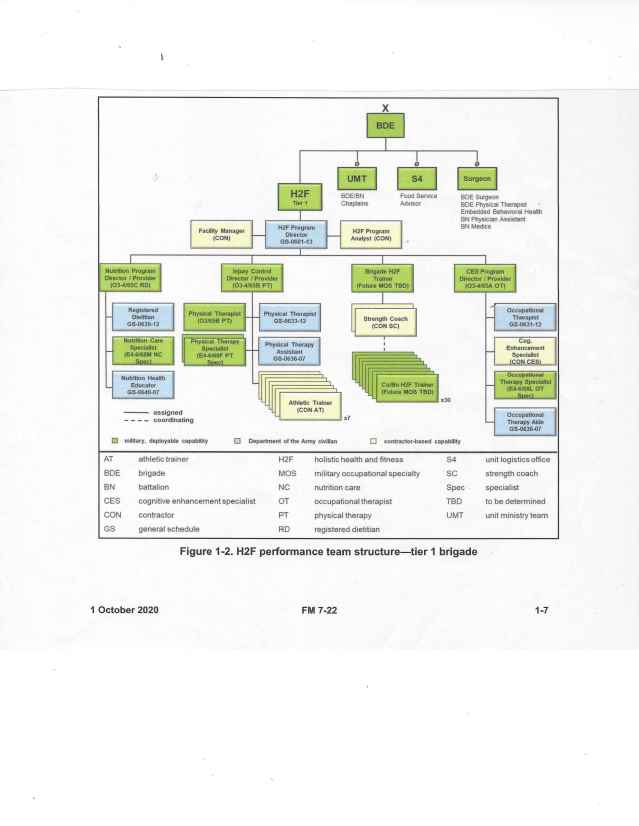
            On October 1st, 2020, the Army published Field Manuel (FM) 7-22, Holistic Health and Fitness.  That made the program command policy, army wide.  The H2F staff, for each brigade, is under the direction of the Brigade Commander.   The H2F Program Director is a civil service GS-13.  Under the Program Director, is a Captain, Nutrition Director, with civilian and military dietitians, a Captain Injury Director/Provider, with military and civilian physical therapists and a contracted civilian athletic trainer for each battalion, a Captain Combat Enhancement Director, with civilian and military occupational therapists.  There are also civilian strength coaches advising the professional military physical trainers. My personal observation is that an actual life style conversion of soldiers is going to take a few years, but will eventually happen, if the army can keep it going.

This is the H2F Organization chart for a brigade, which is an army unit of around 4,500 soldiers, commanded by a full colonel.

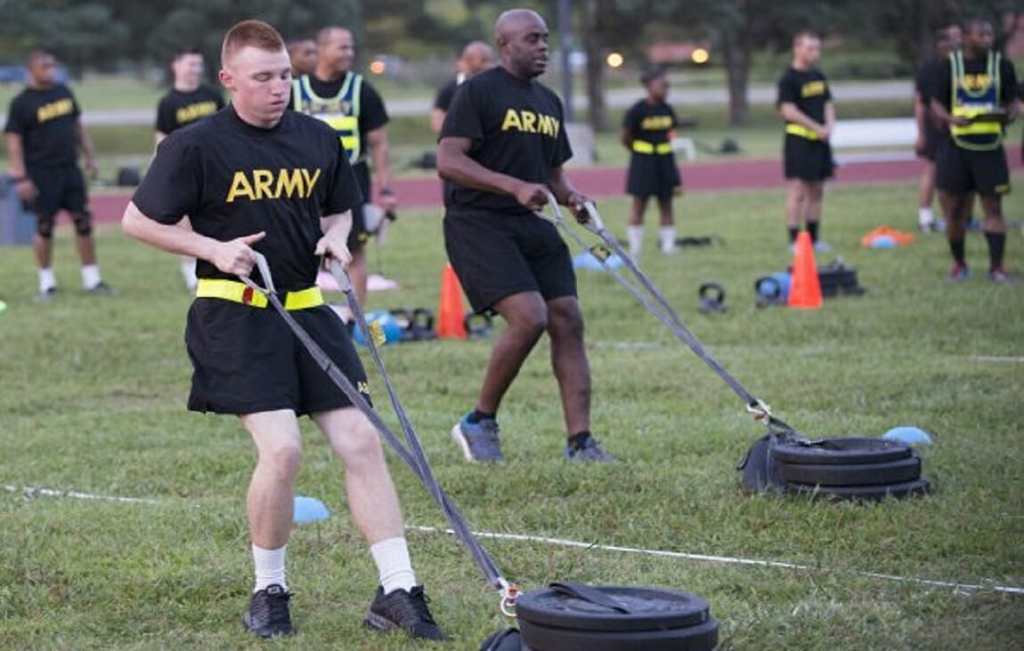
            Also initiated in October 2020 was the new Army Combat Fitness Test (ACFT), which was designed in conjunction with H2F.  It is a six timed event test. Initially, there was to be no point adjustment for age or gender.  It was, “how capable is this soldier of performing in combat”. As soon as it was made public, Democrat Senator Kristen Gillibrand of New York, who is on the Senate Armed Services Committee, complained to the Secretary of Defense that the army had created a physical test that women couldn’t pass. One event, “the leg tuck”, was replaced with the “plank”, and scoring adjustments for age and gender were implemented. The annual National Defense Authorization Act (NDAA) in 2023 contained a provision requiring the army to implement an age – gender neutral fitness test for combat jobs only.  The army said, we are already doing that and made no changes. As of this writing the approved senate version of the 2024 NDAA scraps the ACFT completely and requires the army to go back to the old pushups, situps, and run PT test. The house of representative version again contains an enhanced requirement that the army have a gender-neutral fitness test for combat jobs only. The two versions will have to be resolved in the coming weeks.

            The army values the physical fitness of a soldier above many other characteristics. Physical fitness is considered in assignments, schools, and promotions.  The higher the fitness score, the more promotion points.  Aside from job performance, physical fitness, rifle marksmanship, and civilian education are the three big items considered in soldier promotions.

            Minimum passing score on the ACFT is 360 points, 60 on each event. The scoring below is for the 17 to 21 age group.

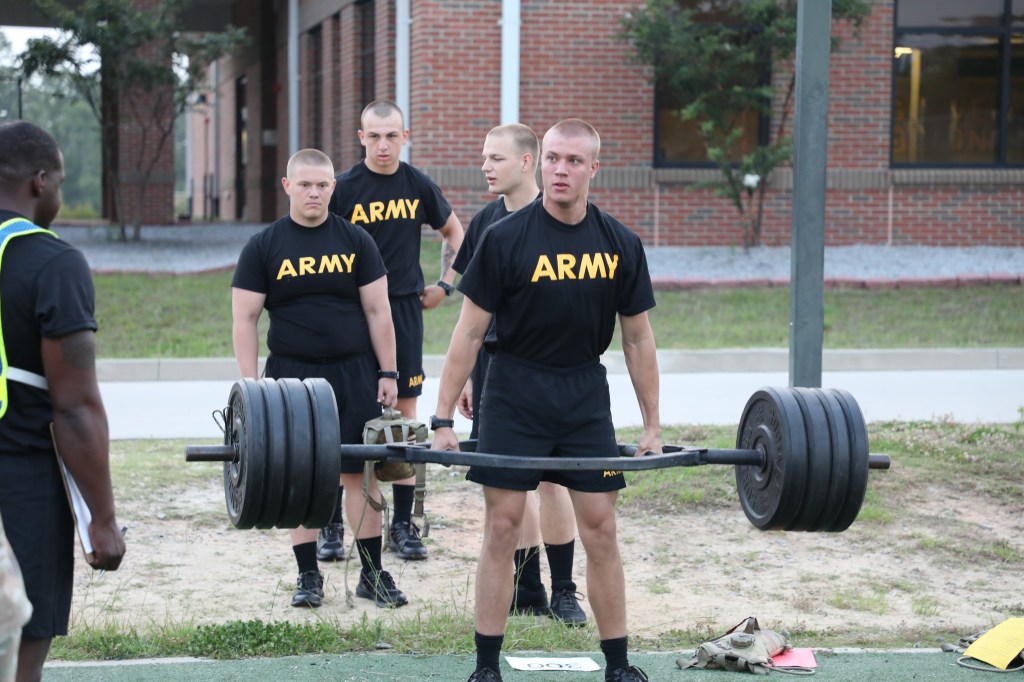
ACFT weight lifting “Max Deadlift”.  Scoring minimum 60 points – male 140 lbs, female 120 lbs. Max 100 points – male 340 lbs, female 210 lbs.

After weight lifting, it is on to the Standing Power Throw..

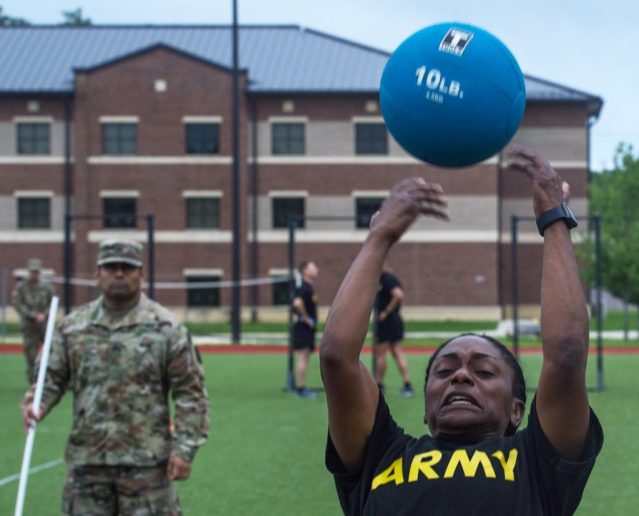
ACFT Standing Power Throw. Throw a 10 pound medicine ball backwards.
Minimum 60 points – Male – 6 meters, female – 3.9 meters.  Max – 100 points Male – 12.6 meters, female – 8.4 meters.  

Then to the Hand Release Pushup.+

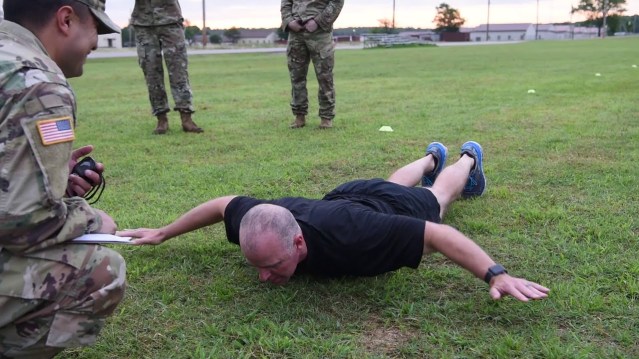
ACFT hand release push up. Start – prone on the ground, hands flat on the ground, on go for two minutes – proper pushup, down – extend arms to the sides, repeat.  Minimum 60 points, Male – 10, female 10.  Max 100 points, Male – 57, female – 53.+

After the Hand Release Pushup is the Sprint, Drag, Carry.
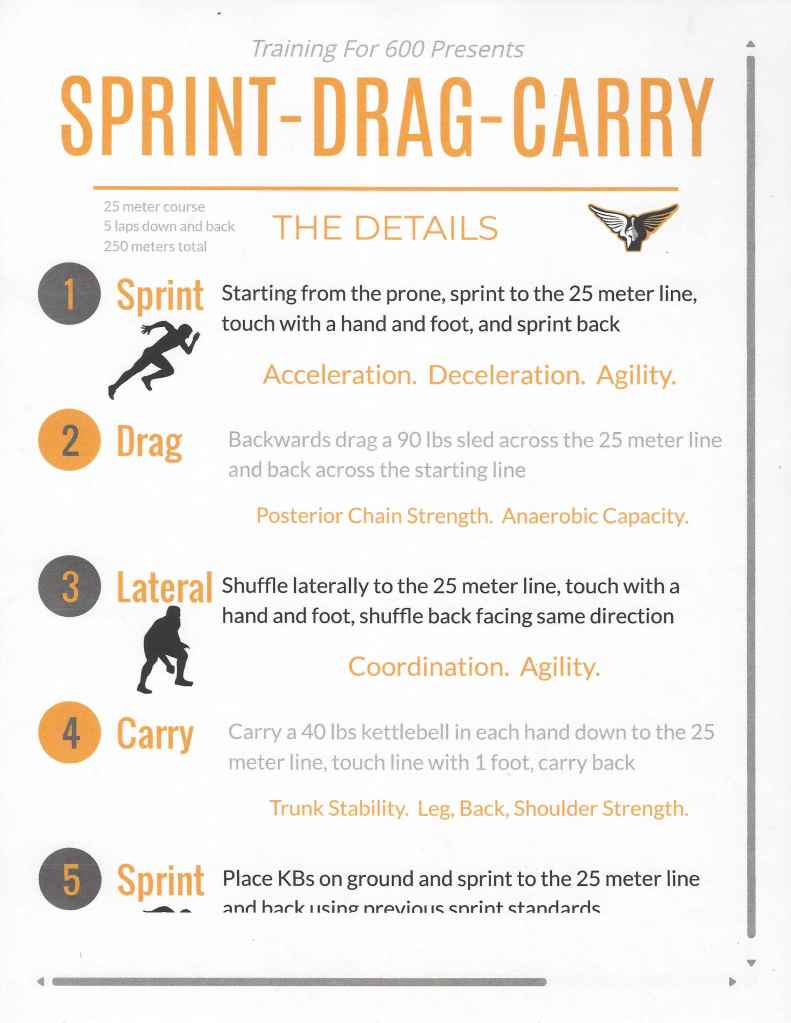
Sprint, Drag, Carry scoring ; Minimum 60 points, Male – 2 minutes 28 seconds, female – 3 minutes 15 seconds. Max 100 points, Male – 1 minute 29 seconds, female 1 minute, 55 seconds.

Under pressure from congress the ACFT Leg Tuck (Hang on the bar, bring the knees up to touch elbows, as many times as you can, was replaced with the Plank.

Elbows 90 degrees forearms and toes touching – maintain straight back. Minimum 60 points, Male – 1 minute 30 seconds, Female – 1 minute 30 seconds. Max 100 points, Male 3 minutes 40 seconds, Female 3 minutes 40 seconds

And last, the two mile run;

Run two miles:  Minimum 60 points, Male – 22 minutes, Female – 23 minutes 22 seconds. Max 100 points, Male – 13 minutes 22 seconds, Female – 15 minutes 29 seconds.


Another new army thing the people don’t know about.

The new Rifle Marksmanship Program.

In 2019 there was another big change in basic training and throughout the army when a new marksmanship program was established. Under the old program, for the previous 50 years, all soldiers, once a year, drew their rifles, went to the range, zeroed the rifle on a 25 meter range, then went to the qualification range.  Qualification firing was from a supported foxhole, with four magazines, each containing 10 rounds, stacked in front of the shooter.  After 10 rounds were fired at the pop-up targets, the command “change magazines” came from the range control tower, then shooting resumed.  If a shooters’ weapon malfunctioned, during firing, and he or she couldn’t immediately correct it, the shooter held up his hand and claimed an “alibi”, which caused a range cease fire until the weapon was functioning.  When I was a Drill Sergeant, before the trainees moved onto the range, the drills would grab a rifle and go “knock down” the targets, to make sure they all worked.  We all could hit 40 out of 40 targets.  Someone once said that a drunk monkey could qualify as an expert, if given enough time on the range.

            On July 30th 2019 the Army published TC (Training Circular) 3-20.40 Training and Qualification – Individual Weapons.  It is 800 pages of specific guidance for weapons qualification, to be followed by every unit in the Army, regardless of the type of unit, including in basic training.

            Now all army units, regardless of the type, are mandated to conduct the same annual weapons qualification program.  It starts with classes on how to properly zero their weapon. 

After which, the soldiers must pass a written and a hands-on test before moving to the next phase, which is firing with the simulator.  The simulator is the army’s Engagement Skills Trainer, which is an elaborate, indoor, laser based unit with a large screen 26 feet from the firer, displaying terrain and targets, with feed back hits and misses.  The rifle is of the same weight, producing sound and recoil very similar to the real thing.  After successfully firing on the Engagement Skills Trainer they go to the actual range for dry drills. 

Soldiers with the Louisiana National Guard practice marksmanship skills while attending a training course for the Engagement Skills Trainer II at Camp Beauregard in Pineville, Louisiana, Jan. 10, 2019. The EST II is a virtual simulation trainer that is designed to assist and improve a Soldier’s basic fundamentals of marksmanship, as well as collective and escalation of force training before going to a live-fire range. (U.S. Army National Guard photo by Sgt. Noshoba Davis)

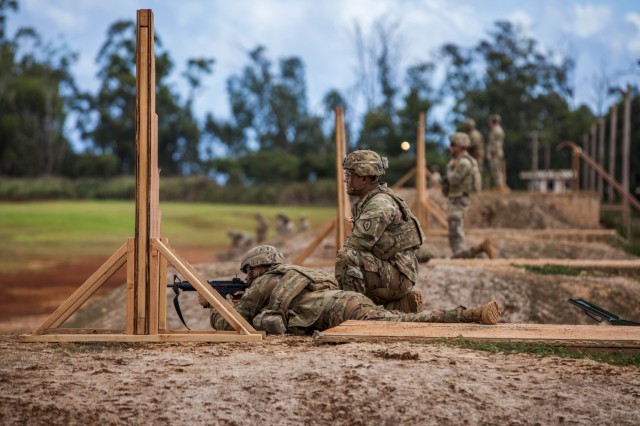
The dry drills are of how they will fire for qualification, which is not all in a rested foxhole, but in prone, kneeling, standing supported, and standing unsupported, and quickly moving between firing positions, just as they would do in combat, and with their ammunition magazines in their pouch, not laid out, and changing magazines automatically, not on orders from the tower.  In fact, there are no orders from the tower, except, begin, and there are no alibies.  If a weapon malfunctions, get it going or lose shots, because now instead of one target at a time popping up, as many as four pop up at one time.  The old way took about 20 minutes to fire 40 rounds, this takes about four minutes.

After the dry drills, they go to the zero range and zero their rifles. 

Next is practice qualification, go through the whole qualification, with live ammo, but for practice.  Finally, qualification.

            One sergeant rifle marksmanship instructor said that he always shot 40 out of 40 on the old way.  His first time this way he shot 22 out of 40.

            Firers change positions on their own, starting with standing unsupported, just like a reaction to contact, then drop to the prone unsupported, then to a kneeling supported position, and finally to a standing supported.  Under the old system, a soldier could fire “Expert” without hitting a 300 meter target.  Now there are five exposures of the 300 meter targets, so at least one has to be hit to qualify as an expert,

When the army announced that the drill sergeant “shark attack” was no longer allowed, talking heads to self-proclaimed pundits declared that the army was going soft in basic training, that it was now coddling trainees through basic training. Not true, but it continued because the army couldn’t get the national media to report what it was actually doing. Recently the add people hired by the army produced a video portraying a lesbian couple. It was withdrawn after it became laughingly ridiculed. I’m not sure I understand the intended message. Now human rights groups claim that the military is full of extremist groups and that military service itself is a leading factor in an individual joining an extremist group.

Before looking at basic training, lets look at drill sergeants.

Now, who are the drill sergeants. The infantry, engineer, supply, human resource, medic, dental assistant, computer specialist soldiers who receive that email from Human Resource Command that says; “Congratulations, you have been selected for a career enhancing assignment – to be a drill sergeant”. I went through Drill Sergeant School in 1979. It was six weeks of basically refreshing everything taught in basic training. And little tidbits like, “wear sunglasses so they can’t see where you are looking”.

            Now at the 12-week Drill Sergeants Academy candidates not only go through basic training performing every task basic trainees complete, but spend a lot of time studying and practicing the “art” of “developmental training”. It is an art that everyone doesn’t naturally possess, therefore it must be studied and practiced. At the Drill Sergeant Academy, they call it training with dignity and respect. The Drill Sergeant school is physically demanding and intense. Candidates are arbitrarily pulled from formations to lead the event being conducted and everything including their physical mannerisms and the inflection of their voice is graded. I saw a comment that the drill sergeant class in April 2023 of 106 candidates, 99 graduated.

            Personal attacks and abuse turns people off. How about some examples of the old days. Drill Sergeant; “How tall are you Jones? Five nine sergeant. Five nine? I didn’t know they stacked shit that high Jones. Did your momma have any kids that lived? Get down and push up until I get tired. Now do you understand what I want?”  There is only one answer, whether understood or not, plus trainee Jones won’t ask anymore questions because they only bring pain.

The drill sergeant “shark attack” was created during the Vietnam War when most of the trainees were draftees and would literally fight a sergeant to get out of the army. The majority of those conscripted recruits considered themselves one step away from prisoners who would literally fight the drill sergeants to get out of there. They had to be defeated and controlled from the minute they arrived. It was, at that time, necessary and it was effective. Once they accepted their situation training could begin.

Basic trainees now are smart, healthy volunteers who have jumped through some hoops to get into the army. I walked into an army recruiters office in August 1961 and signed up. The next morning I was on the bus to MEPS (Military Enlistment Processing Station). Army recruiters tell me know that it takes a minimum of about a month to get an enlistee to MEPS. They have background checks, medical records checks, mental and physical tests. If they have ever taken medication, been in the hospital or had a broken bone, a medical waiver is required, which takes even longer, if they are admitted.

            Basic trainees are now smart young people and they are being fed a tremendous amount of information in a short period of time. Questions are welcomed. The only dumb question is the question not asked now applies in army basic training. The discipline is created by the professional conduct of the drill sergeants and the training unit staff. It is an atmosphere of discipline within the unit. Drill sergeants still yell because they are directing crowds of people, not because they are trying to weed out the week.  The drill sergeant’s job is to turn civilians into soldiers – all of them if possible.

            This past November 2022, Alex Hollings a marine vet journalist wrote a very in-depth article for Sandboxx titled, “DIGNITY AND RESPECT: AN EXCLUSIVE LOOK AT HOW THE ARMY IS TRAINING DRILL SERGEANTS FOR A NEW ERA”. He admits that when approaching that task, he had a definite old marine bias that the army was going soft and woke, but after spending a week at the academy he became a convert that this new approach is the way to go.

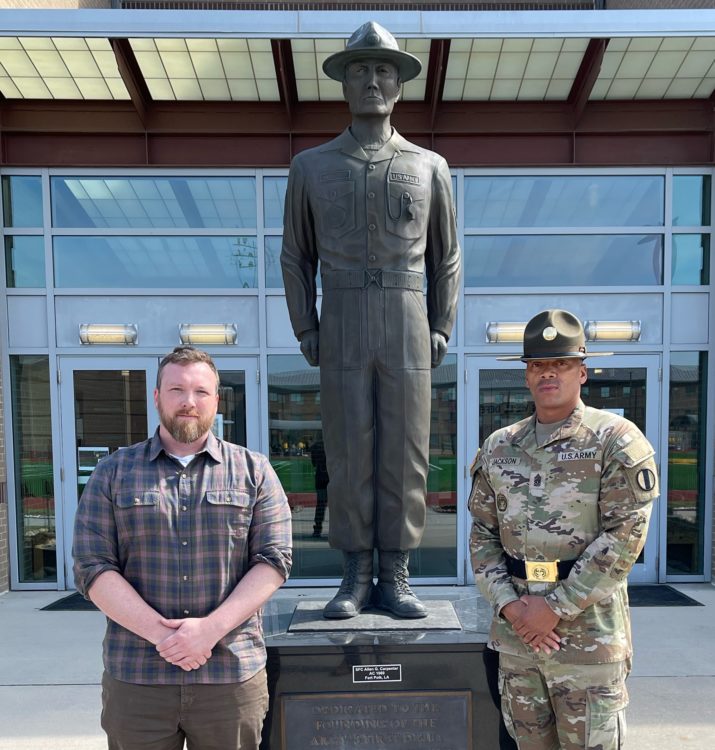
I’m a pretty big guy… but CSM Jackson is bigger. (Photo by Kris Broadus)

Alex Hollings and Command Sergeant Major (CSM) Ricky G. Jackson the Commandant of the US Army Drill Sergeant Academy. Out of uniform CSM Jackson can honestly be called Doctor Jackson, because he has a PhD in Behavioral Health Management.

Doctor (Command Sergeant Major) Ricky G. Jackson with family.

The following video is 15 minutes long. It is directed at army sergeants who may become drill sergeant candidates. In it you will see CSM Jackson telling a class of candidates that if they need to use the language I used in the above paragraph, to get someone to do something, they are no longer relevant in today’s army.

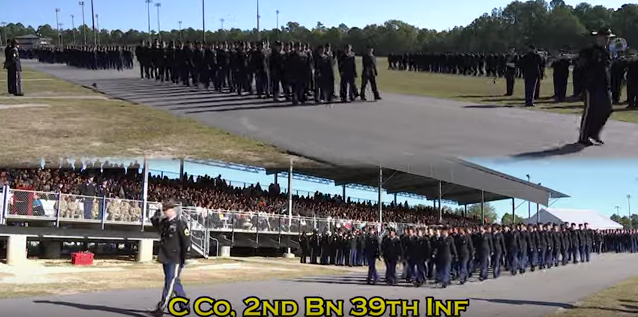
Army Basic Combat Training (BCT) is conducted at Fort Jackson, South Carolina, Fort Leonard Wood, Missouri, Fort Moore (formerly Fort Benning), Georgia, and Fort Sill, Oklahoma. All basic training units have facebook pages and are very open about keeping families posted on what their soldiers are doing, during basic training. At Forts Leonard Wood, Moore, and Sill basic training companies graduate individually, at Fort Jackson basic training cycles are run by battalions and all companies in the battalion graduate together. I chose to follow one battalion at Fort Jackson, because they do a very good job of maintaining their facebook page. The 2nd Battalion and the 4th Battalion of the 39th Infantry are very similar with their postings,

            Day one:  Arrival at the company.

            Drill sergeants meet each bus. Exit bus without gear – go there for a formation.

Drill sergeant yelling. Get off bus go there and form up.

Drill sergeants form them into platoons of 40 to 50 each.

The company is then formed and briefed on what they will be doing for the next 90 minutes in an exercise called “The First 100 Yards”.

            They were issued a small “Training Guide” while they were still at the reception center. They will be quizzed on its information. They will have to conduct a “resupply mission” which consists of moving the pile of stuff in front of the platoon to an out of sight location. They will be shown how to do three exercises of the Army Combat Fitness Test (ACFT), which they will be required to perform. They will then have to go back and arrange the supplies they moved into the exact original configuration. Finally they will be shown a demonstration of what they will be able to do, as a unit, at the end of basic combat training.

It’s June 26th at Fort Jackson, South Carolina and it is hot, drill sergeant says; “Drink water.”
Move supplies and casualties fast.

They have to work together, as a platoon.  After the ACFT exercises they go back to their stacked supplies and arrange them in the exact original order.

            The winning platoon departs first to get their bags and get set up in the barracks, all others have remedial training (pushups).  There is only one winner and winning is everything.

The first week they draw field equipment which they will have to clean and turn in at the end of basic training. There are several sit-down classes, and lots of marching, facing movements, hand salute, etc.

Early in their first week they had their diagnostic ACFT (Army Combat Fitness Test) to see where they were physically.

First ACFT test: The Dead Lift
Second ACFT test: Backward Ball Toss
Third ACFT test: Hand Release Pushup
Fourth ACFT test: Sprint – Drag – Carry
Fifth ACFT test: The Plank
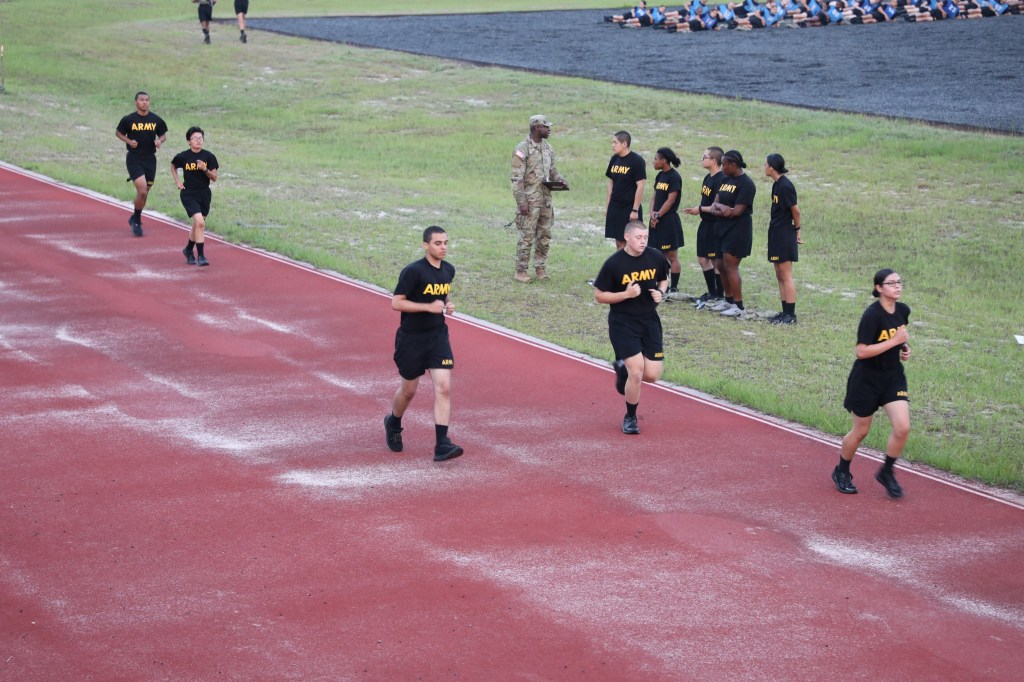
Sixth ACFT test: Two Mile Run

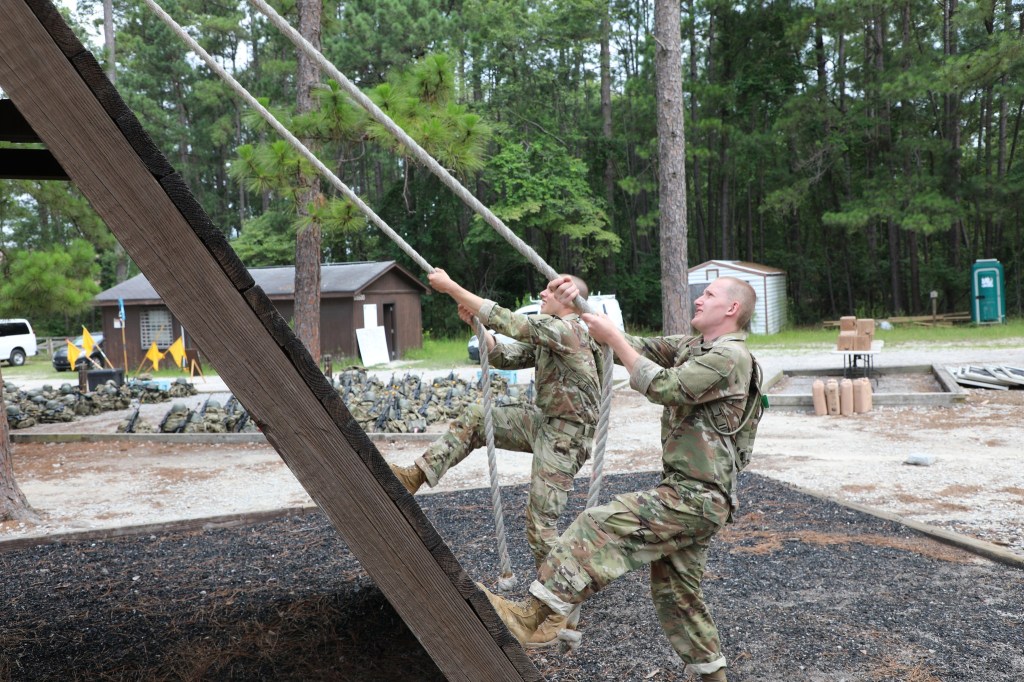
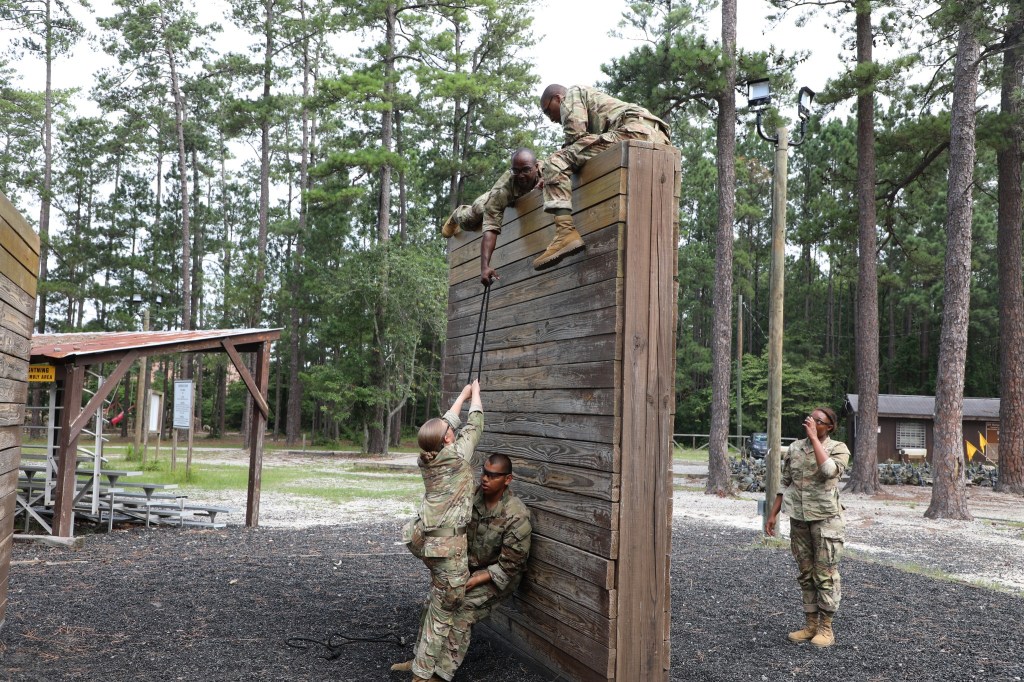
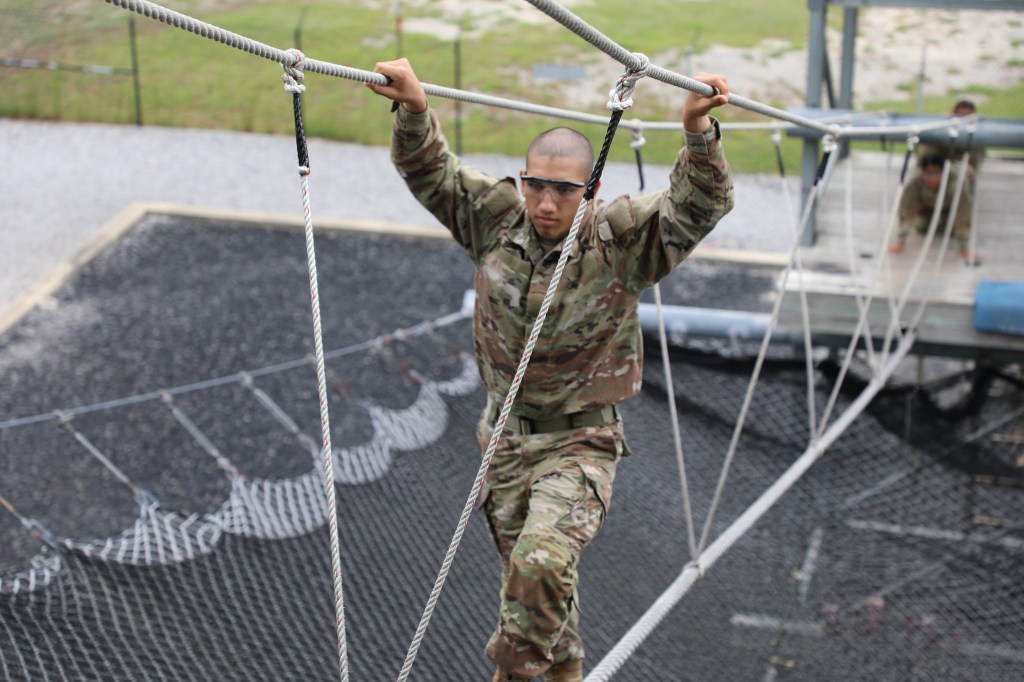
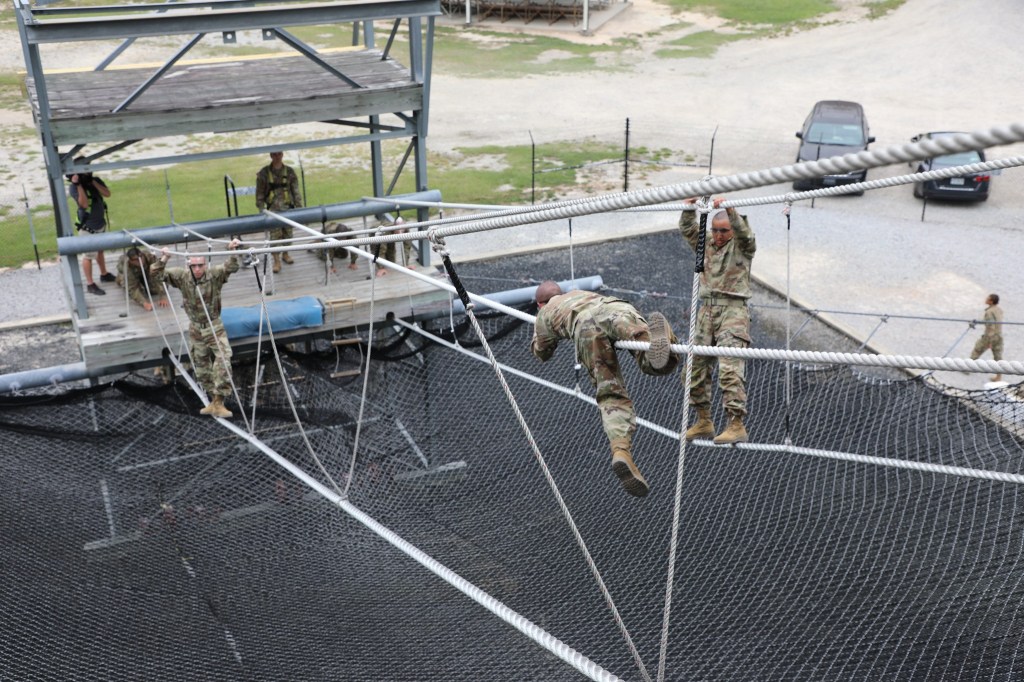
Although the master training schedule says week three, they try to get the confidence course in the second week, because it is a confidence builder. The trainees do have to work together to make it through.

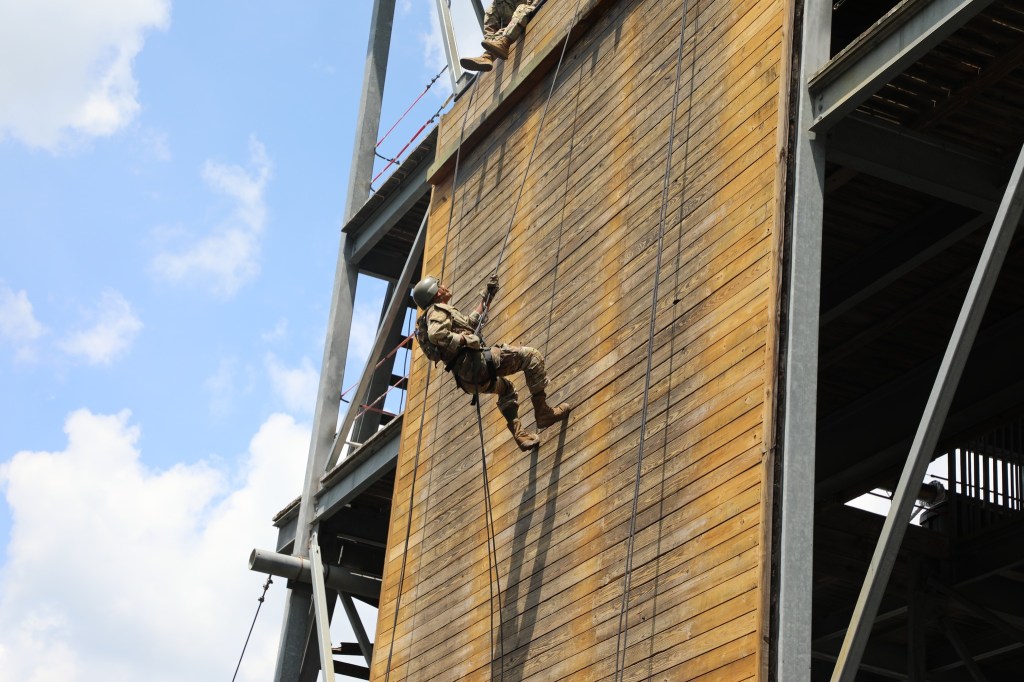
The next confidence builder in the second or early third week is Victory Tower. Victory Tower (Warrior Tower at Fort Leonard Wood) is a 40 foot high rappel tower.  It has a flat wall on one side and open with a rope net on the other side. There are also one, two, and three rope traverses.

            The “Mini Wall” is an addition since I was a drill sergeant there in 1980. I do understand why it was added. In my first basic training cycle as the senior drill of the company there were 4 or 5 young men who refused to go off of the tower. They were absolutely afraid of it. After that, I would give the company a class on the swiss rappel seat while the other drill sergeants took the two smallest female trainees to the tower and got them off of the tower a couple times. Then, I would bring the company to the tower and those two small women would demonstrate how to properly rappel off of the tower. I never had another refusal.

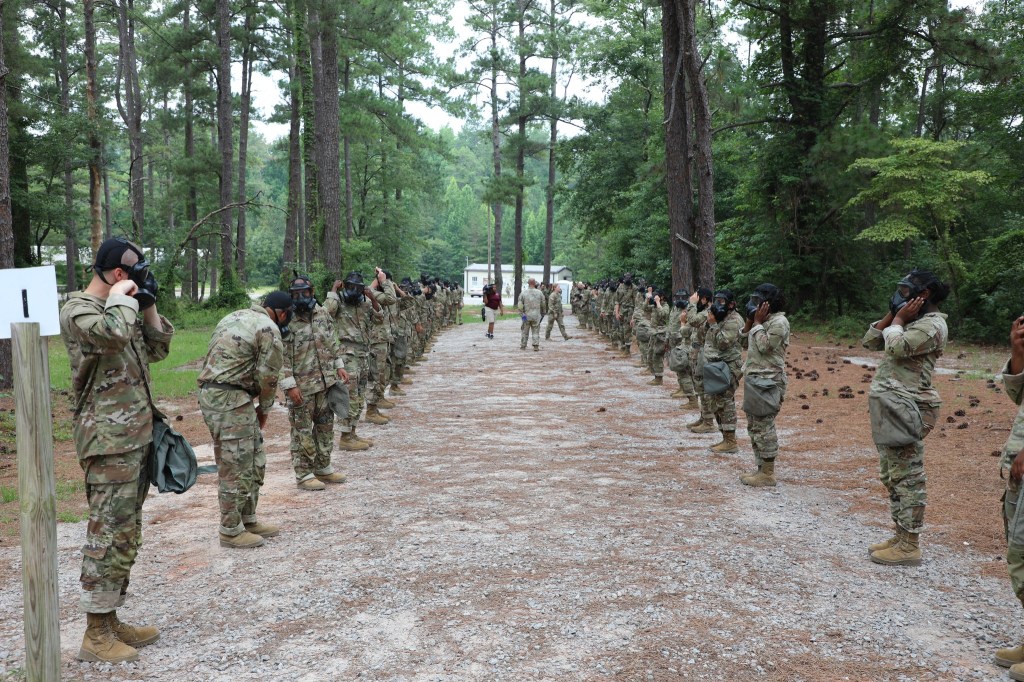
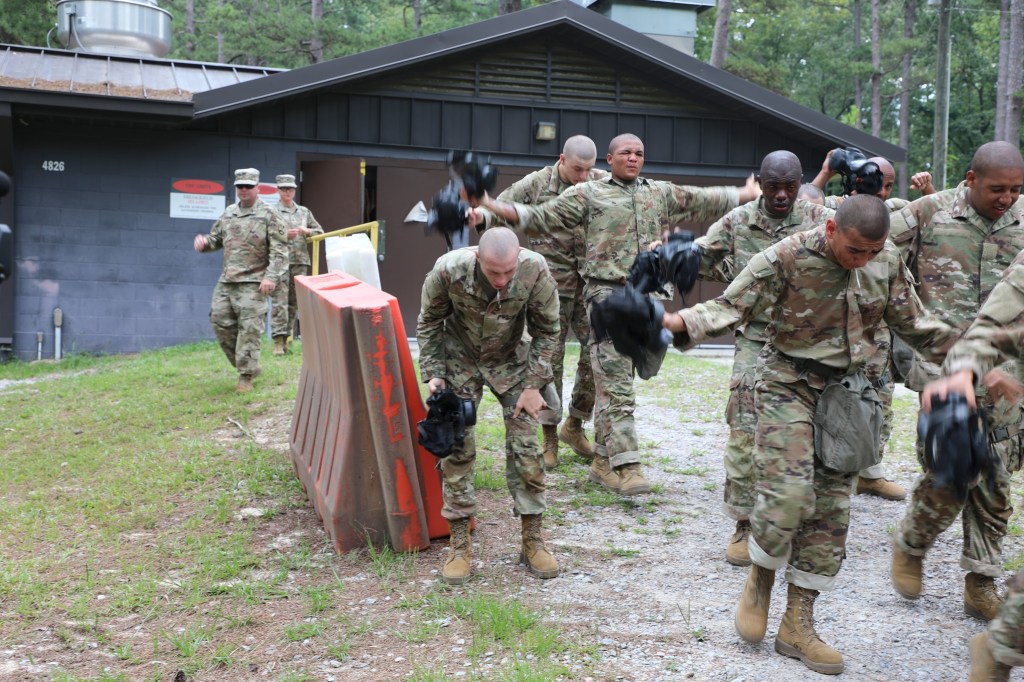
Also in the third week is CBRN (Chemical Biological Radiological and Nuclear) training. In other words, the “gas chamber”. This is an annual exercise that all soldiers do once each year. It is to create confidence in the gas (protective) mask. Soldiers put their mask on and insure that it is properly fitted. They enter the gas chamber, which has a good dose of CS (riot tear) gas burning. Then on command they remove their mask and state their name, number and date of birth, or anything to insure that they get a breath of the gas.

They hold their arms out to keep from touching their face or eyes, which makes it worse.

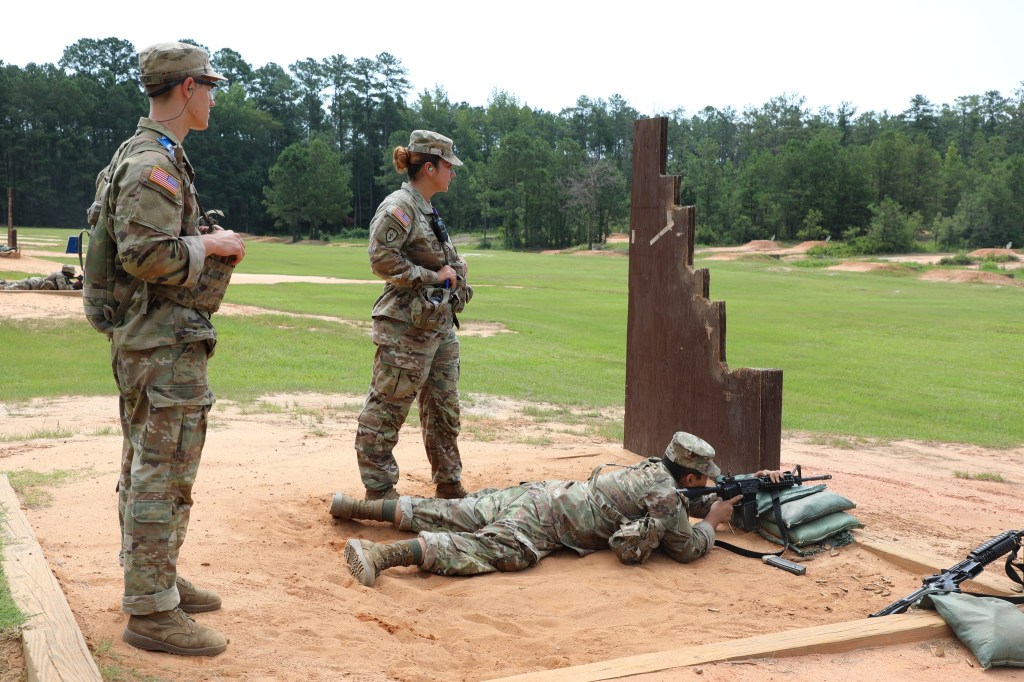
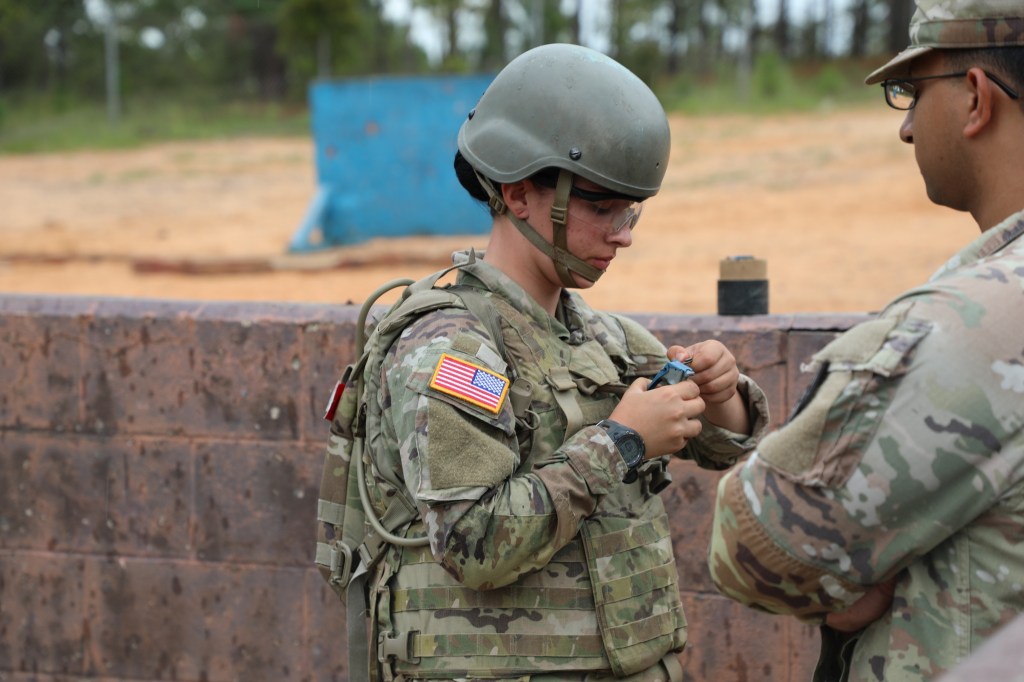
After some classes on how to zero their rifle, the trainees go to the zero range. Zeroing a rifle is basically adjusting the sights of the rifle to the eye of the individual so the bullet goes where the soldier is aiming. This is also their first time with live ammunition.

            The Zero Range is a 25 meter range. The targets are 25 meters (82 feet) from the shooter.

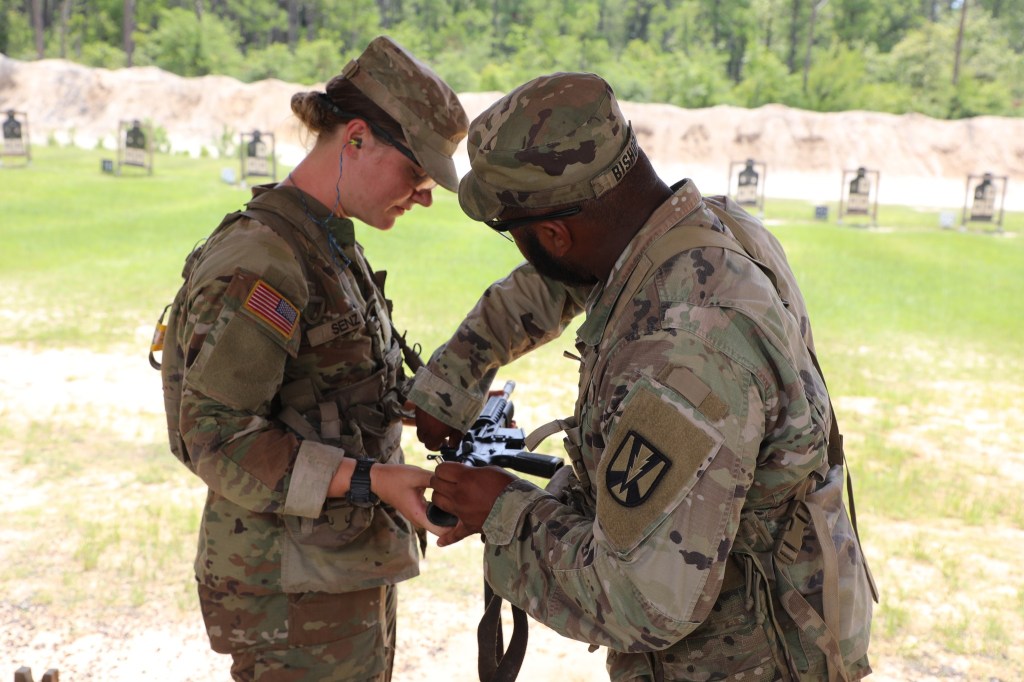
Drill sergeants make sure that trainees are in a proper position.
Drill Sergeants see the targets first, then the trainees, who are waiting.

Zeroing the rifle often gets one on one and personal. A young female trainee in my company couldn’t “zero” her rifle. She was in a proper position, good breathing control, good trigger squeeze, but was all over the target. Drill sergeants fired the rifle, it was ok, they were frustrated. I laid down in front of her and watched her face. She did everything right, but the instant she pulled the trigger she tensed and closed both eyes. For many, especially women, the zero range is the first time they have fired a gun, when she could finally keep her eyes open, she zeroed, qualified with the rifle and graduated from basic training.

After zero range they spend a day on the Engagement Skills Trainer then go to practice qualification. They go through everything with live ammo in qualification shooting, but that day is practice.

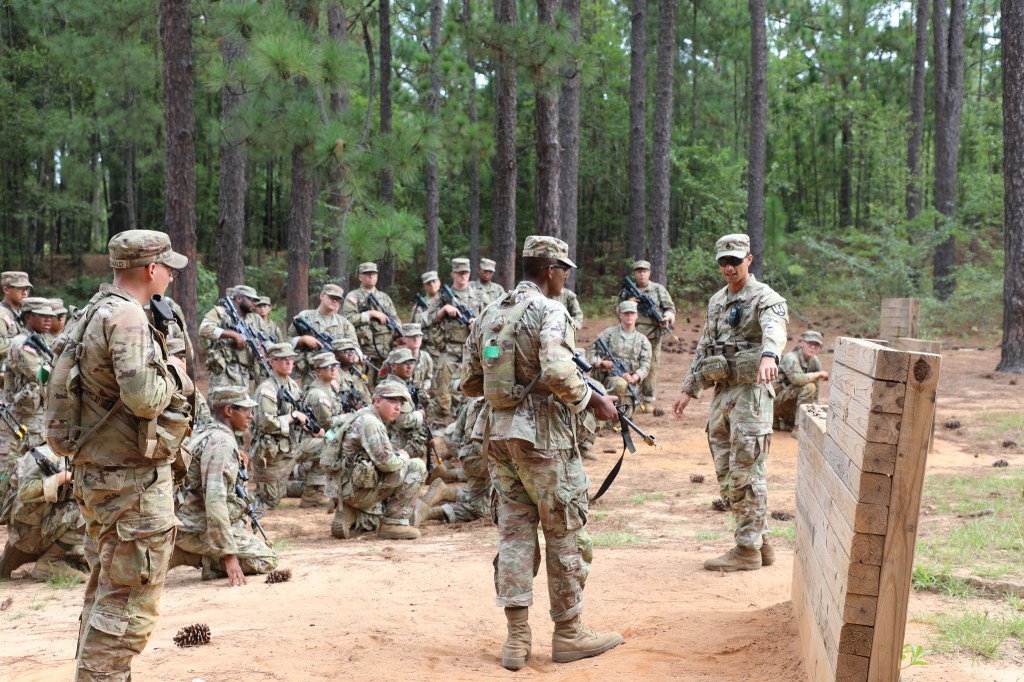
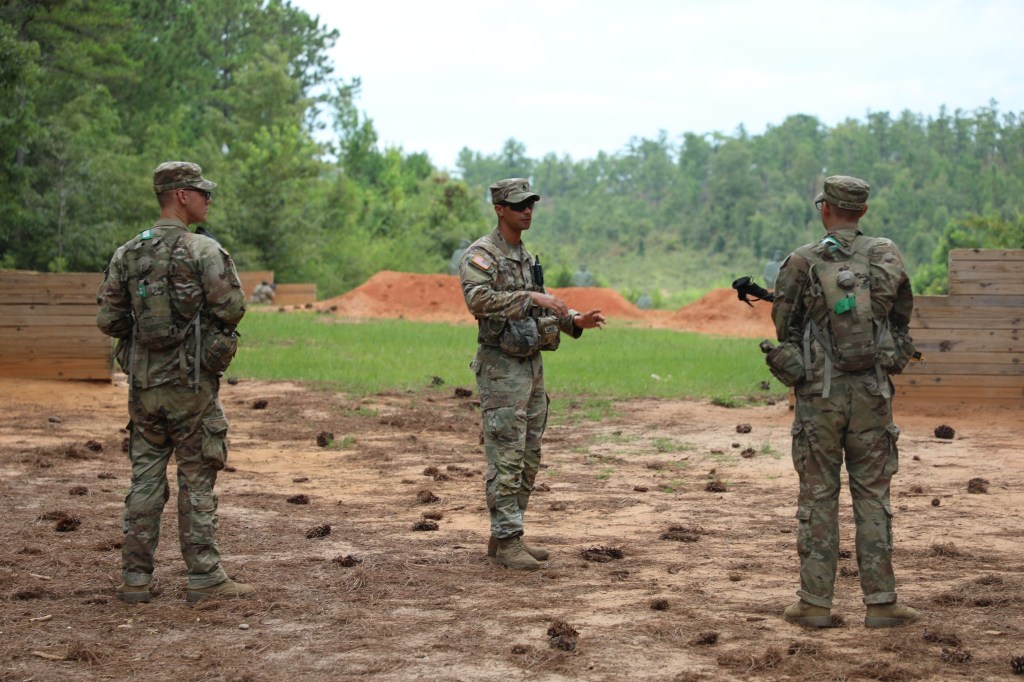
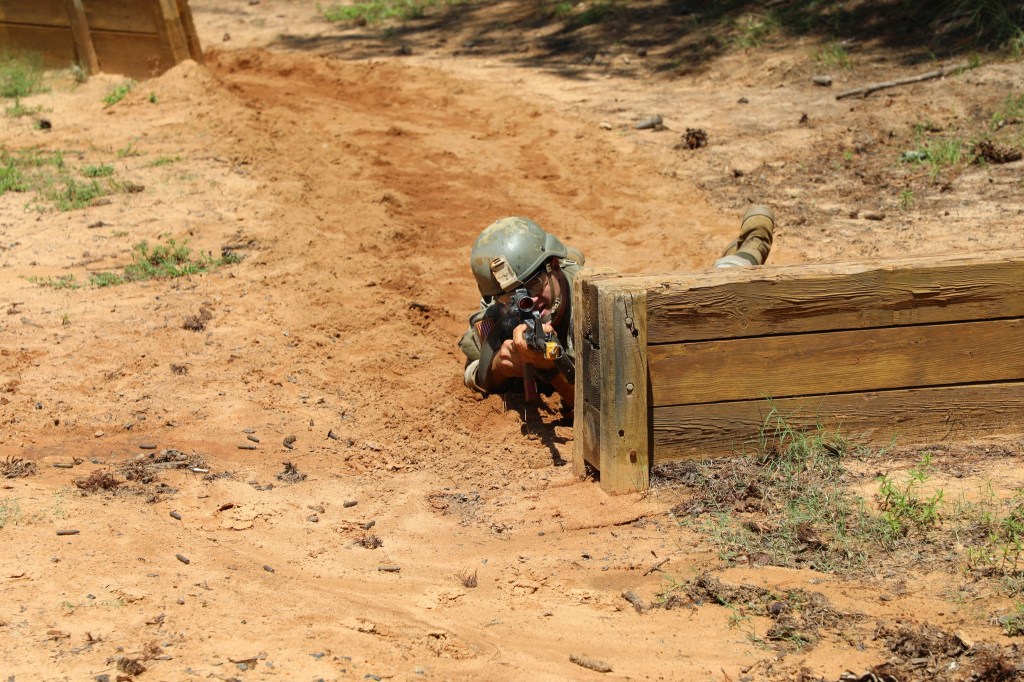
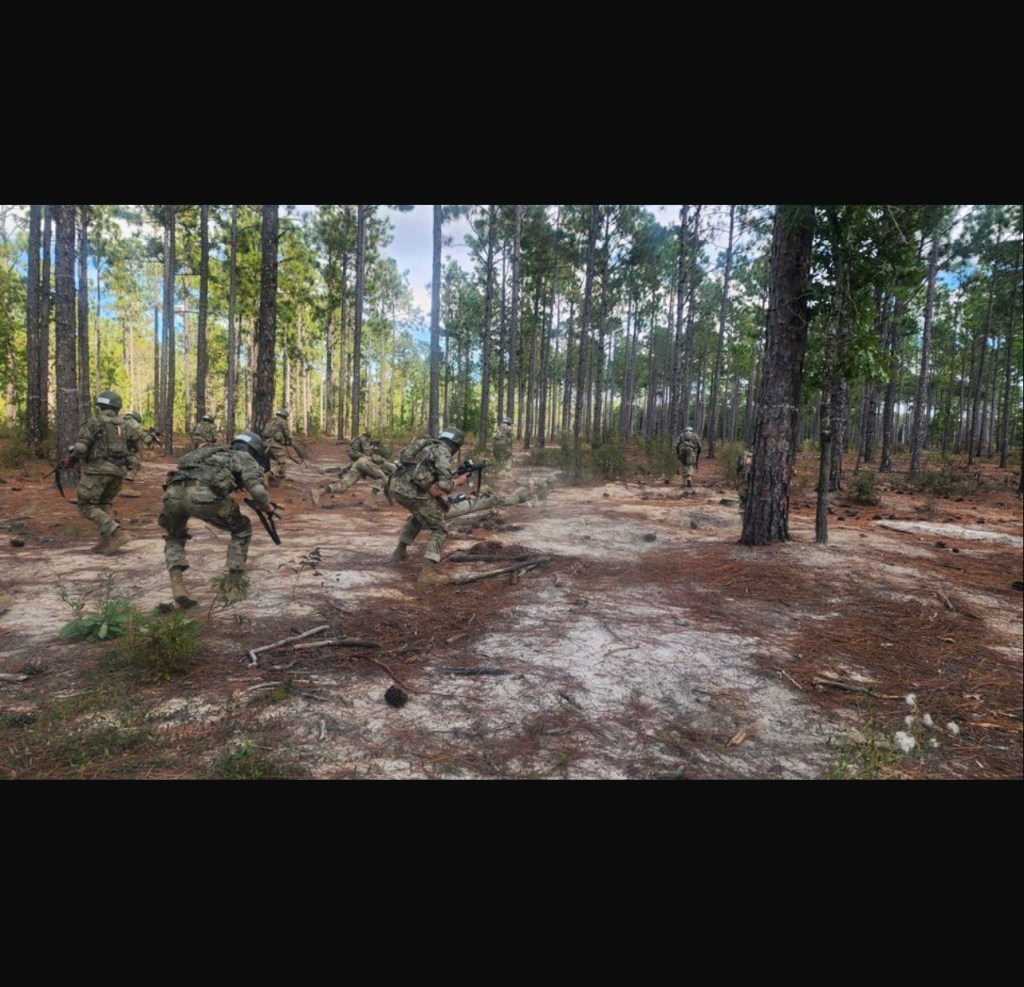
After qualifying with their rifle they move to the close combat course, i.e., fire and maneuver, which starts with group instruction, then one on one.

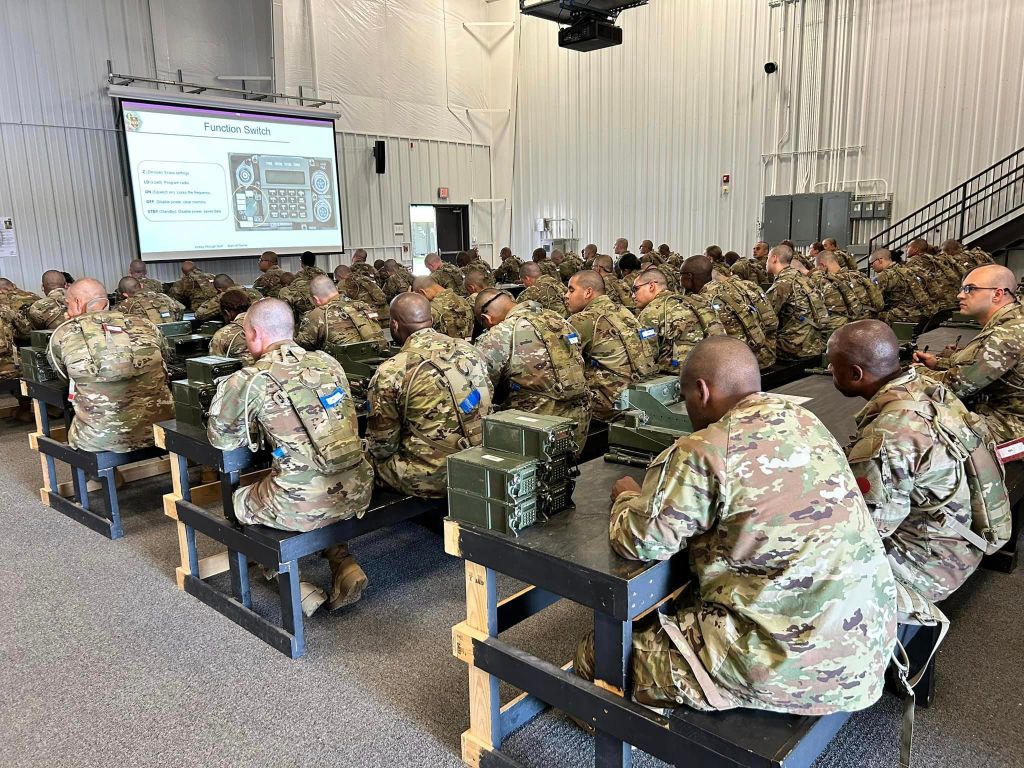
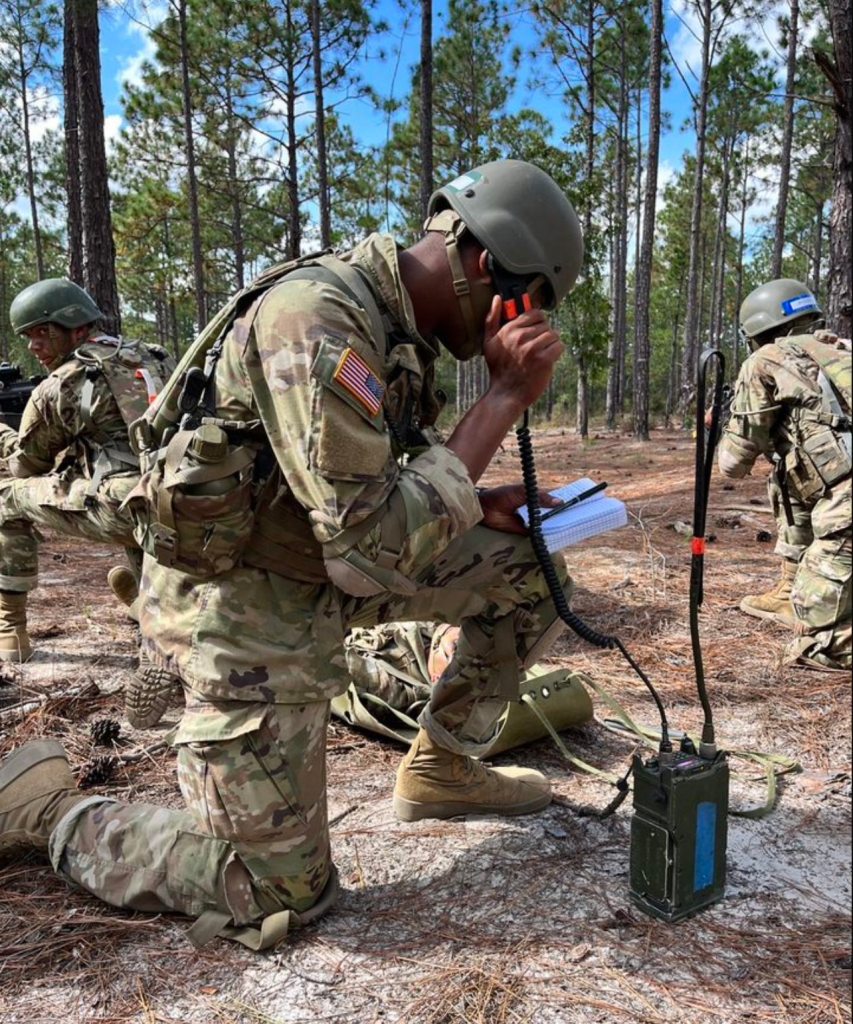
Must know how to operate a radio and establish communication.

The following is from the 2nd Battalion 39th Infantry facebook page;

2nd Battalion, 39th Infantry Regiment “Fighting Falcons”

October 13, 2022  · 

The Fighting Falcons of Delta Company underwent their second Field Training Exercise (FTX), known as the Anvil. The first day consisted of rucking 7.8 miles from the Company to the Area of Operation (AO), where they received various instruction blocks. The topics taught were Indirect Fire, Buddy Team Live Fire, Radios, Reporting (SALUTE and SPOT reports), and Evacuating Causalities. Next, they mastered their navigation skills at the land navigation course, ST LO. By the conclusion of the FTX, they sharpened their tactical battle skills for their final FTX, known as the Forge.

An early morning ACFT to measure progress.

Yes, they do throw live hand grenades.

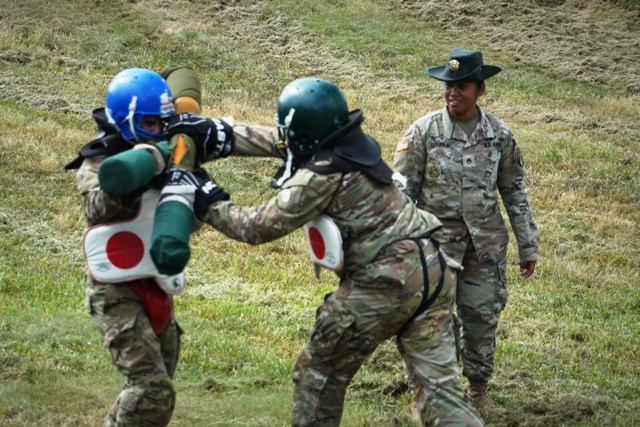
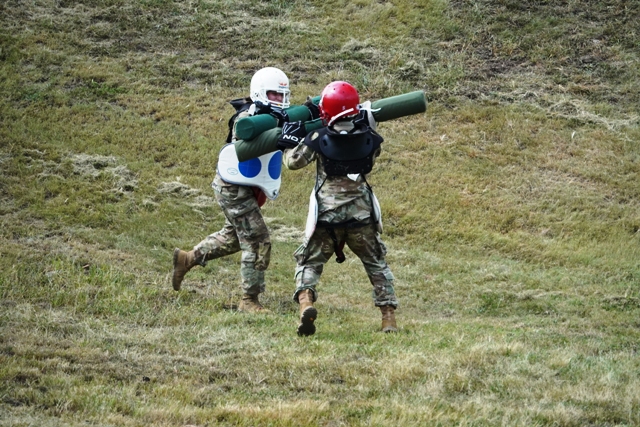
Last night of the Forge – Pugil stick fighting.
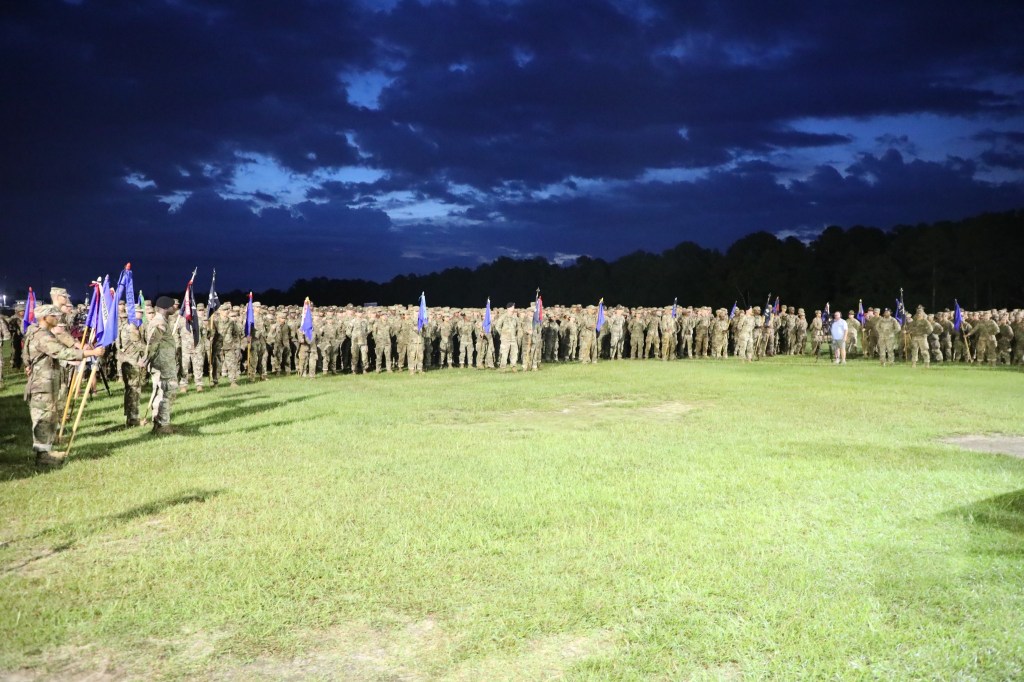
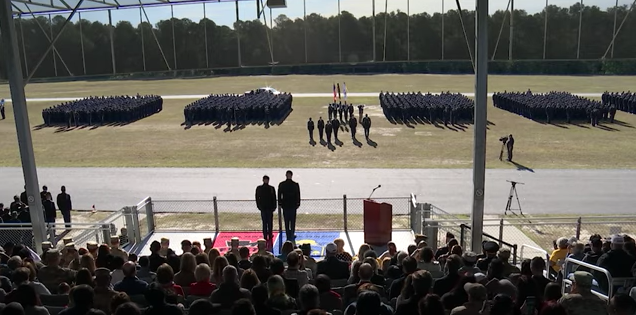
The Soldier Induction Ceremony at the end of The Forge
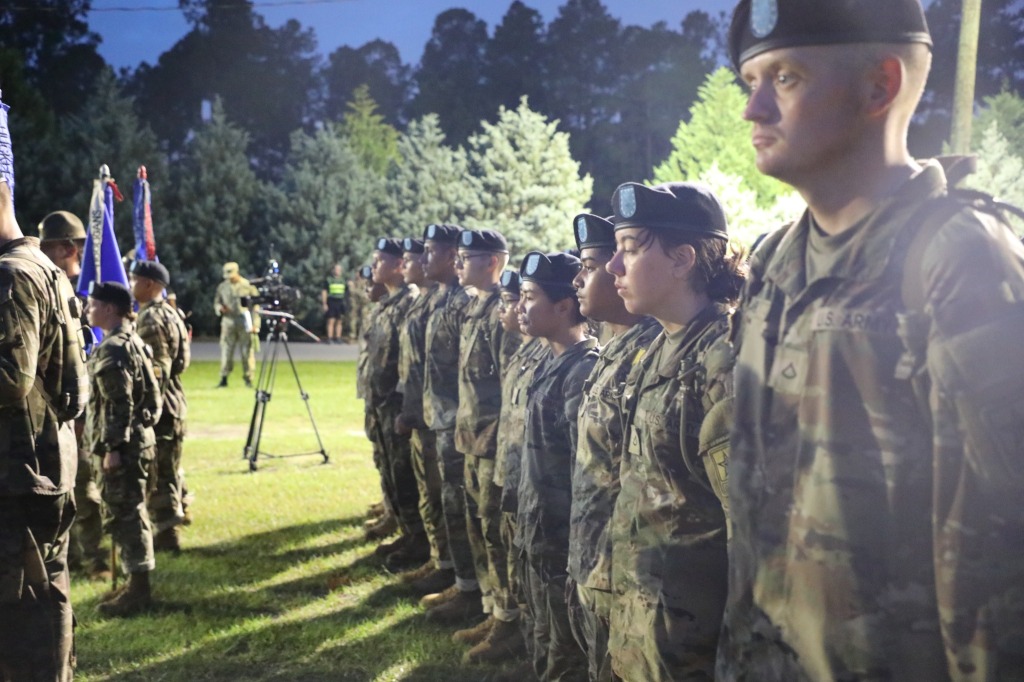
Donning of the beret.


Receiving their “army” patch.
They are dog tired and half asleep. They’ve just covered 45 miles in 3 days with 2 MRE’s a day, very little sleep and almost continuous activity, but they made it. It’s over. They are now soldiers.

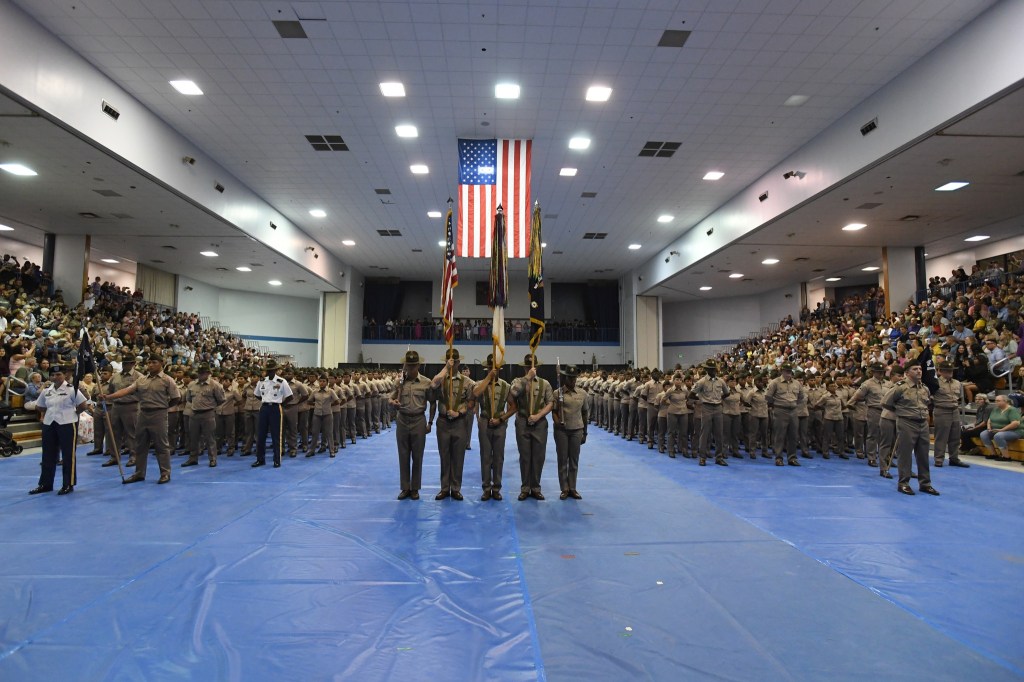
GRADUATION!

RADICAL CHANGES IN THE ARMY OCTOBER 2020

To say that the US Army is changing, is like saying the weather is changing – it is, always, but this change is unlike anything that has ever been attempted.
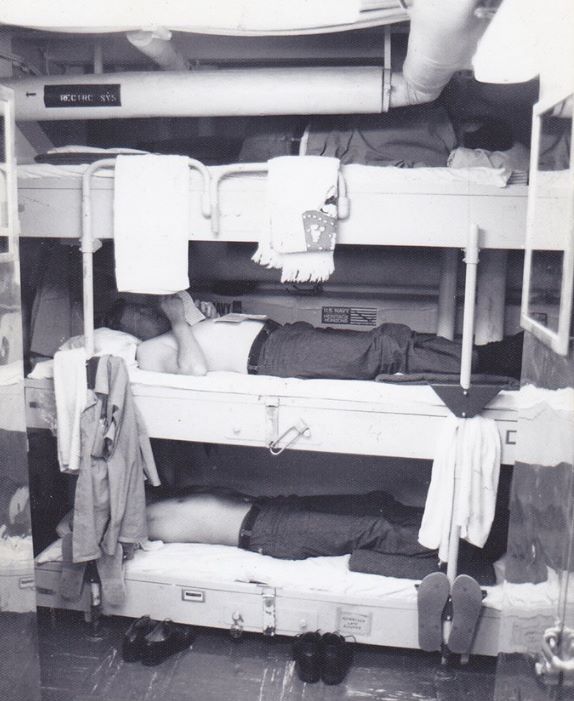
The primary concern of the Air Force is airplanes – keeping them flying. The primary concern of the Navy is ships and airplanes. The Marines – God bless em, as great as they are, they are part of the Navy. If you enlist for four years as a Marine grunt, you’ll be lucky if you don’t spend six months, or more, of it on a ship, sleeping on a 30-inch by 72-inch steel bunk, 17 inches below the one above you.


The primary concern of the Army is people. The Army is the ground soldiers, there must be soldiers on the ground, to hold territory. The wars in Iraq and Afghanistan saw many support soldiers involved in the fighting, either in convoys, moving from one place to another, or real fighting on a Combat Outpost. The Army Combat Action Badge was created to recognize non-infantry soldiers who engaged the enemy in combat.

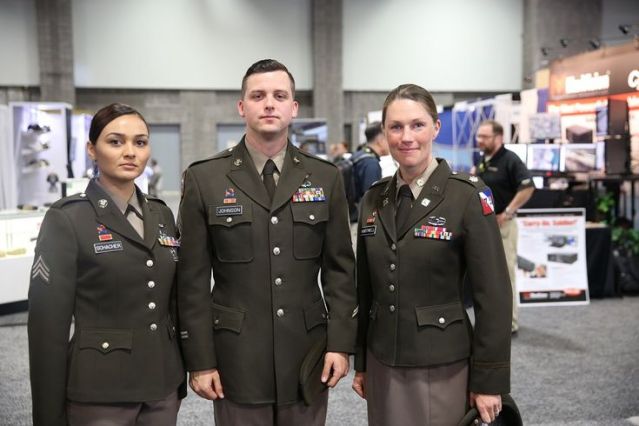
The soldier on the right, a Lieutenant Colonel, is wearing a Combat Action Badge above her ribbons.

One of the observations from those wars, was that overall, soldiers were not in good enough physical condition for the heat of Iraq or the mountains of Afghanistan.
The discussion of better physical fitness started about 15 years ago. The Army had a “Master Fitness Trainer” course in the 1980’s, but it folded, during the wars. It was re-opened in 2013. It trains sergeants and officers in the proper conduct of physical fitness training. They then return to their units to train others.
In 1977, six foot seven, Robert B. Brown was the number two high school basketball pick in Michigan. He went to West Point and played basketball under Coach Mike Krzyzewski, scoring over 1,000 points while there, graduating in 1981. In 2014, then Lieutenant General Brown, Commander of the Army Combined Arms Center, leading a discussion titled “The Soldier Athlete”, at a meeting of the Association of the US Army (AUSA), said we need to train our soldiers like athletes. General Mark Milley, who became Chief of Staff of the Army in 2015, currently Chairman of the Joint Chiefs of Staff, was Captain of the Princeton Hockey Team, graduating in 1980, agreed. So did then Secretary of the Army, Mark Esper, currently the Secretary of Defense, who graduated from West Point in 1986.
Regular Army PT (Physical Training), was not preparing soldiers for the physical rigors of combat. There were a lot of combat veterans, in the Army, when the discussion started about how to evaluate soldiers’ preparedness for combat. As the new Army Combat Fitness Test (ACFT) was being developed, a much more radical change in physical training was also being developed. This is not just a change in physical training, but a program that focuses on the individual, holistically encompassing the soldiers’ life, physical, sleep, nutritional, spiritual, and mental.
The driving force behind all this is readiness. A recent Army News article said that as of February 2019, more than 56,000 soldiers were non-deployable. Also, more than 21,000 were on a temporary injured list, and more than 15,000 had some kind of permanent injury. Almost half of all soldiers are injured at some point, and 71% of those injuries are lower extremity micro-traumatic musculoskeletal “overuse” injuries. In 2018, more than 12% of soldiers had some form of sleep disorder and 17% of active duty soldiers were overweight. Also, included in this conversation, was active duty suicide. How ever many there are, its’ tragic, traumatic, and too many. For the Army to be able to field a healthy, fit, lethal force, soldiers’ life style has to change.

In 2017, the Army ran a six month pilot program, called the Soldier Readiness Test. It temporarily assigned a strength and conditioning coach, a physical therapist, a registered dietician, and an occupational therapist to selected battalions. The increase in health, fitness, and morale was so successful that a two year pilot program started in 2018, in an expended number of units, with increased funding, equipment, and personnel. It was soon named H2F-lite pilot. Several sergeants from those battalions were sent to the Master Fitness Trainer school, and Athletic Trainers, Strength Coaches, Physical Therapists, Occupational Therapists, and Dietitians were hired and placed under the supervision of those Battalion Commanders, who were tasked with implementing the program and identifying any bugs. A lead strength and conditioning coach said; “The greatest part for me is that I see people coming to PT in the morning and they are engaged and excited to be there.” Captain Samantha Morgan, a physical therapist said; “People are coming to physical therapy proactively versus being told they have to come, so when people do have PT or training related injuries they’re getting better faster.” The medical people and the Chaplain and Chaplain Assistant, were also brought into the H2F Team. Chaplains are not part of the program to preach, but to monitor unit morale, and help with personal problems. There is a rule in the Army, anyone can go see the Chaplain anytime. Chaplain’s and their assistants are presented with all kinds of problems. In my story “Be an Army Chaplain Assistant”, I tell the story of a Chaplain Assistant who was confronted by an infantry Private, whose wife was having mental issues. Threatening to kill herself and her unborn baby, if he didn’t start spending more time at home. A Private in the infantry has little control of his schedule. That time, everything worked out. The “spiritual readiness” of a soldier is comprised of his or her core values, and beliefs, and life visions, arising from religious or non-religious beliefs, philosophical and moral values.

On October 1st, 2020, the Army published a new Field Manuel (FM) 7-22, Holistic Health and Fitness. This makes the program command policy, army wide. The Army physical year (FY) starts October 1st, and funds have already been allocated for current FY 2021, to start implementing H2F. Every Brigade is getting a new H2F staff, to be under the direction of the Brigade Commander. The H2F Program Director will be civil service GS-13, starting salary of about $78,000, although the solicitations say that salary will be negotiated with non-prior civil service applicants. Under the Program Director, will be a Captain, Nutrition Director, with civilian and military dietitians, a Captain Injury Director/Provider, with military and civilian physical therapists and a contracted civilian athletic trainer for each battalion, a Captain Combat Enhancement Director, with civilian and military occupational therapists. There will also be civilian strength coaches advising the professional military physical trainers. In FY 2023, construction is to start on a 40,000 square foot “Soldier Performance Readiness Center” (SPRC), for EACH BRIGADE. That is about twice the size of most current army fitness centers. The Brigade H2F Team will be housed in the SPRC, and every company in the Brigade will rotate through the SPRC several times weekly. Daily physical training will not necessarily be the first hour of the day, for everyone. Until the SPRC’s are constructed, H2F teams will utilize whatever facilities are available, like current fitness centers.

The Registered Dietician’s role is in fueling and nutritional needs for various aspects of performance. The Dietician coaches soldiers on diets that support fitness training, brain performance, healing from injury, and special dietary needs in the field environment. Consequently, the Dietician helps soldiers consider meal planning, grocery shopping, cooking skills, and how to navigate the complex market of supplements.

The Occupational Therapist is primarily involved in the mental fitness of soldiers, utilizing skills such as coaching on sleep optimization behaviors, goal setting, habit change, attention and focus control, energy management, communication, team dynamics, and other tactical mental operations involved in leadership, planning, and Warrior tasks. As an expert in both cognitive and musculoskeletal domains, the Occupational Therapist also supports physical aspects of physical performance such as ergonomics of load carriage, visuospatial skills in marksmanship, and evaluation and treatment of the upper extremities.
This is not just a new PT program, this is a complete change of soldier life style, to that of an athlete. I won’t say professional athlete, because the pro’s usually train for one activity. Gone is the one size fits all approach to physical conditioning. This is a program designed to get to every individual soldier, to change eating, sleeping, and activity habits, to create a healthy person both physically and mentally. A part of this program is leaders’ education, to insure that the change in life style actually happens. Good health and strength fosters good self confidence, which soldiers must have.
The new Army Combat Fitness Test (ACFT), was designed in conjunction with H2F. It is a six timed event test. “In shape” people, who have taken it, said that each event didn’t seem to be too hard (except for the leg tuck), but by the time they finished the test, they were exhausted. There is no point adjustment for age or gender. It is, “how capable is this solder of performing in combat”.

ACFT Weight lifting
ACFT sprint and carry of the Sprint, Carry, Drag event
Dead weight drag of the Sprint, Carry, Drag
ACFT Hand release Pushup
ACFT Standing Power Throw (Backward Medicine Ball toss)
ACFT Leg Tuck (Hang on the bar, bring the knees up to touch elbows, as many times as you can).
ACFT -Two mile run.


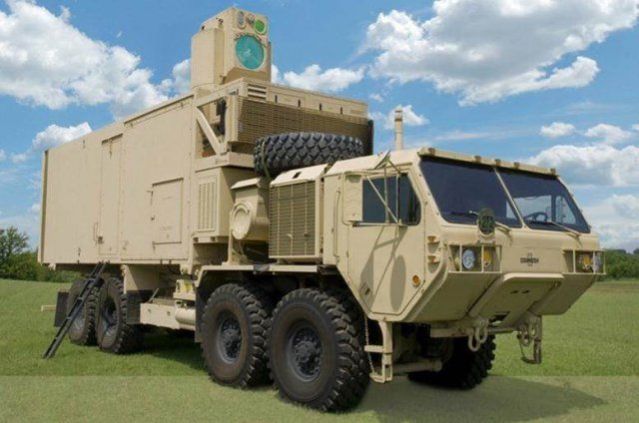
This is a big event in an explosive evolution in the Army, that has been growing for about the past five years. A new four-star command (The Army Futures Command) was created and headquartered in downtown Austin, Texas, to not only get the latest technology into the Army as fast as possible, but to solicit new inventions, like a laser 10 times larger than the Navy’s laser weapon, big enough to knock down incoming cruise missiles.

Not only weapons technology, but lighter field equipment, and a new rifle with ammunition capable of penetrating lightly armored vehicles and any body armor. Computer systems and operators capable of invading and controlling adversarial systems. To do all of this, the Army must have healthy, alert, and quick thinking individual soldiers. The Army is a team of teams, but individual soldiers must often be able to think quickly on their feet, and make adjustments, without higher direction, when necessary. Enlisted Management Branches in the Army Human Resource Command (HRC) periodically posts names of soldiers who will be up for reassignment, in a future window. They then post the assignments, that must be filled, during that window, and they encourage soldiers to go online and post their preferences. Quite a change from the old days, when you just “came down on orders”. The United States of America places more confidence and trust in the individual soldier, than any other country in the world.
There is another evolutionary event, in the Army, that goes along with this. That is the demise of the “shark attack”. For many years, on the day new trainees arrive at their basic training company, they have been met by a swarm of screaming drill sergeants. That has become known as the shark attack. I’m not sure when it started. The first Drill Sergeants were created in 1964, just before the start of the Vietnam War. During Vietnam, the majority of trainees were draftees, and did not want to be there, so I’m sure the shark attack started as the drills established dominance and authority over the draftees.

I was the senior drill sergeant of a basic training company 1979 to 1981, and we didn’t do it. Every company was different.

Now that first day of Army Basic Combat Training is called “The first 100 yards”. The new trainees are briefed on what is expected of them, they are organized into platoons and given a couple of resupply missions, which may be something as simple as moving boxes of MRE’s (meal Ready to Eat) from one location to another, but will require platoon team work. They will perform three of the ACFT exercises, the leg tuck, the hand-release pushup, and the standing power throw. Platoons that fail to get the highest score will be an appropriate corrective exercise, pushups (in other words “smoked”). They will then be instructed to retrieve their baggage, and move it into the company area.

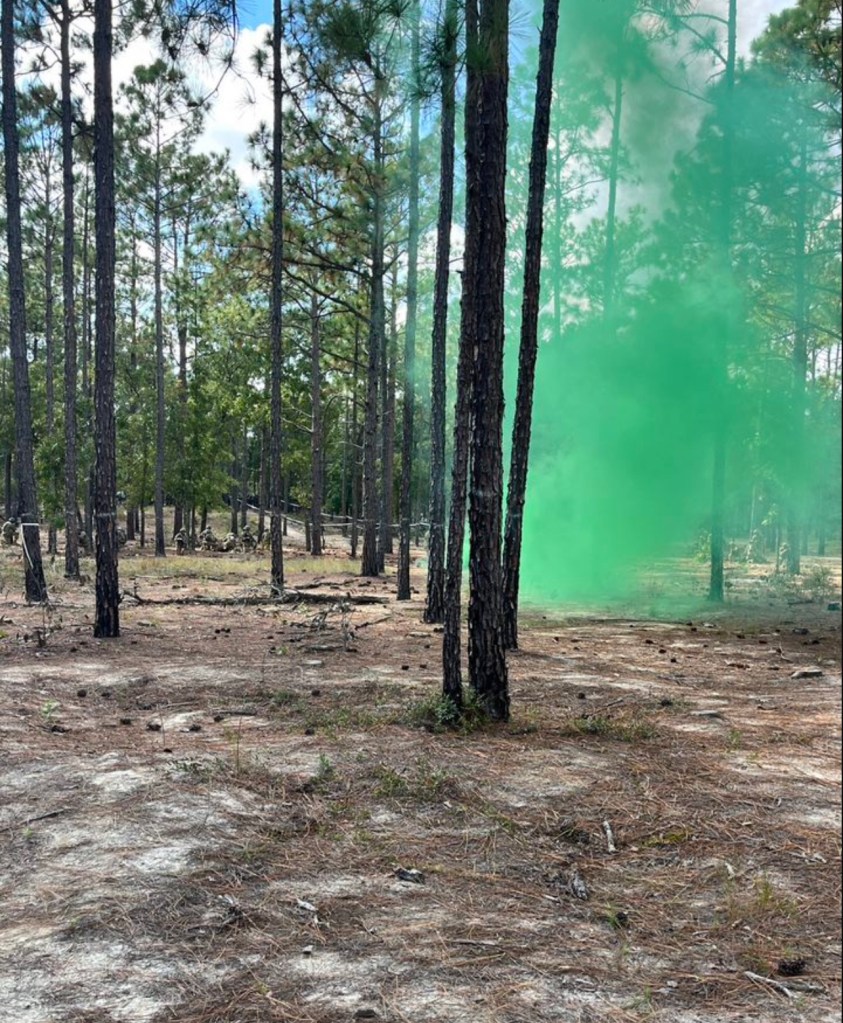
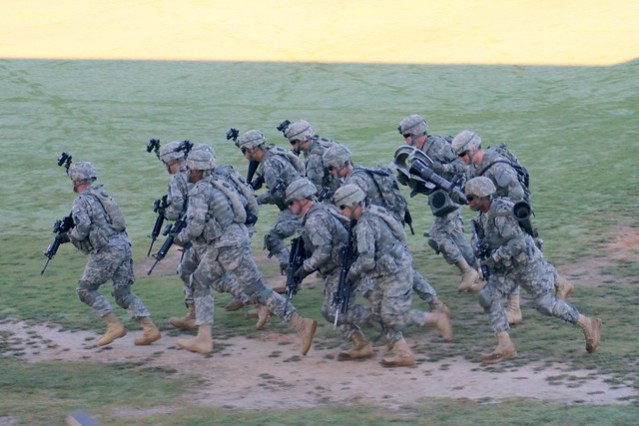
Next comes a demonstration by a squad of infantry in full battle dress, moving with M4 carbines and other weapons through smoke and pyrotechnics, showing what they will be able to do at the end of basic training.

The First 100 Yards ends with the drill sergeants marching trainees to their platoon bays to begin what will be the first two weeks of isolated training, known as “controlled monitoring,” as part of the Covid-19 safety protocols the Army began in the spring. Basic training is as tough as it has ever been, and the discipline is as strict as it has ever been, they are just dropping the shark attack. Welcome to the adult world.
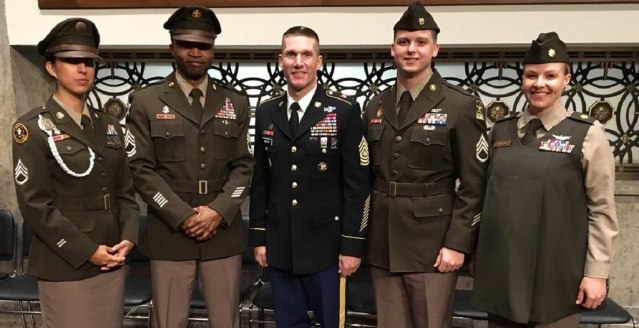
US Army soldiers are generally treated with great respect throughout this country. That respect is important, in that it fosters pride in being a soldier. Most soldiers are proud of being a soldier. They have confidence in themselves and their team, and they are part of something bigger than themselves, defending this country. Part of that pride is in wearing the uniform. World War II is the basis, the launch pad, of the modern Army. The Navy and the Marines have the same service uniforms they had in WWII. The Navy tried to stray off the uniform reservation once, but corrected itself. The Army has tinkered with uniforms since the 1950’s. Finally, starting in December 2020, new recruits will be issued the new Army Green Uniform, which is actually the old WWII uniform, and next summer it will be available for sale to all soldiers. Thank you.

Former Sergeant Major of the Army Daniel Daley, center, with soldiers wearing the new “Pinks and Greens” uniforms.

THE ARMY’S NEW MARKSMANSHIP PROGRAM

     When I went through basic training in September and October 1961 at Fort Knox, Kentucky, we used .30 caliber M-1 Rifles. The same rifles used in World War II. From there to infantry training at Fort Gordon, Georgia, where we used M-1’s, BAR’s (Browning Automatic Rifle), and A-6, .30 caliber machine guns. The same guns used in World War II. We zeroed, and qualified with our rifles on KD (known distance) ranges. Half of the company qualified expert on the 500 meter range. The M-1 had distance and accuracy, but it was heavy and only fired eight rounds at a time. When I got to the 82nd Airborne Division, March 1st 1962, it had 7.62 mm M-14 Rifles. A couple years later we got the 5.56 mm M-16’s, and although modified a couple times, M16A2, and M-4 Carbine, the Army is still using that same rifle. A replacement has been identified. Also, around that time the Army built pop up target rifle ranges. Waist up, man sized, green silhouettes, “pop-up” at distances from 50 to 300 meters. The soldier shoots from a fox hole, with a rest, and must hit a minimum of 23 targets to qualify, 23 to 29 hits gets a Marksmanship Badge, 30 – 35 a Sharpshooter Badge, and 36 – 40 an Expert Badge. That system has been used for the past 55 years.

     Every soldier must qualify with his or her weapon once annually. Combat arms soldiers do a lot of shooting, starting with the infantry, combat engineers, armor, and artillery. Many support soldiers only fire their rifle during annual qualification. There were instances in the first Gulf war, Desert Storm in 1990, of support soldiers taking a wrong turn and finding themselves in enemy lines. Some were killed and some captured, many were not proficient with their rifle, they had trouble firing back, and if their weapon jammed, they were sunk. Then the “no front lines” wars in Iraq and Afghanistan, put the lack of weapons proficiency by support soldiers on vivid display.
     For the past several years, the Army has been fortunate to have had some exceptional people at the top. Many changes have and are happening. After going through several years of relatively easy training, Basic Combat Training is now as tough as it has been since World War II. I know some people don’t believe that. It is not unnecessarily tough, it is physically tough, professional training. After the first couple weeks, basic trainees are having fun, some say the time of their lives. The standard army PT test of pushups, sit-ups, and run, that the Army has used for the past 50 years is out, replaced by a very demanding six event test, which is rapidly changing soldiers’ attitude toward physical fitness, and changing the way units conduct their physical fitness programs.
     This year, the Army is instituting a new Rifle Marksmanship Program. Under the old program, for the past 50 years, non-combat soldiers, once a year, drew their rifles, went to the range, zeroed the rifle on a 25 meter range, then went to the qualification range. Qualification firing was from a supported foxhole, with four magazines, each containing 10 rounds, stacked in front of the shooter. After 10 rounds were fired at the pop-up targets, the command “change magazines” came from the range control tower, then shooting resumed. If a shooters’ weapon malfunctioned, during firing, and he or she couldn’t immediately correct it, the shooter held up his hand and claimed an “alibi”, which caused a range cease fire until the weapon was functioning. When I was a Drill Sergeant, before the trainees moved onto the range, the drills would grab a rifle and go “knock down” the targets, to make sure they all worked. We all could hit 40 out of 40 targets. Someone once said that a drunk monkey could qualify as an expert, if given enough time on the range.
This past year the Army published TC (Training Circular) 3-20.40 Training and Qualification – Individual Weapons. It is 800 pages of specific guidance for weapons qualification, to be followed by every unit in the Army, regardless of the type of unit.
     Now all army units, regardless of the type, are mandated to conduct the same annual weapons qualification program. It starts with classes on how to properly zero their weapon.
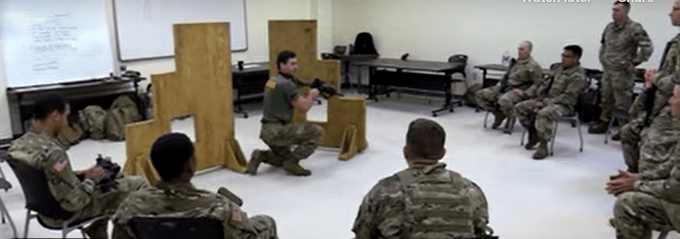
After which, the soldiers must pass a written and a hands-on test before moving to the next phase, which is firing with the simulator. The simulator is the army’s Engagement Skills Trainer, which is an elaborate, indoor, laser based unit with a large screen 26 feet from the firer, displaying terrain and targets, with feed back hits and misses. The rifle is of the same weight, producing sound and recoil very similar to the real thing.

Soldiers with the Louisiana National Guard practice marksmanship skills while attending a training course for the Engagement Skills Trainer II at Camp Beauregard in Pineville, Louisiana, Jan. 10, 2019. The EST II is a virtual simulation trainer that is designed to assist and improve a Soldier’s basic fundamentals of marksmanship, as well as collective and escalation of force training before going to a live-fire range. (U.S. Army National Guard photo by Sgt. Noshoba Davis)

After successfully firing on the Engagement Skills Trainer they go to the actual range for dry drills.
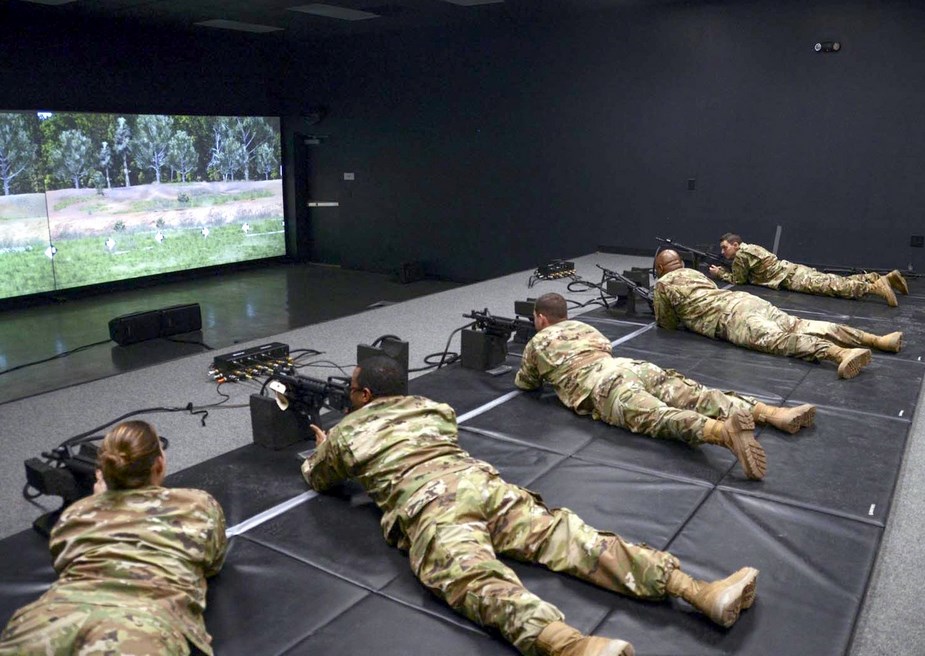
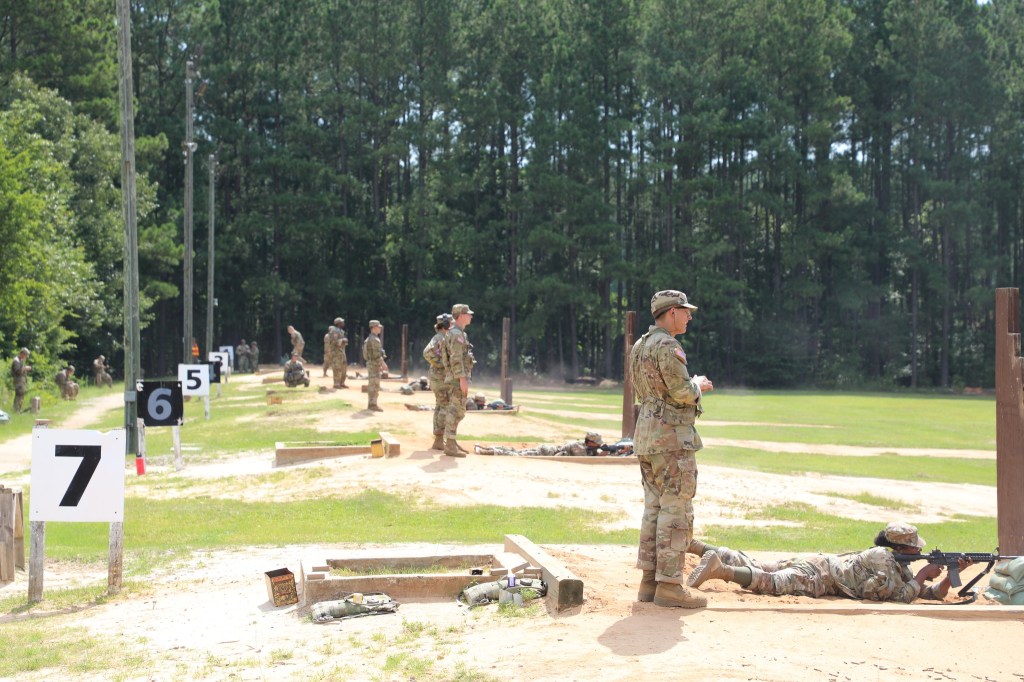
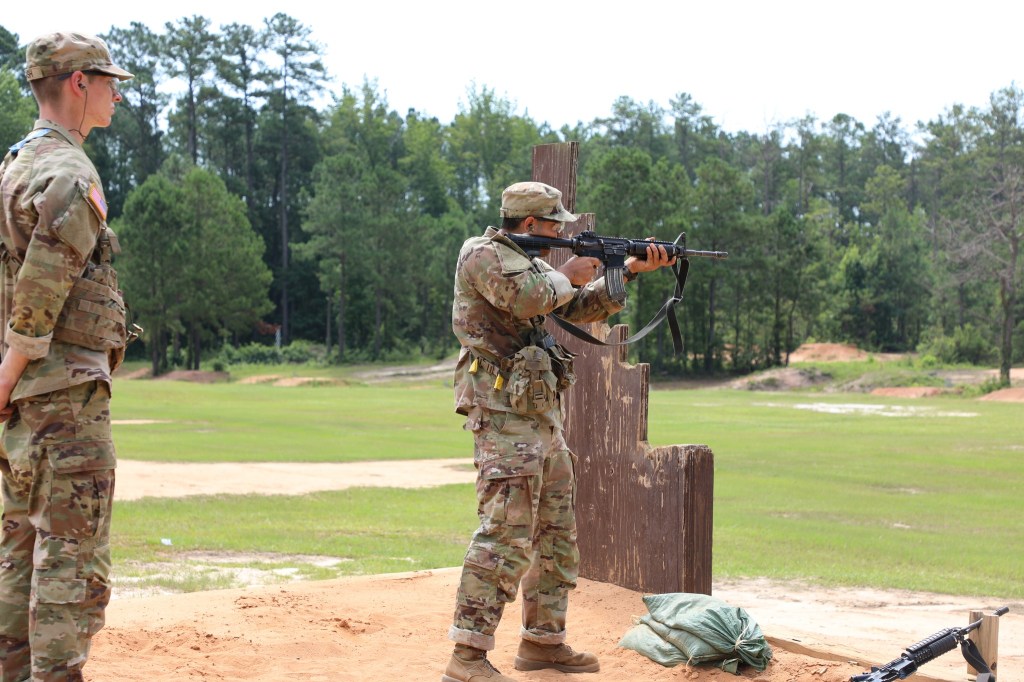
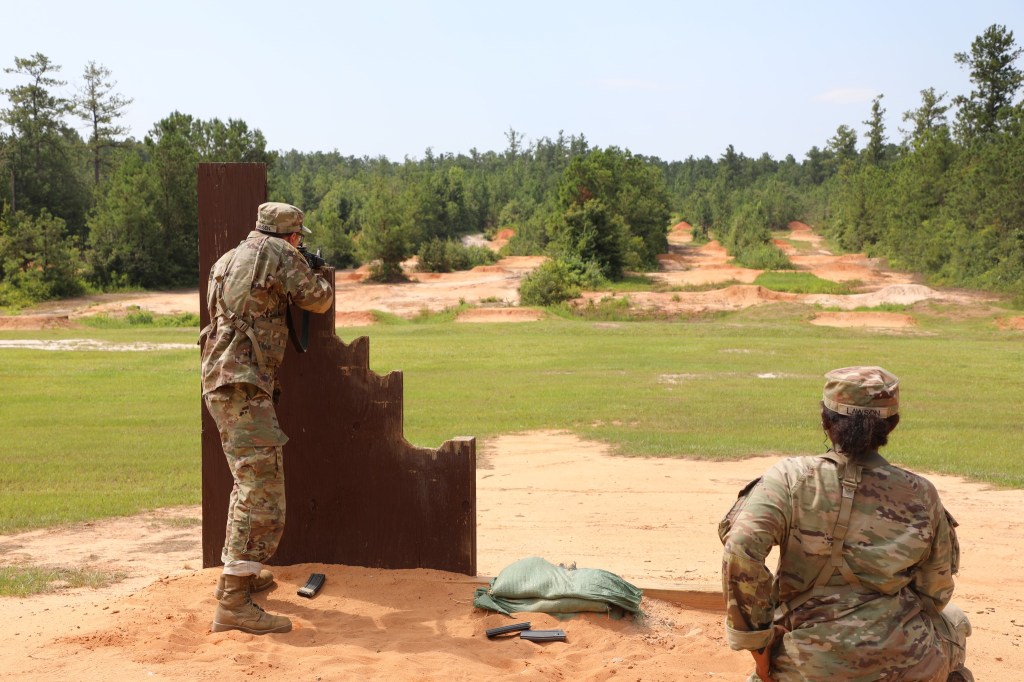
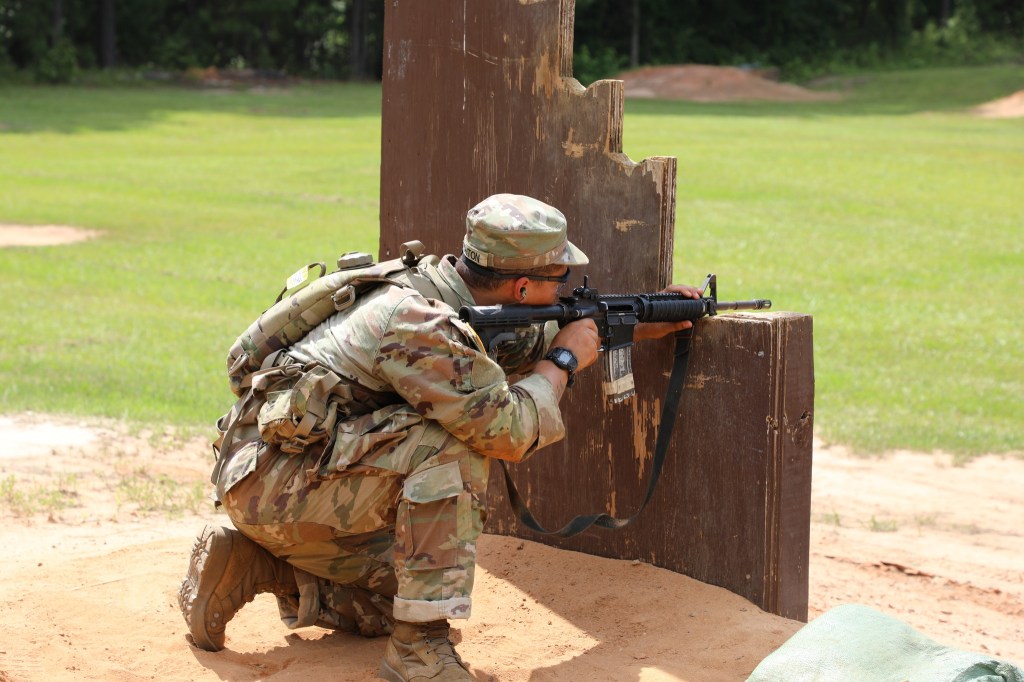
The dry drills are of how they will fire for qualification, which is not all in a rested foxhole, but in prone, kneeling, standing supported, and standing unsupported, and quickly moving between firing positions, just as they would do in combat, and with their ammunition magazines in their pouch, not laid out, and changing magazines automatically, not on orders from the tower. In fact, there are no orders from the tower, except, begin, and there are no alibies. If a weapon malfunctions, get it going or lose shots, because now instead of one target at a time popping up, as many as four pop up at one time. The old way took about 20 minutes to fire 40 rounds, this takes about four minutes.
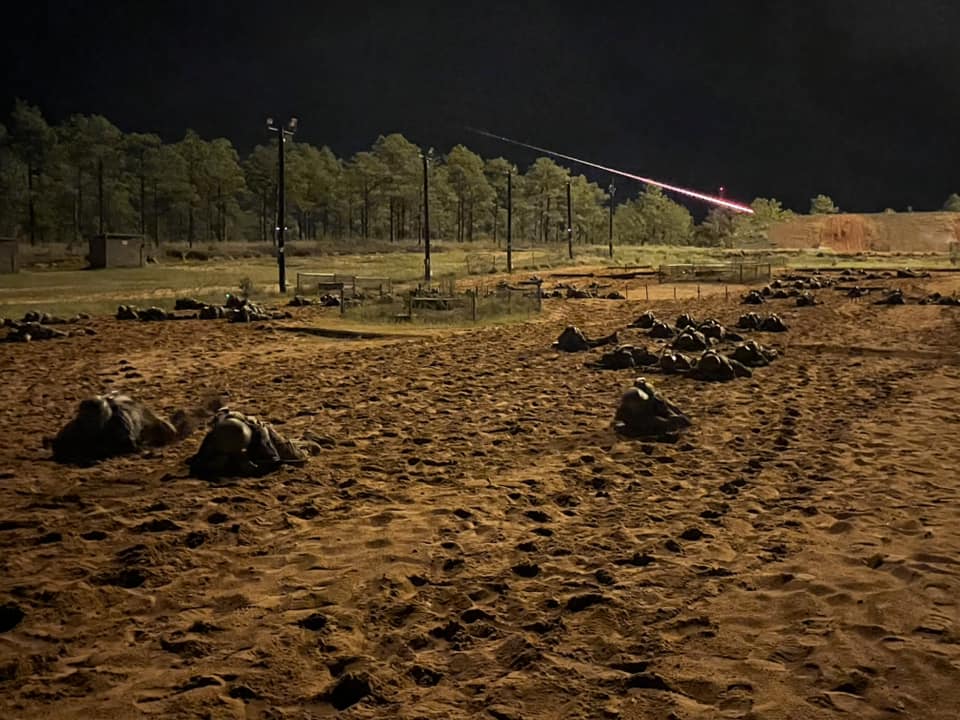
After the dry drills, they go to the zero range and zero their rifles. Next is practice qualification, go through trough the whole qualification, with live ammo, but for practice. Finally, qualification, but not just daytime firing. Qualification firing in daytime, daytime wearing gas masks, then night time firing, and night time firing wearing gas masks.
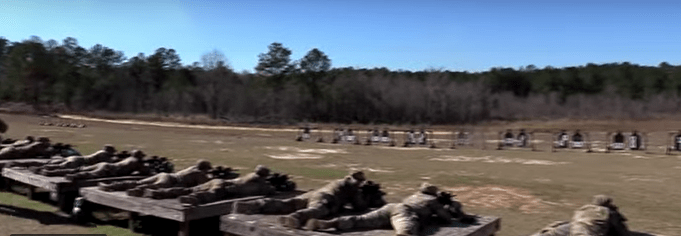
One sergeant rifle marksmanship instructor said that he always shot 40 out of 40 on the old way. His first time, while teaching the course, this way he shot 22 out of 40.

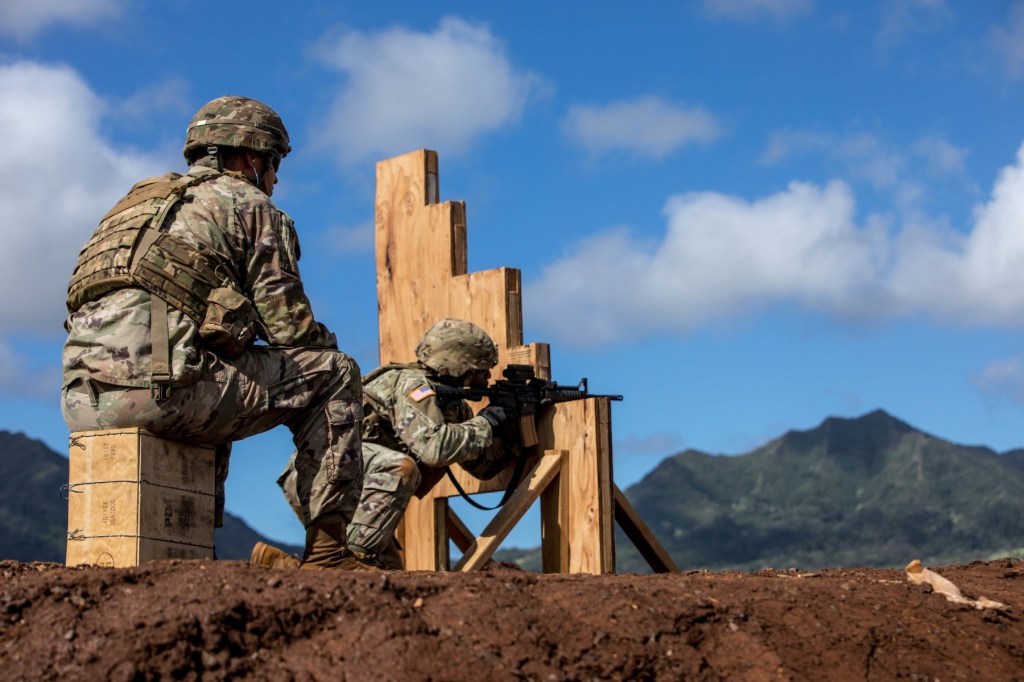
                                                 Standing unsupported

                                                         Prone unsupported

                                                    Kneeling supported

                                                       Standing supported

     Firers change positions on their own, starting with standing unsupported, just like a reaction to contact, then drop to the prone unsupported, then to a kneeling supported position, and finally to a standing supported. Under the old system, a soldier could fire “Expert” without hitting a 300 meter target. Now there are five exposures of the 300 meter targets, so at least one has to be hit to qualify as an expert,
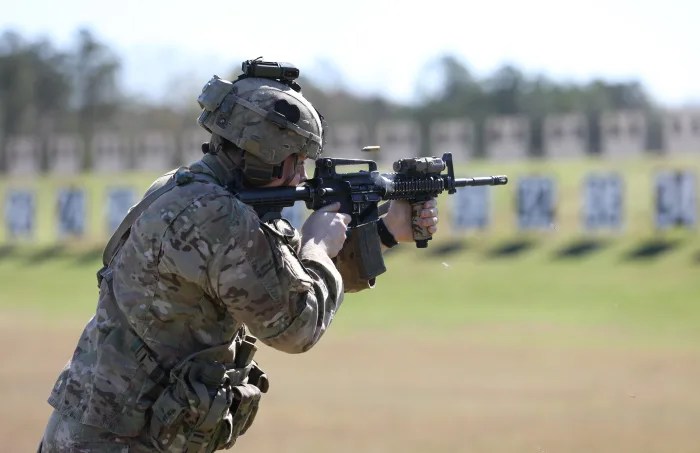
     Aside from doing their job to the best of their ability, the Army wants soldiers to be physically fit and good shooters.
     Carly Schroeder, an actress who has starred in over a dozen movies, Lizzie McGuire, Mean Creek, and most recently Ouija House, turned 29 this past October, and Hollywood guestimates her net worth at around a million dollars. She also graduated from California Lutheran University with a double major in communications and psychology. In March 2019, she enlisted in the Army for OCS (Officer Candidate School), her intention was to try to get into Military Intelligence. She completed basic combat training at Fort Jackson, South Carolina, in July 2019, and moved to Fort Benning, Georgia for OCS. During OCS, she had a change of desire and graduating in September, she was commissioned a second lieutenant and branched Infantry. She then completed the 17 week Infantry Basic Officer Leadership Course, during which she, not only qualified expert in the new army marksmanship program, she was the high shooter in her class, beating all the guys. She also successfully completed Ranger school this past June, and is now an airborne ranger infantry lieutenant, somewhere in the Army – no publicity, she is now a REAL soldier.

BENEFITS OF SERVING IN THE ARMY

This was originally published in The Belle Banner, Belle Missouri, on November 27th 2019. If you would like to see the current articles as they are published, you may subscribe to The Belle Banner by calling 573-859-3328, or email tcnpub3@gmail.com, or mail to The Belle Banner, PO Box 711, Belle, MO 65013. Subscription rates are; Maries, Osage, and Gasconade County = $23.55 per year, elsewhere in Missouri = $26.77, outside Missouri = $27.00, and foreign countries = $40.00.
First, is pay. Military pay is established, by law, every year in the National Defense Authorization Act (NDAA), which is past each fall to fund the Department of Defense. The pay charts change every January 1st, with raises (or not) calculated by the increase in the Employment Cost Index (ECI), which is published quarterly by the Bureau of Labor Statistics to reflect changes in total employment compensation. Traditionally, in August the President proposes military pay increases either based on the ECI or not, with justification, if different. Congress has the final say, and for the past several years, military pay raises have adhered to the ECI, regardless of which party was in power.
The military pay chart on this page only goes to 20 years and displays officers to the rank of colonel. The complete chart goes to four star general and increases to 40 years. This reflects basic pay only. The shaded areas reflect a normal progression in rank for an enlisted soldier and an officer. The actual pay soldiers receive is sometimes less, after deductions for social security, Medicare, federal and state income taxes, and retirement thrift savings plan, and sometimes more with additions such Basic Allowance for Housing (BAH), Basic Allowance for Subsistence (BAS), special duty pay, hazardous duty pay, diving pay, flight pay, and more.


All military pay is paid by direct deposit to service members bank accounts, from the Defense Finance and Accounting Center in Indianapolis. Monthly pay is divided in half and paid on the 1st and the 15th of each month, unless those dates fall on a weekend or a holiday, in which case the payment is paid the day prior. Military pay is automatic, whether the soldier is in a combat zone, on leave, in the hospital, or sick in bed at home. Benefit = steady pay check. A huge difference between civilian life and military life is the soldier does not worry about keeping a job.

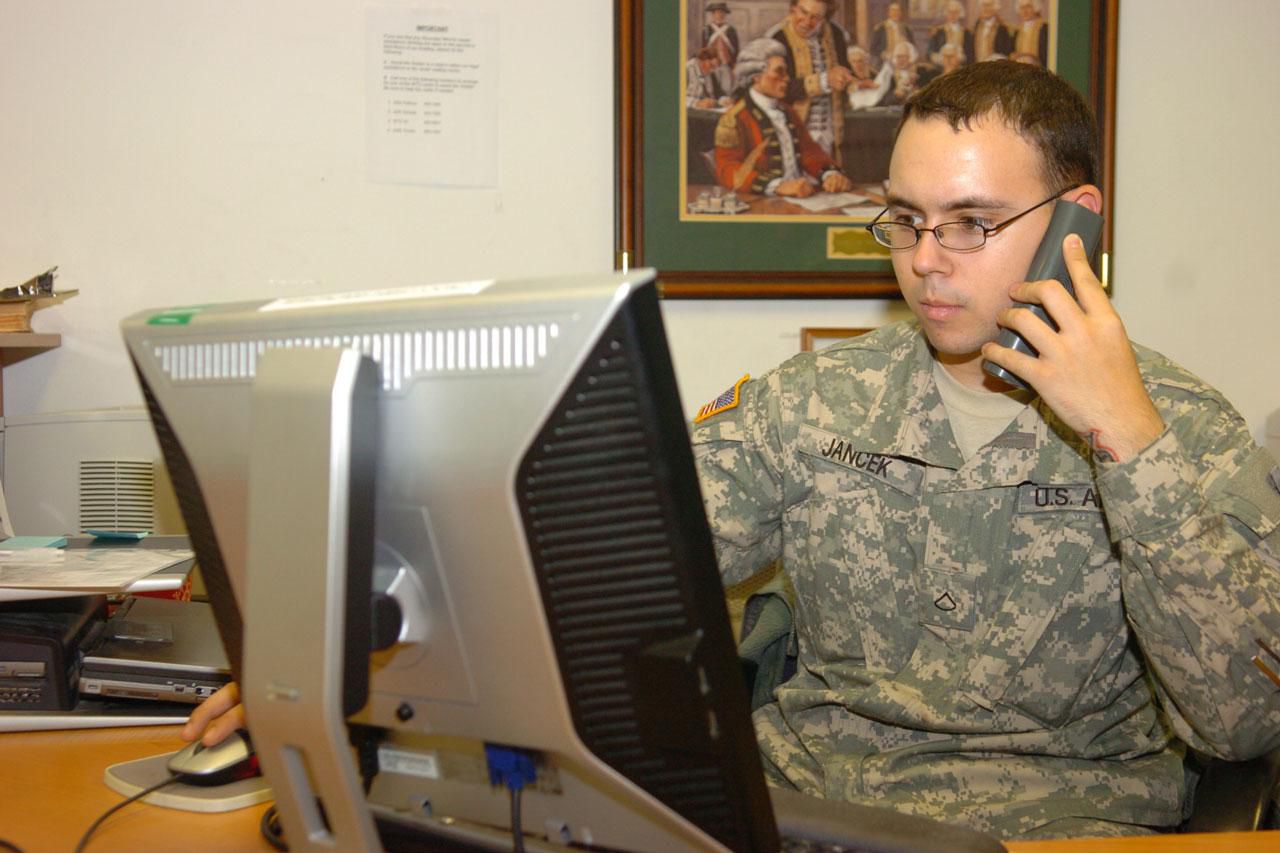
      Some soldiers like this Paralegal Specialist work hard at a desk all day.

Pay is different for a married soldier from a single soldier. Almost 70 percent of soldiers are now married, so families are now an integral part of the Army, and the military pays the married soldier more to take care of his or her family. The extra is called Basic Allowance for Housing (BAH). The amount varies according to the cost of living in each location, and increases with rank. Soldiers in ranks private through specialist receive $876 in this area (Fort Leonard Wood), $924 at Fort Polk, Louisiana, $1,056 at Fort Hood, Texas, and $1,134 at Fort Bragg, North Carolina. The BAH for a staff sergeant E-6 in this area is $1,038. These figures are expected in increase by around 3.2 % starting January 1st. Actual amount will be announced in mid-December. BAH is for housing the soldier’s family, if the family lives in family housing on the fort, the married soldier doesn’t get the BAH. However, on post family housing means a nice house, with all utilities and maintenance, including lawn maintenance in the summer, provided. A great deal for low ranking young couples, and most forts now offer family housing to all ranks from private up. A married soldier, who is living in the barracks, his or her family is not with them, is still paid BAH because that is for their family’s housing.
A married soldier living with his or her family on or off post, not in the barracks, is also paid Basic Allowance for Subsistence (BAS), which is currently $369.39 for enlisted soldiers. That is the monthly cost of meals in a Dining Facility. Soldiers living in the barracks eat free in Dining Facilities. BAH and BAS are not taxed.
Pilots and aircraft crew members, paratroopers, divers, drill sergeants, recruiters, and a few others are paid extra.
A Private (slick sleeve) single soldier, who has completed initial training and has finally arrived at a permanent duty station, claiming single with one deduction for tax purposes, after all deductions will have about $780 deposited in his or her bank account on the 1st and again on the 15th of the month. If they took the airborne option and are on jump status, that will be around $835. A Specialist E-4, with over 2 years in service will have around $940 deposited each payday. These are soldiers living in the barracks (dorms) and eating in Dining Facilities.

                            Soldiers living in the dorm eat in the DFAC free.

For a married Private living with his or her family in on post family housing, claiming married with two deductions, that deposit would be around $1,020. That calculates to a take home pay of about $470 per week, which is in the $15 per hour range, but when you throw in the cost of a house, electricity, water, sewer and trash pickup, plus complete, no co pay, no deductible health care for the whole family, you’ve got to be in the $25 to $30 an hour range, which makes that married private equal to his or her civilian friends making over $50,000 a year. A married Sergeant First Class E-7 with 10 years in service, living off post around Fort Leonard Wood (bought a house), claiming married with three deductions, and having 5 percent deducted for the Thrift Savings Plan, will have about $2,415 deposited on the 1st and again on the 15th of each month. That calculates to a weekly take home pay of around $1,115 per week, plus the free health care. The money is OK.
All military health care is managed through a giant government supervised insurance company called “Tricare”. Health and dental care for an active duty service member is free in military hospitals and clinics. Health care for family members of active duty soldiers is basically the same, there are different plans for remote locations and overseas. Tricare dental insurance for the family is $30 per month regardless of the size of the family. Military retirees, who are under the age of 65, pay $297 for only themselves, or $594 annually for the family, then a co-pay of $20 per doctor visit. Military retirees over age 65 are enrolled in “Tricare for Life”, for which there is no cost, at all. No annual fees and no co-pay, and it pays everything that Medicare doesn’t. As retirees age that becomes a huge benefit. The Army has some great medical facilities and people. We were both in our early 50’s, when my wife had major spinal surgery at Fitzsimons Army Hospital in Denver in 1995 (it’s no longer there). A large benign tumor was pressing her spinal cord and had already broken her spinal column. The doctor (neurosurgeon) who performed the surgery was a Ranger, the only doctor Ranger I ever saw. After 12 hours of surgery, he flopped on a couch beside me, and in 5 minutes explained exactly what he and his orthopedic assistant did. He went on to become Chief of Neurosurgery at Walter Reed, during the Iraq and Afghanistan wars, and having just retired from the Army was called to help save Gabby Gifford’s life in January 2011, when she was shot in the head in Arizona. Colonel (Retired) (Doctor) James M. Ecklund.
Another great benefit in the Army, is “time off”. Every soldier gets 30 days paid vacation (leave) per year. Leave time accumulates at the rate of 2 ½ days per month, and many soldiers often accumulate more than 30 days leave before they use it, because there is plenty of time off. Soldiers, who are not training in the field or on some kind of occasional duty, are normally off from about 5:00 PM to 6:00 AM for PT (physical training). On Friday, that means they are off until Monday morning. Plus, there are three and four day weekends. In most combat units that train hard, Commanding Generals, if at all possible, designate the Friday before a holiday weekend as a “training holiday”. Most people like to get home at Christmas and in the summer, during good weather. As a result of frequent deployments to Iraq and Afghanistan, many combat units try to schedule block leaves around the Christmas/New Years holidays, and again in the summer.

                                        Some soldiers play hard after work.

    Some soldiers play games at the Fort Leonard Wood Gaming Room.

The Post Exchange (the PX), is officially the Army Air Force Exchange System (AAFES). AAFES is run by the Army and the Air Force, but is a “for profit” company that competes with all the off post stores, so the prices are very close to the lowest prices off post. Every Army post has a main PX and several small annex’s, like quick stops. The Main PX is like a giant department store, on post and available to soldiers, which caters to soldier’s desires. The main PX on Fort Leonard Wood now carries several higher quality more expensive lines of clothing, desired by soldiers and their families. Profits from AAFES go to the Morale Welfare and Recreation (MWR) fund.
The MWR office on army posts are in the business of soldier and family recreation. Bowling, golf courses, swimming pools, paint ball, gaming centers, and many more. They sell hunting and fishing permits, they rent everything from boats and trolling motors, trailers, tents, gas BBQ grills, bounce rooms, horse shoe sets to all kinds of personal athletic equipment. Fort Leonard Wood MWR rents horse stables on post for $125 per month per stable.

                             Soldiers do physical training in the morning.

SOFT SOCIETY TO HARD SOLDIER

This was originally published in The Belle Banner, Belle, Missouri, October 30th 2019.  If you would like to subscribe to The Belle Banner, you can call 573-859-3328 or mail to PO Box 711, Belle, MO 65013.  Subscription rates are; $23.55 for Maries, Osage, and Gasconade counties, $26.77 for elsewhere in Missouri, $27.00 for outside of Missouri, and $40.00 for foreign countries.

We have become an overweight, soft, out of shape society. Why?
As a little boy, I spent a lot of time at my grandparents’ house. They were 60 years old before they had electricity. They cooked and heated with wood, which had to be cut, sawed, carried in and placed in the stoves. They milked cows every morning, separated the cream, made butter and cottage cheese. They grew a large garden, most of which had to be canned in the fall. Fall was also butchering time, steers and hogs. Pork was salted down and placed on racks in the smoke house, and beef was smoked and dried or canned. They had chickens for eggs and meat. Sweets, cakes and pies were special. Hay was cut and put up loose in the summer, because in the winter the cows still had to be milked and fed even when there was snow on the ground. Family and neighbors helped each other. They lived through the Great Depression. They were not overweight. They were slim and tough.
During World War II, the United States of America put almost 12 million men in uniform. When America came home from the war, life started getting better. The war jump started a great economy, jobs were plentiful and electricity reached rural America. My father was the general contractor who built most of the rural electric lines, for Three Rivers Electric Coop, in this area in 1949 and 1950. We got our first television in 1955. The TV was for night viewing, not daytime. Perhaps TV was the start of soft kids, because daytime TV soon followed, and many of our parents, who had grown up during the Great Depression and lived through World War II, wanted their children to have things better than they had. Parents relaxed discipline, and many stopped attending church. Spanking an unruly kid in public became a crime. Now, some parents even defend their undisciplined children to teachers and school staff. Physical education was reduced or made not mandatory in many schools. The term “Couch Potato” was born. I know people who were normal slim kids who left home, got married and apparently got addicted to soft drinks and chips, and now in their old age, 50’s and 60’s, they have serious health issues.
The America I grew up in has been under attack all of my life. In 1941, after the Soviet Union attacked Finland, Finnish soldiers found a charred Soviet code book and passed it to the OSS (Office of Strategic Services), the forerunner of the CIA. Using that code book, in February 1943 the US Army Signal Intelligence Service started the “Venona Project”, which was the intercepting and decrypting of messages from Soviet intelligence agencies. That project ran until October 1980, and many of the messages were declassified and released to the public in 1995. The released messages removed any doubt as to the guilt of the Rosenberg’s. Julius and Ethel Rosenberg, husband and wife, were convicted and executed by electric chair in June 1953 for treason, the passing of US atomic secrets to the Soviet Union. Also, in the early 1950’s Senator Joseph McCarthy, from Wisconsin, claimed that communists had infiltrated our government. In 1953, starting his second term, he chaired the Senate Committee on Government Operations. He held hearings and charged many government employees as being communists, and many lost their jobs, but when he went after the US Army and the hearings were broadcast on national television, people saw an overbearing and intimidating Senator McCarthy. He lost his power and was censured by the Senate. The press ridiculed him, saying that he saw a communist behind every bush. The release of the Venona Project files, revealed that there were, in fact, communists in very high positions in our federal government, and that they were targeting the United States education system.
When the Vietnam war cranked up in 1966, President Johnson eliminated student deferments to the draft. Student organizations against the war sprang up all over the country, most all were either solidly communist or organized and ran by communist sympathizers. Students for a Democratic Society (SDS) and Weather Underground were two of the most solidly communist. Many of those protestors stayed in college, becoming ‘professional students’, achieving masters and doctorate degrees and then becoming university and college professors, teaching that socialism (communism) is the “most fair” form of government. We now have a couple generations of elementary and high school teachers who have been taught socialism. Many did not accept the premise of socialism, but many did. Communists (socialists) hate religion, because a belief in God infers a higher power than the state (government), and for socialism to be implemented the government must have ultimate power, so for the past 50 years religion has been under active attack. Schools and government organizations have been forbidden to make any reference to God.
Now we have many young people graduating from high school who are not physically fit, have no self-discipline, and little, if any, respect for authority. Many would rather play video games, or their cell phone than baseball, basketball, or football.
There are about 34 million Americans between the ages of 17 and 24. Of that 34 million, 71%, 24 million are ineligible to serve in the military, even if they wanted to, because of obesity, no high school diploma, or criminal or drug use record. Of the 10 million who are eligible, only about one percent, according to the Department of Defense, are inclined to have any conversation about military service. The US military comprises about .04 percent of the US population.
When the “me generation” started coming from the couch and the computer into the Army, the Army adjusted. Basic Combat Training (BCT) became easier, drill sergeants changed the way they dealt with young people who questioned everything and had never been yelled at, some never having been corrected about anything. The result was undisciplined, out of shape, untrained soldiers going out into the Army. The first war in Iraq, Desert Storm in 1990, revealed that support soldiers were out of shape and not proficient with their weapons, and the Army started relying too heavily on technology allowing combat soldiers to navigate with GPS, without basic land navigation training. Then the wars in Iraq and Afghanistan displayed the need for soldiers to be in much better physical condition. A few years ago, there was a leadership change in the Army, and with it a complete change in attitude. Strict discipline is now the norm in Basic Combat Training, which is now as tough as it has been since World War II. Infantry training has been extended, with armor and combat engineers to follow.
After years of study of events that would reveal how prepared soldiers are for combat, the ACFT (Army Combat Fitness Test) has arrived, and by October 1st 2020 it will be the norm throughout the Army, including Basic Combat Training. It is six event test that does require extra equipment, and a change in physical training. Weight lifting, dead weight draging, backward medicine ball throw, chest on ground hand release pushup, a 2 mile run, and the leg tuck, which is holding a horizontal bar and bringing the knees up to touch the elbows. There is no adjustment for age or gender. The standards are the same for men and women regardless of age. It is a test to show how prepared a soldier is for combat. There are now women in the infantry – the standards are the same for all.

Staff Sgt. Cassandra Black, 70th Regional Training Institute, Maryland National Guard, participates in the leg-tuck portion of the Army Combat Fitness Test (AFCT) May 17, 2019, during the Region II Best Warrior Competition at Camp Dawson, West Virginia. This four-day event is designed to measure the physical abilities, leadership skills, teamwork and critical thinking of Soldiers from the West Virginia, District of Columbia, Pennsylvania, Delaware, Maryland and Virginia Army National Guards while completing basic and advanced warrior tasks to crown the region’s best warrior. (U.S. Army National Guard photo by Bo Wriston)

Army uniforms are also changing. The new Army uniform, which will start being issued next summer, 2020, is almost a knock off of the World War II uniform, down to the brown shoes. The current blue uniform will be kept for formal wear. Basic soldiering in this ultra hi-tech Army is going back to its roots in World War II. While attempting to increase the size of the Army, standards have not been lowered, and training is longer and harder.

                         New Army uniforms compared to World War II uniform.

I have written before about how the United States Army is the most feared army in the world, not because of size or weaponry or technology, but because of the trust and confidence placed in the individual soldier. If an infantry company is helicoptered into a hot area and becomes scattered, individual soldiers form together, because all have been briefed on the complete mission, and they attack their objectives, even if there are no officers or sergeants present. None of our potential adversaries can do that. The US Army is the smartest, the most morally healthy, best trained, and will soon be the most physically fit army in the world

                                          Paratrooper in the air and landing.

So, who is going into our Army now? A former Belle girl, Haley Shanks, graduated from Basic Combat Training at Fort Jackson, South Carolina on October 17th. The guest speaker at the graduation ceremony was Command Sergeant Major (CSM) Martin S. Celestine, who is the CSM of the Infantry and Armor Center and Fort Benning, Georgia. In his remarks, he gave some details about the group graduating from BCT. They ranged in age from 17 to 39, yes 39, they came from 48 states, and an ethnic background of 30 countries. This may surprise many people. Forty one percent (41%) of the 1,123 new soldiers on the field, that day, had at least an Associates Degree, thirty nine percent (39%) had bachelor’s degrees, and six percent (6%) had masters degrees.

                         Haley Shanks BCT company passing in review.

                2nd Battalion 39th Infantry BCT Graduation 17 Oct 2019.

Haley is now at Fort Benning, Georgia, where in three weeks she will make five parachute jumps, two with combat equipment, one of them at night and become a US Army Paratrooper. Then, on to Fort Lee, Virginia where she will learn how to pack all kinds of parachutes, and rig heavy drops from pallets to small tanks, becoming a parachute rigger. HOOAH!!!!
SUICIDE

This was originally published in The Belle Banner, Belle Missouri March 13th 2019.
This was just published a few weeks ago, but I want to get it online now because of the seriousness of the subject.

For the past month one of the big news items has been that military suicide is at an all-time high. The figures released by the Department of Defense of active duty suicides in 2018 are; Marines – 57, Navy – 68, Air Force – 58, and Army – 138. Marines, sailors, and airmen who take their own lives are often young people who have never deployed. The causes, which have been identified, are what you might expect, relationships, marriage problems, and financial problems, but in the Army the overwhelming majority come from special operations, and in particular Special Forces – the Green Berets. These are older men who have been deployed over and over and over for the past 15 years. Suicides within that group tripled in 2018, and after they leave the Army they are still a large percentage of veteran suicides.
If you overwork anything, it will wear out. That has been the message Special Operations Command (SOCOM) leaders have been telling congress for the past several years. Most of the work of Special Forces is classified. The shadow warriors. The silent professionals. There are five active Special Forces Groups with a total of less than 5,000 Green Berets, and there are two National Guard Groups. Two years ago the Commander of the US Special Operations Command testified before the House Armed Services Committee that Special Forces were deployed to 138 countries, or about 70 percent of the world.
When we were first married in 1966, Special Forces was a big attraction to us grunts in the 82nd Airborne Division at Fort Bragg, North Carolina. They were getting promoted much faster than we were. My wife Betty said “No way”. Our SF neighbors would go on a three month deployment, come home for 30 days then go on a six month deployment to Vietnam, and then repeat it over and over. The rumor was that the SF divorce rate was 70 percent, I don’t doubt it. We had been married six months when I went to Vietnam the first time. Guess where I got assigned – the 5th Special Forces Group.
In Special Forces an Advise and Assist mission means a 12 man A Detachment (A Team) is sent into a backward undeveloped country that is at war with its neighbor. The team’s mission is to train an army, with little outside support, and take it into combat. They also go into modern developed nations to train them in unconventional warfare (guerilla fighting). They go on medical assistance missions to undeveloped nations. When the United States of America invaded Afghanistan it was with one 12 man Special Forces A-Team. Twelve Strong. In Iraq, Afghanistan, Syria, Somalia, and several others Green Berets have been engaged in combat over and over, with most of it classified, so they can’t talk about it.
During my time in the Army, Sergeants didn’t show emotion, it was a sign of weakness. The only place you could release those inner feelings was at home. That is apparently still the case. There are stories from wives of Green Berets who committed suicide, about the change the wife saw in her husband after several deployments. Complete personality changes. Even after urging from their wife the soldiers would not seek help, because they would lose their security clearance and possibly get kicked out of SF or of the Army. I knew a couple soldiers who had nervous breakdowns. One Personnel Sergeant was able to recover and stay in the Army. The other committed suicide.
Everything the Delta Force does is classified. If you want to know more about Delta, read “Inside Delta Force” by Eric Haney. He and I were on orders to the first Delta assessment class, I didn’t go, he did and made it, and spent several years as a Delta Operator. He then wrote the book and was technical advisor on the TV show “The Unit”. The Command Sergeant Major (CSM) of the US Special Operations Command, Chris Farris, came up through the ranks of special operations, having spent 18 years as a Delta Operator. After many repeated deployments, CSM Farris and his wife Lisa, saw their marriage coming apart. They vowed to fix it, and they did. For the past few years they have together visited special operations groups everywhere, held town hall meetings, and appeared on television, urging soldiers to confront their problems and get help, if necessary. CSM Farris said that he didn’t think that he was suffering from traumatic stress, but an examination identified three spots on his brain that showed traumatic brain injury. He could only remember one incident of being “blown up”, but thinking back he recalled repeated training on breeching. Breeching is basically blowing open a door or an obstacle with a big explosion, and immediately going through it, so you have to be as close as possible when you blow it open.
Career soldiers have an attachment to and a love for the Army that is hard to explain to people who haven’t been there. The more elite the unit, the stronger the attachment. I pulled strings to get my last job in the Army at home, in the ROTC Department of MS&T (then University of Missouri-Rolla). I knew in the back of my mind that it would be my last assignment. I was home, helping Dad and Mom on the farm, my kids going to school where I and my Dad went to school, reconnecting with old friends and relatives, but that didn’t change the devastating trauma I felt taking off the uniform. I don’t regret retiring then, because I got to spend the last 14 years of my Dad’s life with him, and that was more important, but leaving the Army was traumatic.
During my first tour in Vietnam, with Special Forces, I contracted hepatitis from eating some really bad stuff. Our medic said; “You got yellow jaundice man, you got to go to the hospital.” Two months later, when I was released from the hospital in Japan, I was told that since I had only been in country nine months and two weeks, I had to go back, because anything less than 10 months was considered an incomplete tour. My enlistment was about up, so I got out of the Army. Two years later, after selling new and used cars in Fayetteville and Charlotte, North Carolina, I couldn’t stand it anymore so I went back to the Army. Leaving the Army was like leaving a family that had cared for me for over twenty years. I was then a civilian, making a living just like everyone else, something that doesn’t concern soldiers.
A few years ago I attended a Veterans Day assembly at my grandson’s school in Ballwin. A speaker there was a man about 40 years old. He talked about his high school friend who was a star athlete, set athletic records at their school, and was smart and good at everything. His friend had scholarships, but wanted to go into the Army. His friend spent several years in the Army. He said that he saw his friend one day, wearing an old army field jacket, sitting on a bench at the Barnes Hospital complex. His friend slept on benches or under bushes. He said that he ask why, “You have family here.” His friend said yes but they just don’t understand, they just don’t understand.
It is an honor to serve in the Armed Forces of this great country. Most people who serve, do their job and their time, get out and go on with life. Over 17 percent of those who enlist, stay for a career. It is a protected and secure life, leaving it can be traumatic. I think problems veterans have will surface shortly after their leaving the service, so it you know a recent veteran who appears to be struggling, offer to help or encourage them to get help.
On March 6th President Trump signed an Executive Order creating a task force to study and attempt to reduce veteran suicide. Prayers with that task force. The active army is already taking action. Senior leaders like CSM Farris and a few generals are starting to go public with their battles with service connected stress, in an attempt to get the soldiers who are suffering to seek help. The inner culture of special operations does not encourage soldiers to admit that they are suffering.
The Army is having trouble increasing the number of soldiers, therefore having trouble increasing the size of special operations. Perhaps the United States needs to reduce the number of missions around the world.