This was originally published in The Belle Banner, Belle Missouri February 28th 2018. If you would like to see the current articles as they are published, you may subscribe to The Belle Banner by calling 573-859-3328, or email tcnpub3@gmail.com, or mail to The Belle Banner, PO Box 711, Belle, MO 65013. Subscription rates are; Maries, Osage, and Gasconade County = $23.55 per year, elsewhere in Missouri = $26.77, outside Missouri = $27.00, and foreign countries = $40.00.
There is another Army about which I have not written, until now. It is like a separate Army within the Army. It is the largest professional component of the US Army. Over twenty percent of active duty soldiers are in that command/department. It has dozens of military jobs for which an individual can enlist, be trained and perform, then leave the Army and do the same thing in a civilian setting at a good salary. One of the greatest dangers in that command is becoming overweight and out of shape.
The US Army Surgeon General, Lieutenant General Nadja Y. West, is the head of the Army Medical Department (AMEDD) and also the Commander of the US Army Medical Command (MEDCOM). MEDCOM supervises through four Regional Health Commands, worldwide, 8 Army Medical Centers, 13 Army Community Hospitals (like the one at Fort Leonard Wood), 29 Army Health Clinics, 81 Primary Care Clinics, 8 Occupational Health Clinics, 99 Dental Clinics, 42 Veterinary Facilities, 33 Research and Development Laboratories, 5 Laboratory Support Activities, 10 Combat Support Hospitals, 16 Forward Support Surgical Teams, and six active Medical Brigades, plus other smaller units. All wear the same shoulder patch, all are part of MEDCOM.
MEDCOM says that on an average day, worldwide they will have 55,000 outpatient visits, fill 57,000 pharmacy prescriptions, do 85,000 lab procedures, give 9,400 shots, do 25,000 dental procedures, 13,000 radiology procedures, admit 253 patients to the hospital, and deliver 71 babies.
Medical Doctors, MD’s and DO’s, are in the Army Medical Corps, Nurses are in the Army Nurse Corps, Dentists are in the Dental Corps, Doctors of Veterinary Medicine are in the Veterinary Corps. The Medical Service Corps includes psychologists, social workers, optometrists, pharmacists, podiatrists, and audiologists. Officers in the Medical Service Corps also serve in many hospital administrative, logistical, and research positions. The Medical Specialist Corps has clinical dieticians, physical therapists, occupational therapists, and physician’s assistants. Medical doctors are separately identified into one or more of 41 specialties from family practice to orthopedic surgery to neuro surgery.
There are 23 enlisted military occupational specialties (MOS’s) in the medical field; 68A Biomedical Equipment Specialist, 68B Orthopedic Specialist, 68C Practical Nursing Specialist, 68D Operating Room Specialist, 68E Dental Specialist, 68F Physical Therapy Specialist, 68G Patient Administration Specialist, 68H Optical Laboratory Specialist, 68J Medical Logistics Specialist, 68K Medical Laboratory Specialist, 68L Occupational Therapy Specialist, 68M Nutrition Care Specialist, 68N Cardiovascular Specialist, 68P Radiology Specialist, 68Q Pharmacy Specialist, 68R Veterinary Food Inspection Specialist, 68S Preventive Medicine Specialist, 68T Animal Care Specialist, 68U Ear, Nose, and Throat (ENT) Specialist, 68V Respiratory Specialist, 68W Healthcare Specialist (Combat Medic), 68X Behavioral Health Specialist, and 68Y Eye Specialist. Plus 68Z is a Chief Medical NCO (Non-commissioned Officer) (sergeant). And outside the Army Medical Department (AMEDD) is the Special Forces Medical Sergeant, MOS 18D.
Most of those MOS’s are employed in hospitals or clinics in the Medical Command. Dental people are of course in Dental Clinics and the Animal care folks are in the post Vet Clinics. Every post has a vet clinic to care for pets. The Healthcare Specialist, the 68W (68 Whiskey) can be assigned to a hospital or to a combat unit. Every infantry rifle platoon has a medic attached when in the field. I never had a bad medic. Airborne infantry is light infantry, it rarely gets to ride. Our medics carried everything that the grunts carried plus a 50 pound medical bag, and they were always with us. So far, the Army has avoided sending female medics with infantry units. However, the Iraq and Afghanistan wars blurred the lines of where combat could be found, as with the case of Monica Brown.
The current comments from soldiers working in Army hospitals are; ”It’s like working in a civilian hospital but wearing a uniform.” Or one said; “It’s like being in the Air Force but wearing an Army uniform.” Hospital work is hospital work civilian or military. It is shift work with rotating shifts. Those sections rarely have organized PT (physical training). The individual soldier works out on his or her own or risks getting out of shape or overweight. Either condition draws attention and grief. Over the years medical people have worn their hair too long, their uniforms not as neat, and not acted as “military” as the rest of the Army, but always end up being tolerated and accepted because of what they do. They are different and they are special.
The biggest difference between a civilian and a military hospital is that it is military, the bosses have rank and more authority than a civilian boss, so they are normally more disciplined and tightly operated.
I’m going to start with the enlisted jobs then move on to how doctors and nurses are procured. I’m starting at the top with MOS 68A Biomedical Equipment Specialist. This is a great school and job in the Army that translates directly to a good civilian job, starting at around $30 an hour. I found one recent veteran of this MOS who started work immediately, in St Louis, at $70,000 a year. These people take care of all the medical equipment used by medical personnel, from mechanical and hydraulic to electronic and digital. They install medical equipment and perform preventive maintenance checks, including lubricating, adjusting and cleaning. They also troubleshoot and check equipment for any malfunctions or defects and submit reports on all equipment inspected. Most of the positions are in hospitals. Work in a hospital consists of conducting inspections and verifying that units are properly calibrated about 65 percent of the time, and spending the rest of the time on repair work-orders, troubleshooting, identifying broken components, replacing boards, etc. Hospitals are where 68A’s really get to do their job. In field units, medical logistics, or combat support hospitals 68A’s apparently do more “just army stuff” than their real job, and they complain that in Brigade Support Battalions they rarely get to do their job, although some say that promotions seem to come faster in the combat units.
The requirements to enlist for this job are first, be qualified for enlistment, have at least one year of high school algebra with a grade of C or better, have normal color vision, and score at least 107 in the EL (electronics) area of the ASVAB, which consists of these tests, General Science (GS), Arithmetic Reasoning (AR), Mathematics Knowledge (MK), and Electronics Information (EI). It also requires a four year enlistment, because the school is almost a year long, and most leave the army after their initial enlistment, for a lucrative civilian job. Many have said that they meet so many people in the field, military and civilian contractors, during that four years, that they have a job waiting for them when they leave the service. The Army school is considered by many the best in the country. The person who is lucky enough to get this MOS will probably have to wait for a slot to come open. MOS 68A is not currently on the list for an enlistment bonus, although that list changes with the wind it is an indication of whether the Army needs that MOS or not. The AIT (Advanced Individual Training) for MOS 68A is 41 weeks long at Fort Sam Houston, Texas (San Antonio). That means, since it is longer than 21 weeks, the Army will move a soldier’s family to Fort Sam immediately after basic training. Discipline and soldier control wise it is very laid back. There are often specialists and sergeants, who have reenlisted for MOS 68A, or reclassified into it, attending the course. There is still PT (Physical Training) every weekday. Mentally it is tough for many. Several suggested a lot of study or even setting up study groups outside the classroom. The school consists of 12 courses of 17 days each. 1 and 2 are the hardest for a lot of people, but they are meant to weed people out. 1 is math about circuits, dimensional analysis and conversions. 2 is circuit theory and learning components. You have to know how a transistor works. The other courses are on specific items of equipment.
They leave AIT with enough college credit to finish an associates degree in biomed tech in about three classes. It is hospital work, but without dealing with patients, they work on equipment that keeps the patients alive. Also, there is often the opportunity to train with industry, when new equipment is introduced.
DEAR JOE
This was originally published in The Belle Banner, Belle Missouri March 14th 2018.
Dear Joe,
I know that is not your real name, and that you don’t know me, but I know you. Every man in the army is a “Joe”, as in “GI Joe”. The term “GI” (Government Issue) was used almost exclusively in World War II to describe anyone in an army uniform. The Air Force wasn’t formed until late 1947, before that they were the Army Air Corps. So all solders were “GI’s”. The term has kind of died off as the people who lived it died. I said that I know you Joe, and I do, we haven’t met, but I know you as well as you know yourself. You are a teenager in high school and for you trying to see out the windshield into the future is like looking into fog. Life in the rearview mirror is crystal clear. All the major and seemingly insignificant decisions at the time, all the “I think I’ll try that” and I don’t think I’ll do that right now” thoughts that determined what became my life are clear as a bell. You can change your mind, but once you act it’s done, you can’t take it back.
I’ve been told that you are a very bright young man, although your grades don’t always reflect that. After all, for some of us, many high school classes were not that exciting. You have no idea what to do after high school, you’re kind of interested in the military, but you don’t know anything about it. You’re being pushed to look at colleges, but college just sounds like more classes, not that exciting. I know that you like excitement, the adrenalin rush, pushing to the edge, and you will probably be an old man before you lose that desire. Some of us never lose the desire, just the ability to do anything about it. I recommend that you consider the military. Three years in the military then if you want to go to college or a trade school, the government will pay for it. Full tuition plus $1,000 a year for books, plus around $1,000 a month living expense, while you’re in class.
Now I’m going to recommend a specific place in the military, for you, Joe. Army airborne infantry. Yes infantry, the grunts, the gravel grinders who hump big ruck sacks. When you have high scores and do a good job, the Army is always asking you to take a “special job”. I had many, but I kept going back to the infantry. The infantry IS the Army. Every other element in the military supports the infantry. The motto of the infantry is “Follow me”, because the infantry is always leading. I know, your mother says “but they shoot back at the infantry”. Wouldn’t have it any other way, taking it to them. Airborne! Jumping out of airplanes. The biggest thrill you can get with your pants on. The infantry is the most respected branch in the Army, and it works the hardest. When you come in from a 24 hour forced march over 40 miles that seems closer to 60, with blood in your boots, you’re not thinking good thoughts about those who encouraged you to be where you are. But, after the feet heal and you’re rested up, the bragging rites begin. “I was on that march. It must have been 80 miles. We did it in 24 hours and had to run part of the way.” When your platoon of 40 guys is on an outpost the size of the high school gym, in Afghanistan, and you’ve been shot at, mortared and living on MRE’s and haven’t washed for 30 days, you don’t really care much about the respect a rear echelon POG (Person Other than Grunt), who is sleeping in a bed on a big base, has for you, because there are guys who don’t like you on the next hill. And when you go looking for the bad guys, there are two SAW’s per squad even if it is short of troops. That’s a twenty two pound M249 squad automatic weapon with twenty pounds of ammunition, thirty five pounds of body armor, ten pounds of helmet and NOD’s, ten pounds of water, personal effects and whatever cross-loaded platoon or company equipment you were assigned such as giant rechargeable batteries, mortar rounds, radios, etc.
When a new private arrives at his first company, he is assigned to a platoon and then to a squad. An Airborne infantry rifle squad is nine men, a Staff Sergeant Squad Leader, two Sergeant Team Leaders and six specialists and privates. There are three rifle squads in a platoon, plus a weapons squad which has a Staff Sergeant Squad Leader and eight specialists and privates manning two machine guns and two anti-tank weapons. The Platoon Leader is a Lieutenant and the Platoon Sergeant is a Sergeant First Class. Most training and combat operations are by platoon. Squads do some patrolling and small operations on their own, but the platoon is usually together. There are three rifle platoons and a platoon of mortars in a rifle company, commanded by a captain and a First Sergeant. The First Sergeant runs the company, the Company Commanding Officer (CO), the Captain, commands. The CO is your best friend and your strictest disciplinarian, he can promote you to Specialist, he can recommend you for other promotions, awards, schools, etc. He can also fine you, restrict you to the barracks, make you work overtime (extra duty), and take your drivers license.
You’ve heard about how close combat veterans become with each other, like “Band of Brothers”. It’s not always the combat that brings them together, although being under fire does bring out things in individuals that wasn’t seen before, both good and bad. What brings that platoon together is being together. The 30 specialists and privates in that platoon spend days, sometimes weeks, and during deployment, months, sharing foxholes, MRE’s, water, canteens, razors, socks, ammo and stories. They share those things, and more, struggling up mountains in Afghanistan or humping 120 pounds in 120 degree heat in Iraq. They also share the most intense training in the army back at Fort Bragg, and EDRE’s (Emergency Deployment Readiness Exercise) where the only sleep they get for several days is cat naps. Any BS that a new member of the platoon brought with him, soon dissolves, because under those conditions, the real person comes out. Any pretense is soon gone. Everybody is just who they are. There is no racial prejudice. The guy next to you may be of a race that you were never around, but he has the same job as you. He’s watching your back and you’re watching his. Nobody in that platoon cares how anybody grew up, they only care about who you are now. Platoon pride is intense. The platoon always wants to be better than the other platoons, whether it’s weapons qualification, PT scores, football, baseball, inspections, or a platoon member winning trooper of the month or of the quarter. And when they play, they play hard.
Parachute jumps are also a great equalizer, plus it’s a rush that’s hard to explain. There are only two kinds of people on an airplane full of paratroopers, jumper and jumpmaster, until you get to the ground, everybody is just a jumper.
Joe, I know that to some, that may sound like a terrible life, but I don’t think it sounds that way to you. I know that your parents greatest concern will be that you could be injured or killed. I would be more concerned that you would get hooked on it and stay until they run you off with a stick, thirty years later as a Command Sergeant Major or a Colonel. There are worse lives.
The 82nd Airborne Division at Fort Bragg, North Carolina is unique in that sergeants stay there. Some spend entire careers there, minus a couple absences. You see Joe, those First Sergeants who run companies, and those Command Sergeants Major at battalion, brigade and above, who appear to new privates as having no real job, all came up in a platoon like I just described. Mike MacLeod, had a bachelors degree in biology and a masters degree in wildlife biology, enlisted in the army at age 40 and spent five years as a photo journalist in the 82nd Airborne Division, which included tours in Iraq and Afghanistan. He wrote in “The Brave Ones”, “When I arrived at the 82nd, I was convinced that the army could save all the bonus money it was paying soldiers to reenlist if it just got rid of all the sergeants major. But I was wrong. I have served with command sergeants major like Chuck Gregory of Tennessee, a seven-time deployer who would do anything for a dedicated soldier, and Kurt Reed, a sustainment soldier and a rock of enlisted muscle and fortitude who could chew ass like a bionic hemorrhoid but who never took a soldier’s dignity. These men inspired soldiers because their business was serving soldiers and their families. They believed to their core in the nobility of service. Because these men exist, I believe nobility does too.”
In the infantry it will take between two and a half and four years to make Sergeant, depends on how good you are. Staff Sergeant around five to six years and Sergeant First Class around 10. First Sergeant or Master Sergeant around 15 and Sergeant Major around 20.
So Joe, that’s my recommendation. If you spend three or four years doing that and decide to move on to other things, the self-discipline and maturity you will have gained cannot be found anywhere else. I left the army after about five years, stayed out two years, couldn’t stand it, went back and finished a career. My son spent four years, as an infantryman in the 10th Mountain Division and wrestled with the decision to leave. He did get out, finished college and has enjoyed a very successful career, but when he is home we talk about the army. It stays with you forever.
Good luck and have a great life.
ENLIST IN THE ARMY AND BECOME A NURSE
This was originally published in The Belle Banner, Belle Missouri March 7th 2018. If you would like to see the current articles as they are published, you may subscribe to The Belle Banner by calling 573-859-3328, or email tcnpub3@gmail.com, or mail to The Belle Banner, PO Box 711, Belle, MO 65013. Subscription rates are; Maries, Osage, and Gasconade County = $23.55 per year, elsewhere in Missouri = $26.77, outside Missouri = $27.00, and foreign countries = $40.00.
This is how to enlist in the Army, immediately after graduating from high school, and within about six years be a registered nurse with a Bachelor of Science in Nursing (BSN) and a commissioned officer in the Army.
Army MOS (Military Occupational Specialty) 68C Practical Nursing Specialist. After basic training, the course is 55 weeks long. All students must pass the NCLEX-PN test (National Council Licensure Examination for Licensed Practical Nurses) to complete the course, making them an LPN. This is a hospital job.
The requirements to enlist for this job are; be medically and physically qualified to enlist in the military, plus most of the medical jobs require that the enlistee have normal color vision, no aversion to blood, no history of alcoholism or drug use, and no history of violent activity, or sexual misconduct. The ASVAB score requirements are; 101 in ST (Skilled Technical), which consists of VE, verbal expression which is word knowledge and paragraph comprehension, GS, general science, MC mechanical comprehension, and MK, mathematics knowledge, plus a 107 GT (General Technical) score, which also consists of the VE tests plus AR, arithmetic reasoning.
Those are the book requirements. There is competition for that job, plus a person may have to wait a couple months for the MOS to be available. To be competitive for this job a person should blow the ASVAB test away, they should study for it like their very future depends on it. It does. They should be of squeaky clean good moral character and be athletically physically fit. If they are not currently a runner they should start. Running is the best and cheapest cardiorespiratory fitness exercise. The 68C course is tough, not physically but academically, and running keeps good oxygen going to the brain. High school classes in anatomy, biology and physiology will help in the training.
Someone enlisting from here will probably go through basic training at Fort Leonard Wood, that’s about 10 weeks. Then the 68C candidate is transferred to Fort Sam Houston, Texas (San Antonio) for Phase I of the 68C course. Phase I is text books, classes and studying of anatomy and physiology. Phase I is 11 weeks, three days long. In phase I living conditions resemble basic training. Get up at 0400 or 0430, clean barracks, PT (physical training), breakfast, march to class at 0830. Personal freedoms increase as the class progresses. There isn’t an “easy” part of the 68C course. Civilian LPN courses are two years long, the Army does it in one. The fail rate fluctuates from class to class. The Army does not like high fail rates in long expensive courses. For those who struggle there will be remedial classes and individual tutoring. Tests are given each week after that block of instruction. You cannot fail a test. If a student fails a test he or she is allowed to retest, if they pass that time (above 76%) OK, but if they fail the second time they may be recycled back to a newer class or dropped and reclassified to another MOS.
After completing phase I, students are transferred to Phase II at one of five locations; Brooke Army Medical Center right there at Fort Sam Houston, William Beaumont Army Medical Center at Fort Bliss, Texas (El Paso), Madigan Army Medical Center at Fort Lewis, Washington (between Tacoma and Seattle), Dwight D Eisenhower Army Medical Center at Fort Gordon, Georgia (Augusta), and Walter Reed National Military Medical Center at Washington, DC. That is a permanent change of station (PCS) so the Army will move a family to accompany a Phase II student, and some have said that a car practically a necessity, depending on the location. The first five weeks of Phase II are classes five days a week. It has been described as being academically brutal. PT is at 5:00 AM, clean up, get dressed, eat breakfast and be in a mandatory study hall at 7:00 AM until 8:00 AM when regular classes begin. Class 8:00 to noon, then 1:00PM to 5:00 PM. Tests are every two weeks in Phase II. After those first five weeks of Phase II, classes are only on Monday and Tuesday, while Wednesday, Thursday and Friday are spent on a ward in the hospital working under the close supervision of an instructor. There they get to interact with patients and deal with different illnesses, injuries and treatments. On those days PT is often in the afternoon in the gym. A grade point average of 84 percent must be maintained, if a student falls to 80 percent they are placed on academic probation, and must apply extra study hours and keep a log of their study time.
Finally in the last few weeks of Phase II, sometimes called Phase III, the student is paired with an LPN in the hospital and works a regular shift. The final exam is the NCLEX-PN test, making them a Licensed Practical Nurse. One recent graduating class said that they started with 65 students and 13 months, 29 tests and 798 clinical hours later they graduated with 51. That’s a 78 percent success rate.
When this person arrives at their first duty station (hospital), they will have been in the Army around 16 to 17 months. They will probably be promoted to Specialist E4 shortly after establishing themselves in their job.
Now for the Registered Nurse part. The Army get its registered nurses through Army ROTC Nurse Programs, some are direct commissioned into the Army, although that is very competitive, and some are grown from within. The Army has many male nurses, but most are women. Upon being commissioned a Second Lieutenant, nurses are obligated to serve in the Army for three and four years. Many leave the Army after their initial obligation, after all they are registered nurses. Many large civilian hospitals offer sign-on bonuses for nurses. The Army assumes that it has a much better opportunity to retain a nurse, possibly for a career, if that nurse comes from within the Army. So the Army Medical Department (AMEDD), has its own “Enlisted Commissioning Program”. The requirements are; have been in the Army for at least four years, but not more than twelve, be a Specialist E4 or above, have enough college to complete a Bachelor of Science Nursing (BSN) program within two years, and be accepted at a college or university to do just that. Those selected, are not discharged, they are assigned to the ROTC department of the school that has accepted them. They continue to draw full pay and allowances, and the army pays full tuition plus $1,000 a year for books. When they receive their degree and complete the ROTC program they are commissioned, they then owe the army four years as a nurse.
The graduating 68C, who is at that time an LPN, has close to 60 college semester hours, maybe only a couple classes short of an Associate’s Degree. Those hours have to be accepted by a civilian school and schools have different requirements, but find a school that will accept all or most all of those hours, and has a bachelor of science in nursing program, and an Army ROTC program. Central Missouri at Warrensburg appears to be a military friendly school that fits that scenario.
A registered nurse in the Army is an officer, and in the Army an officer is an officer, whether that person is a nurse or an airborne ranger infantry officer. A new Army registered nurse is commissioned as a Second Lieutenant (2LT). After the nurse officer basic leadership course, a 2LT nurse will typically work a shift on a hospital ward as their first job. At 18 months from their commissioning they are promoted to First Lieutenant (1LT). A 1LT nurse may be the charge nurse on a shift. At about four years from their commissioning they are promoted to Captain. At about that same time, if they are staying in the army, they will return to Fort Sam for the AMEDD Captains Career Course. Also around that time the army will be encouraging them to get a masters degree, and for some, the army will send them to grad school. At around the ten year time they will probably be promoted to Major and sent to attend the year-long Command and General Staff College, with officers from all army branches. Promotion to Lieutenant Colonel may come around the 15 to 16 year time frame, and if they are promoted to full Colonel that will probably be around the 20 year mark. Army nurses not only work in hospitals, they command companies, clinics and hospitals. One of the recent commanders of the hospital at Fort Leonard Wood was a female nurse (Colonel), not a doctor. And the Commander of the US Army Medical Command (MEDCOM) and Surgeon General of the Army, who retired prior to the current commander, was Lieutenant General (3 stars) Patricia Horoho, a nurse.
CHRISTMAS
This was originally published in The Belle Banner, Belle Missouri December 20th 2017.
Christmas is the celebration of the birth of Jesus Christ. It has been my observation, in life, that soldiers, even those who don’t profess religious beliefs, experience a stronger feeling for their fellow man at Christmas, than at other times of the year.
Young soldiers in basic training or advanced individual training (AIT), get leave for Christmas and New Years, regardless of how long they have been in the Army or how long they have left in their training. When I was a Drill Sergeant It was called EXODUS, now it is simply called Holiday Block Leave (HBL), and it is a major operation at every training post in the country. The soldiers have to pay for their transportation home and back, but the Army coordinates and secures their plane and or bus tickets, insures that they are packed, and have their proper leave papers, then delivers them to their transportation. If you happen to be around Fort Leonard Wood December 20th or 21st you may see literal convoys of Greyhound busses going in and out of the Fort. About 570 Drill Sergeants will insure that 6,500 trainees get to multiple MWR (Morale, Welfare, and Recreation) offices which will process around 4,000 plane tickets and 1,500 bus tickets for the trainees 14 day holiday leave. A very few don’t take the leave, because a soldier accrues 2.5 days of leave time each month, and if they have only been in the army a month and take a 14 day leave, they are six months in the hole for leave time. Most do take leave. Those who don’t are consolidated into one company in each battalion or brigade, and some Drill Sergeants who are not leaving the area watch over them.
In regular units Christmas leave depends on where the unit is located and what it is doing. When I was in the Army, every soldier in the unit couldn’t go on leave at the same time. That has changed. The Army started “block leaves” when units were returning from deployments of nine to fifteen months, to Iraq and Afghanistan. Now most divisions try to insure that units have written into their annual master training schedules two 2 week block leaves, one in the winter around the holidays and one in summer.
For those in the states who don’t get to go home for Christmas, there is a great Christmas dinner in the Dining Facility (DFAC), with the leaders serving, just like at Thanksgiving.

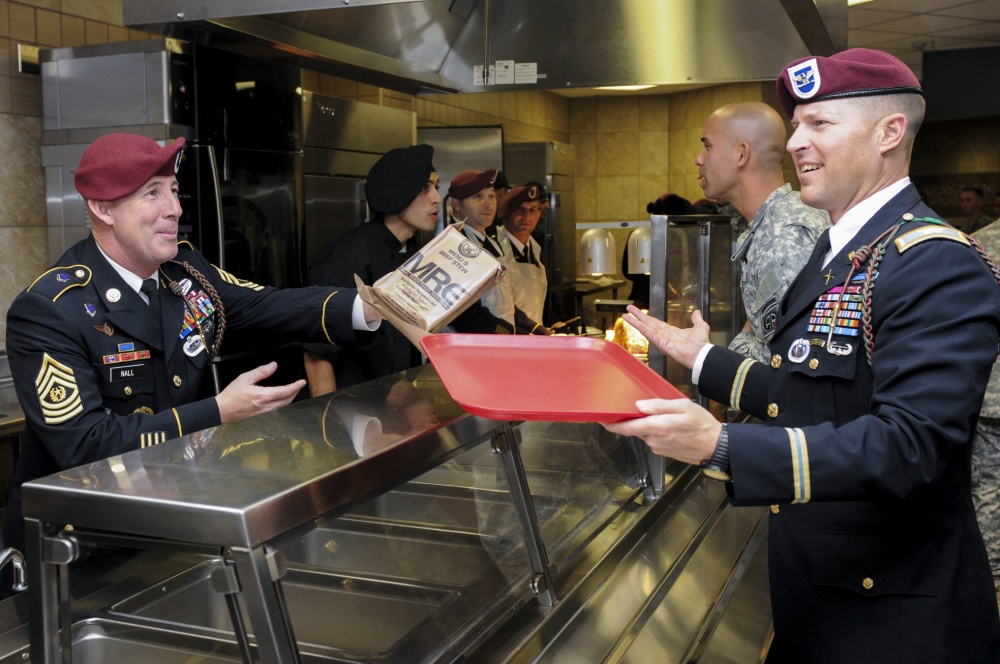
Brigade Command Sergeant Major offering the Brigade Commander his Christmas dinner of an MRE (Meal Ready to Eat).
For those deployed “down range” Christmas is a little different. If you were lucky enough to be at Balad Air Base in Iraq, it was a good Christmas Dinner.
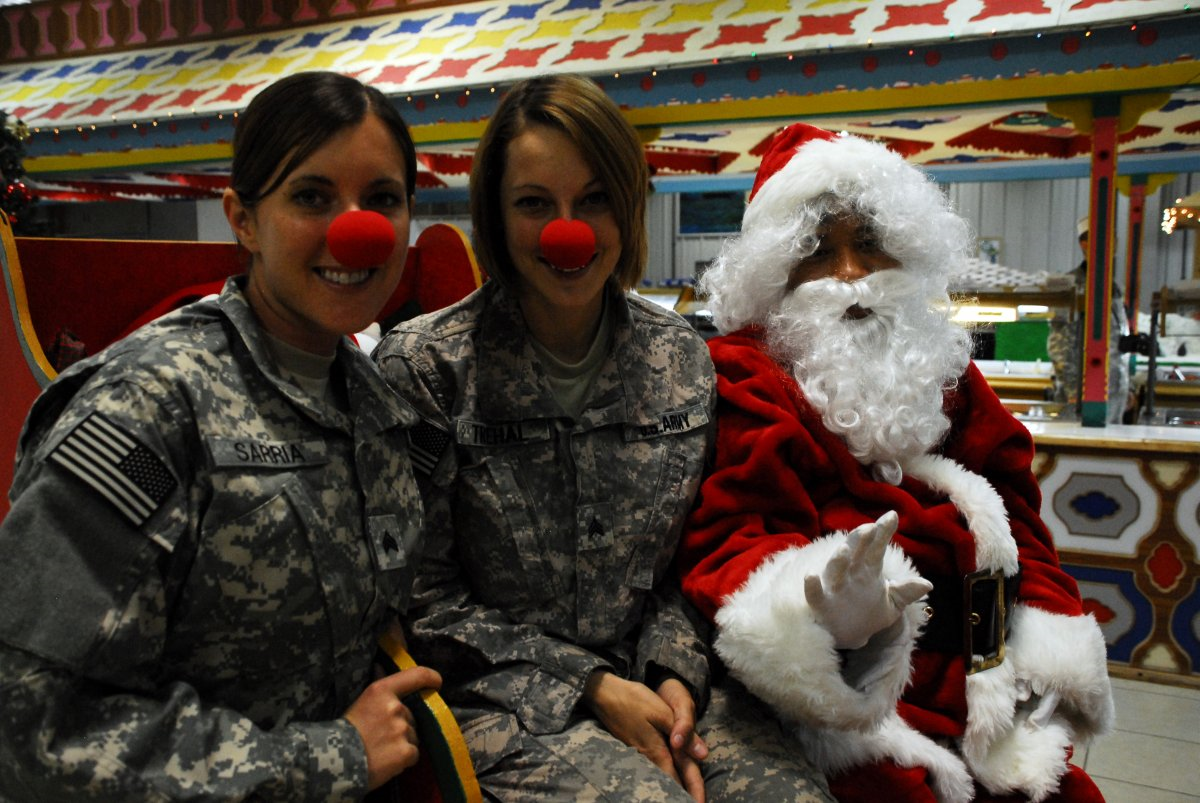
For those further down range Christmas is even more different.
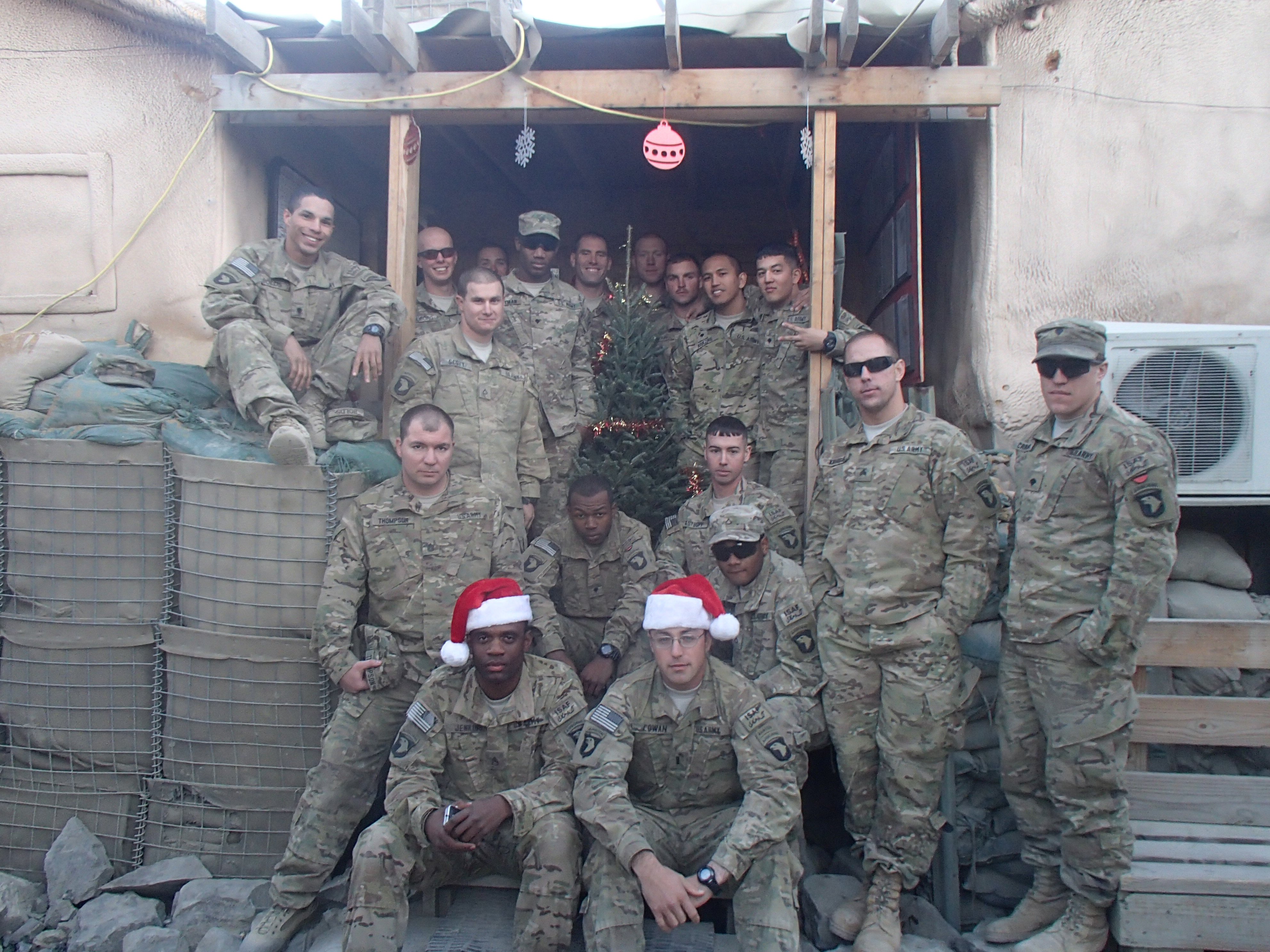
The tree came from “Trees for Troops”, which is an operation of “The Christmas Spirit Foundation. They express ship live American farm grown Christmas trees to deployed troops. The Platoon Leader, First Lieutenant Ryan Cowan, of this Artillery Platoon of the 101st Airborne Division, wrote the family whose farm donated the tree and thanked them for the Christmas spirit.
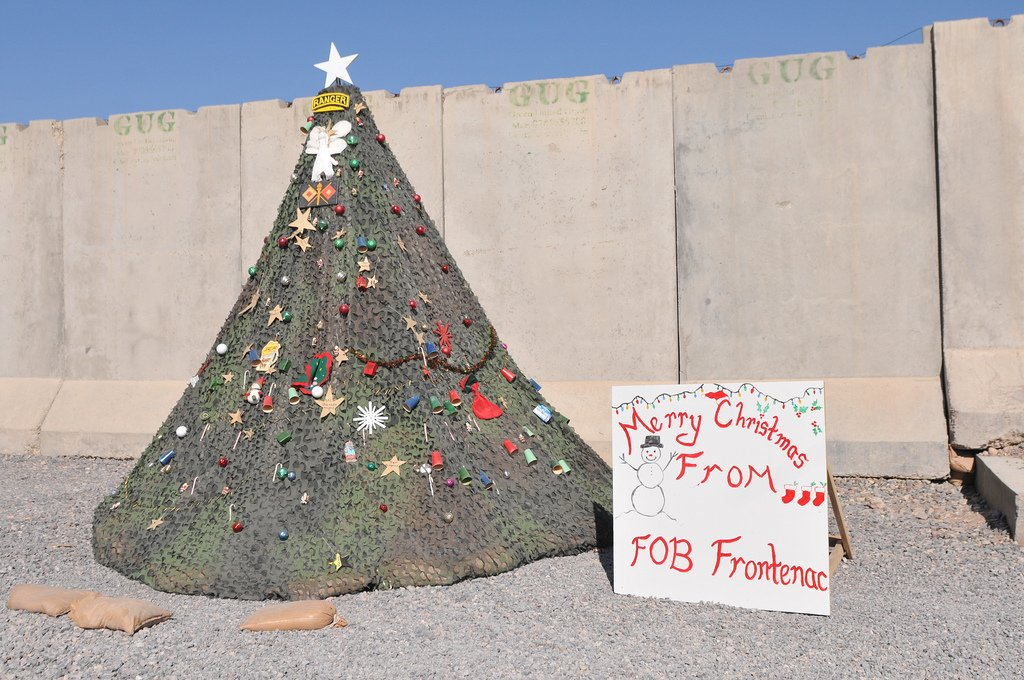
Those who don’t get a tree improvise.
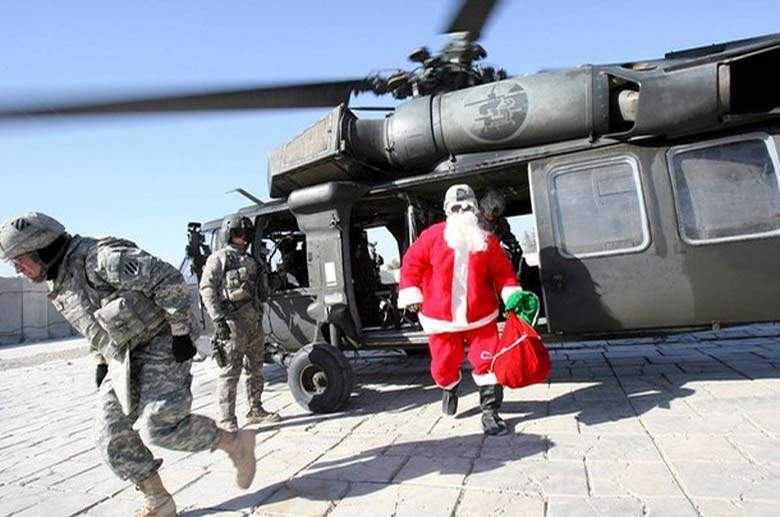
Sometimes Santa even makes it to the field.
The hardest trained and most used division in the armed services always has a brigade on stand-by to deploy anywhere in the world, which doesn’t get to go home for Christmas, and still it has the highest morale. Some unknown paratrooper wrote the following;
“Twas the night before Christmas. And high in the sky. A single, lone plane – through the air did fly. On board a Paratrooper. And pallets of toys. Ready for heavy drop. To good girls and boys. Now Santa stands ready. Only ten minutes more. The jumpmaster says “Stand in the door!” Santa Claus jumps out. As the red light turns green. His parachute rigged toys. From the ground can be seen. The toys fall in chimneys. All across the land. Bringing joy and smiles. And a Christmas so grand. The Christmas drop was successful. And Santa PLF’s with precision. Because Santa is a paratrooper. With the 82nd Airborne Division. Merry Christmas.
FLYING IN VIETNAM
This was originally published in The Belle Banner, Belle Missouri September 26th 2018. If you would like to see the current articles as they are published, you may subscribe to The Belle Banner by calling 573-859-3328, or email tcnpub3@gmail.com, or mail to The Belle Banner, PO Box 711, Belle, MO 65013. Subscription rates are; Maries, Osage, and Gasconade County = $23.55 per year, elsewhere in Missouri = $26.77, outside Missouri = $27.00, and foreign countries = $40.00.
After last weeks’ article about Army Aviation I’ve been prompted and prodded with stories and memories of flying in Vietnam. This started with a post from a facebook friend. Mike Long and I were in the same Rifle Company, in the same platoon in the 82nd Airborne Division, before Vietnam. Mike doesn’t really remember me, but when he posted a picture of himself in uniform in 1962 I remembered him. I was a new private only there a couple weeks before Mike left. Mike is only a year older than me, but at 19 he was already a Sergeant on his way to officer candidate school to become an artillery officer. Artillery doesn’t walk in the woods – right? Well, because Mike had been an infantry Sergeant in the 82nd Airborne Division he was assigned as an advisor to a South Vietnamese army infantry unit. Mike posted that every September 16th he remembers “meeting” Huey pilot Jerry King who flew into his bomb crater position to pick up the wounded.
There are hundreds of stories of helicopter heroism in Vietnam. Here are a couple.
The war in Vietnam was poorly managed from the start. President Johnson and Secretary of Defense McNamara did not understand war or Vietnam and were convinced in late 1965 that they could not win, but continued anyway. By the start of 1969 public sentiment, as well as a growing number of Congressmen of both parties, was against continuing the war. When Richard Nixon was sworn in as President in January 1969, he announced a policy of “Vietnamization” where the South Vietnamese military would be built up and the war gradually turned over to them, while the US military would gradually withdraw.
In 1971, Operation Lam Son 719 was in keeping with that policy. In that operation the South Vietnamese Army was going into southern Laos to cut off the North Vietnamese Army’s (NVA) supply route to South Vietnam, known as the Ho Chi Minh trail. No Americans were to be on the ground in Laos, but US Army helicopters were to fly the South Vietnam troops into battle, resupply them, evacuate casualties, and pick them up when necessary. At that time it was the largest airmobile operation in history. Most all of the 101st Airborne Division’s helicopters were used. The 101st was actually “airmobile” (helicopters) at that time. Americans did end up on the ground in Laos, not intentionally. In January 1971 an Operations Center was setup at Khe Sanh to control the Lam Son 719 activities. The 237th Medical Detachment stationed at Phu Bai which was a Dust Off (helicopter medical evacuation) unit was moved to Khe Sanh. The operation started on February 8th 1971.
A South Vietnam Army Ranger battalion had set up a firebase nine kilometers inside Laos right on the Ho Chi Minh trail, it was called Ranger North. Another ranger battalion established another firebase four kilometers south, called Ranger South. Both were soon surrounded by North Vietnam Regular Army regiments. By February 18th they had been severely mauled. Around 11:30 AM on the 18th Ranger North requested evacuation of their severely wounded. A Huey Dust Off helicopter with CW2 (Chief Warrant Officer-2) Joseph Brown pilot, CW2 Darrel Monteith co-pilot, SP5 (Specialist five) Dennis Fujii crew chief, and two medics, SP4’s James Costello and Paul Simcoe, took off from Khe Sanh heading to Ranger North. Two Cobra gunships were along for cover fire. In an interview, in later years, Dennis Fujii said; “As soon as we crossed the border into Laos the ground fire became more intense than anything I had experienced. You could hear and feel the rounds hitting the bottom of the aircraft and then the blades started whistling. At about 3 or 4 kliks (kilometers) in we started receiving actual anti-aircraft fire designed to shoot down jets and we were in helicopters. I could see a lot of helicopter wrecks on the ground. The Cobras were firing at the gun emplacements on the ground, which was using up their ammunition. As we were approaching the firebase, I told the pilot that the ship was becoming so badly damaged I was afraid it wouldn’t be able to fly. So he informed the Cobra Leader that we were aborting the mission and returning to base. The Cobra Leader said that they would return to Khe Sanh, fuel and rearm and would be on call to cover us if we decided to try again. When the Cobras left, the pilot didn’t say a word, he just turned around and headed back down onto the firebase. You could see the NVA soldiers all around the firebase. They weren’t trying to hide, they were everywhere. I don’t know how we got in, but we did, and as soon as we touched down the mortar rounds started landing all over the place. We didn’t want to be on the ground more than 15 or 20 seconds, so we just grabbed the wounded and threw them on board. As we were taking off a mortar round landed directly in front of the chopper and blew out the canopy and instrument panel, and another landed under the tail rotor, so we went down. The co-pilot, Mr. Monteith, had a massive wound under his backside and was paralyzed from the waist down, we had to drag him out onto the ground. The pilot, Mr Brown, who was a big guy and mortar rounds were landing all around, stood up and popped open the front panel on the helicopter. There was a transmitter in there that was classified. He would get hit and knocked down and get up, finally he didn’t get up anymore. We dragged the pilots to a ditch for some cover. The three of us ran through exploding mortar rounds for a bunker. I got hit in the shoulder and Costello got knocked down, but his breast plate saved him.
The radio conversations in the air around the firebase immediately turned to “We’ve got to get them out of there.” One of the most fearless medivac pilots in the 101st was on station and said “It can’t be done right now.” Every attempt to get close to the firebase was met with a hail of gun fire. Listening to the radio traffic was Major James T Newman, Commander of Troop C 2nd Squadron 17th Cavalry of the 101st, who was on a reconnaissance flight nearby. Major Newman was already a legend among aviators in Vietnam. He once landed his Huey in the trees, chopping saplings with his rotor blades, to pick up two downed pilots who were about to be captured. Major Newman said; “I’ll pick them up.” With no gunship cover, he dropped down to grass level right on the top of the brush, put the nose down at full throttle, flew right over the enemy regiment firing at him and dropped onto the firebase. Mortar rounds immediately started falling. I talked to pilots who were in the air over the firebase and one had recorded the radio traffic, which I got to hear. What got their attention most was Major Newman’s voice. He was known as the coolest character in the world under fire. I don’t remember everything verbatim, but his first words were; “Get them in here!” The three ran from the bunker, but a mortar round landed in front of Fujii and blurred his vision for a few seconds so he stayed at the bunker. The two wounded pilots, who would die of their wounds, had to be carried on board, and the two medics got on board. With mortar rounds landing between the helicopter and Fujii he waved them to go on. All during this time Major Newman was saying; “We’re taking fire, get them in here.” As the seconds drug on and the mortar rounds got closer, Major Newman’s voice started to break; “We’re taking fire, we’re taking fire, get them in here!”. As the Huey lifted off, mortar rounds landed where it had been sitting.
Specialist Five Dennis Fuji, helicopter crew chief, was the lone American on the ground in Laos. He found a radio in the bunker and using the call sign “Papa Whiskey” warned helicopters in the area not to try to pick him up, it was just too hot. Then the Vietnamese battalion commander came to him and ask for his help. Dennis Fujii was no ordinary helicopter crew chief. He had enlisted as an infantryman, completed infantry training and airborne school and spent nine months on the ground, as a grunt, in Vietnam, then reenlisted to be a helicopter door gunner. He had learned the helicopter so well that he was offered a job as crew chief in the medical unit. That night a North Vietnamese Regiment attacked the firebase. For the next 17 hours Dennis Fujii, as Papa Whiskey, became the nerve center of the firebase, coordinating six Air Force flareships and seven Air Force gunships, only pausing to pickup an M-16 and go to the wire to help stop the enemy from penetrating the perimeter. I was at Phu Bai at that time and we thought Fujii was a medic, since it was a Dust Off bird.
The next day getting Fujii out of Laos was the number one priority of the United States. That afternoon 21 helicopters descended on Ranger North, ten Hueys and eleven Cobras. While they fired up the perimeter, Major Jim Lloyd and Captain David Nelson dropped their Huey out of formation, and using the tactic of Major Newman, hugged the ground and trees and sat down on the firebase. Fujii ran and dived into the bird. It caught the NVA be surprise, but when they realized what was happening the Huey received so many hits that it was on fire by the time Fujii got on board. Major Lloyd managed to get it in the air and get four kilometers to Ranger South. When it touched down everyone jumped out and ran because its machinegun ammo was starting to cook off in the flames. Again everyone got picked up but Fujii who volunteered to stay and help Ranger South which was also under attack. Finally, at 4:00 PM on February 22nd, 100 hours after he was wounded, Fujii was admitted to the 85th Evacuation Hospital at Phu Bai. He had helped save 122 South Vietnamese Rangers. He was quickly awarded a Silver Star, which was later upgraded to a Distinguished Service Cross
We had 168 helicopters destroyed and 618 damaged during operation Lam Son 719 and the South Vietnamese Army withdrew from Laos bloodied. 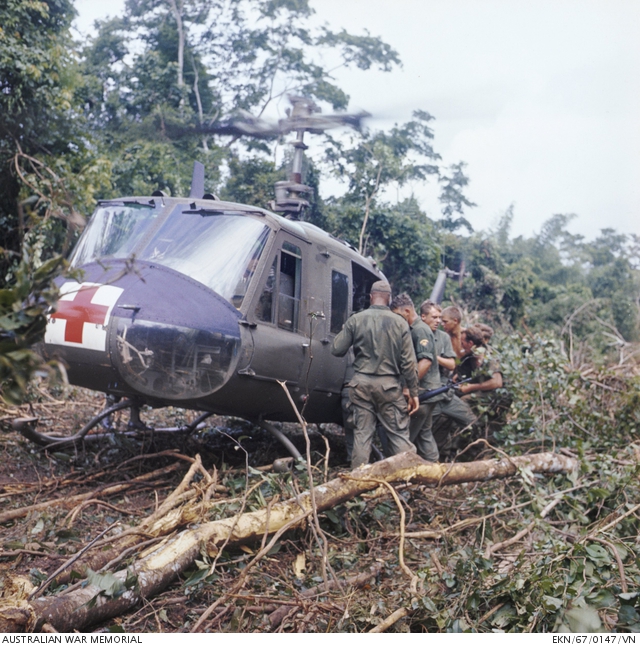

ADVENTURE in the 173rd Airborne Brigade
This was originally published in The Belle Banner, Belle,Missouri.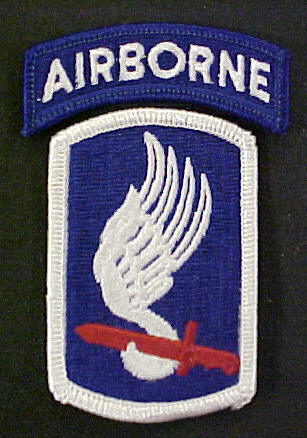
The most requested assignment locations in the Army are Hawaii, Germany, and Italy. Being assigned to one of those places is often the luck of the draw. It is possible to enlist for one of those areas, but not very probable. If you want to see Europe and be in an exciting unit that also travels, that would be the 173rd Airborne Brigade headquartered in Vicenza, Italy. If you try to enlist for Italy, you may wait until you are too old to join the Army and never get called. A possible way for a new enlistee to get assigned there is to enlist for a job he or she wants, with the airborne option. Then on every dream sheet and at every opportunity on their AKO account (Army Knowledge Online) with the ASK key (Assignment Satisfaction Key), request the 173rd. Initial assignments are determined during AIT (Advanced Individual Training), with the first consideration being the needs of the Army, then the desire of the individual.
The 173rd is known throughout the military as “the SkySoldiers”, internally they refer to themselves as “the herd”. The Brigade Headquarters and four battalions are at Vicenza, and two battalions are located at Grafenwoehr, Germany. Vicenza is about 50 miles east of Venice at the base of the Alps. Graf is in Northern Bavaria. They are about 8 to 10 hours driving time or two hours flying time apart. 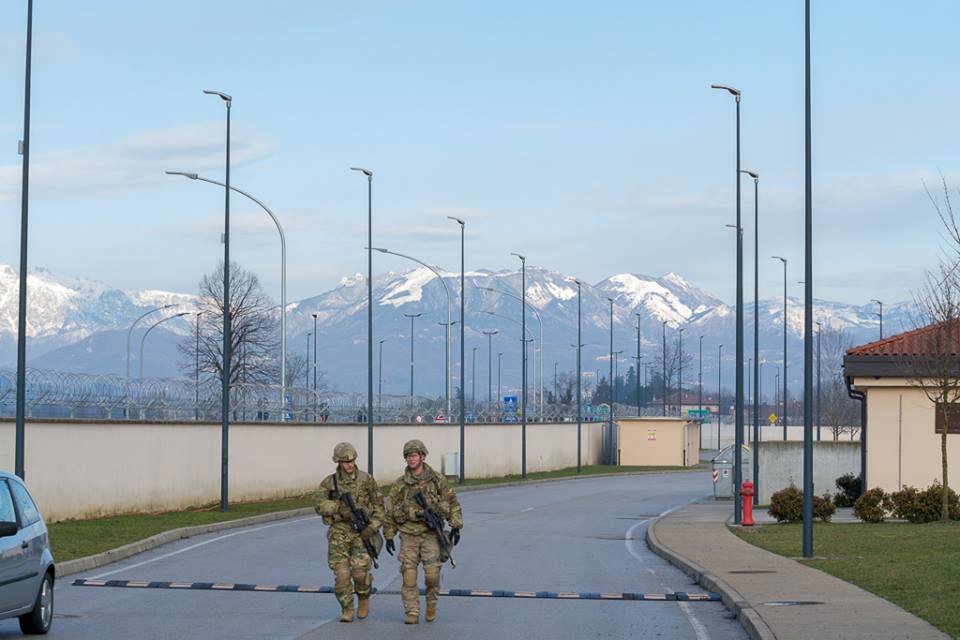
While the 82nd Airborne Division is the United States military global rapid response force, the 173rd Airborne Brigade is the US rapid response force for Europe. It is airborne, high speed, and completely professional. Career paratroopers from the 82nd do their “overseas time” in the 173rd. Many airborne soldiers re-enlist for the 173rd. They train in several areas of Italy, including the Alps, as well as in Germany, Poland, Lithuania, Sardinia, Spain, England, and other NATO (North Atlantic Treaty Organization) countries.
The 173rd Airborne Brigade Combat Team Headquarters is at a new Army post, built just for the 173rd, called Caserma Del Din. It is on the site of an old Italian Army airfield on the far east side of Vicenza. It is somewhat isolated, but the barracks and facilities are new. The Brigade Headquarters, the 2nd Battalion 503rd Infantry, and maintenance, supply, transportation, food service, medical, engineers, military intelligence, and signal people are at Del Din. On the other side of Vicenza in the original old post of Caserma Ederle is the 1st Battalion 503rd Infantry. The 1st Squadron 91st Cavalry, the 173rd’s reconnaissance battalion, is at Grafenwoehr Germany, as well as the 4th Battalion 319th Artillery. Belle’s very own Kevin Altemeyer, class of 1981, teaches math and science at the American Middle School at Grafenwoehr.
I’m going to follow some of one infantry battalion’s adventures for the past year. An Infantry battalion has around 800 soldiers. It is commanded by a Lieutenant Colonel, with a full staff. It also has many soldiers who are not infantrymen, personnel clerks, supply clerks, cooks, mechanics, truck drivers, medics, and CBRN (Chemical Biological, Radiological, Nuclear) people.
I’m going to follow the 1st Battalion 503rd Infantry Regiment. Partly because they have put out a lot of information, and partly nostalgia – they are the only battalion located at Caserma Ederle, in the same buildings I occupied in the 509th Airborne Battalion Combat Team. The 503rd is nicknamed “The Rock”. In the Pacific in World War II, the Japanese fought a five month battle to take the island of Corregidor, which is located at the mouth of Manila Bay, forcing General McArthur to evacuate the Philippines. Corregidor was called the rock. Outnumbered two to one, the 503rd Parachute Regimental Combat Team made a combat jump onto Corregidor. That battle is considered by many to be the most vicious combat action of the war. The 503rd suffered around 200 killed and about 800 wounded, but took the island. When the battle was over, only 50 of the estimated 6,700 Japanese soldiers remained alive. The 1st 503rd is “First Rock”. The 173rd has had the unique luck or fate to have been given some of the most dangerous combat missions. The 503rd alone has a whopping 16 Medal of Honor winners. Two from World War II, eleven from Vietnam, and three from Afghanistan. 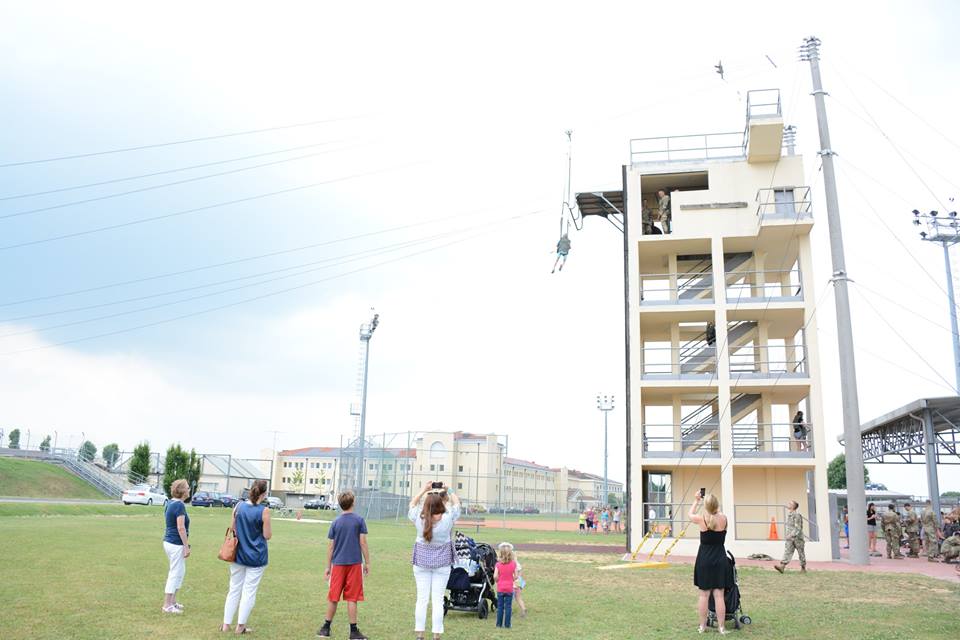
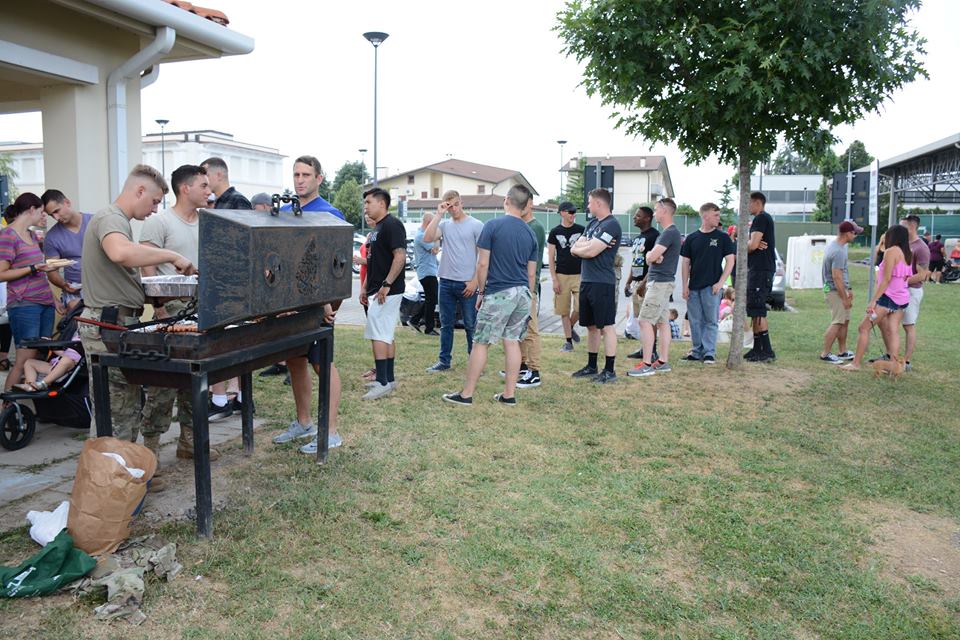
On Thursday June 29th 2017 the battalion relaxed with a family fun day with kids jumping from the 34 foot tower, displays and a plain old cookout get together. It was also a chance for the soldiers and families to say good bye to Lieutenant Colonel (LTC) Michael Wagner and his wife, because the next day was a change of command ceremony where LTC Wagner, who had commanded the battalion for two years, turned the colors over to LTC Robert Shaw, the new Battalion Commander.
The last week of August Alpha (Attack) Company flew to Croatia and participated in a 10 day live fire exercise with the Croatians.

In October it was Eagle Strike 2017, as the “herd” jumped into the large Grafenwoehr Training Area and trained with German paratroops in various live fire exercises. They coordinated live fire of mortar, artillery, and helicopters into the exercise. They fired pistols and went through an Urban Breach Course and learned how to breach doors with shotguns and explosives. It was two weeks of intense, down-to-business, live fire training, showing Europe and its neighbors that they are the “real deal”. 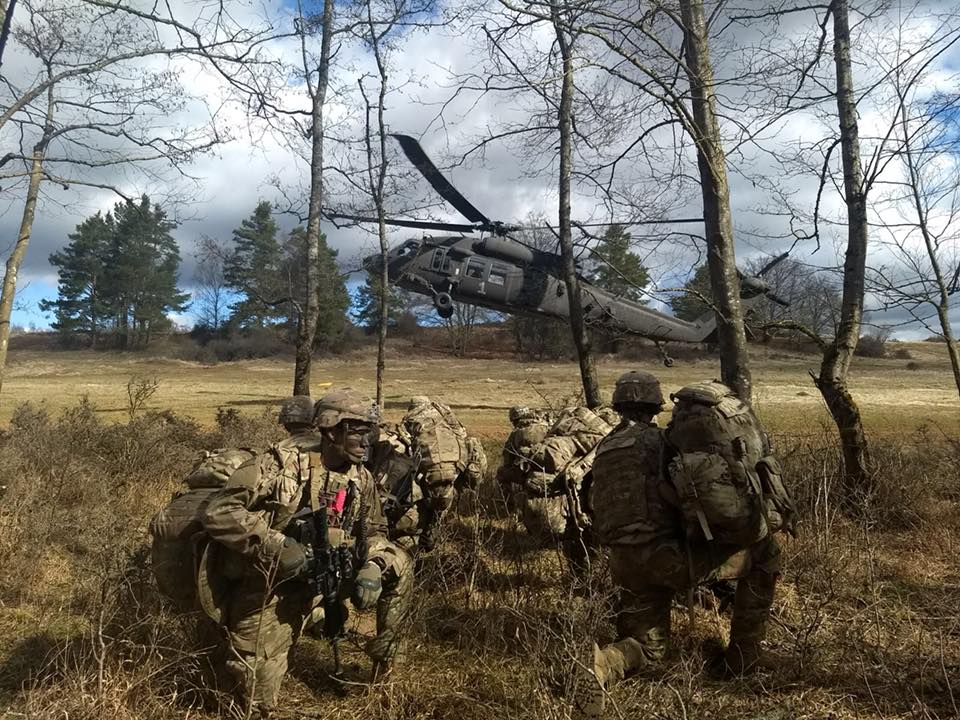
At thanksgiving it was the annual flag football officers vs enlisted “Turkey Bowl”. The officers won.
Then everyone dressed and enjoyed a traditional thanksgiving meal at the DFAC (Dining Facility).
Mid December First Rock held the annual Chaplain’s Crazy 5K run and Christmas party. The battalion also conducted platoon competition, pitting all the platoons against each other in a test of all their skills. The 1st Platoon, Alpha (Attack) Company has bragging rights for a year, as the best platoon in the battalion.
Training takes a break for a couple weeks during Christmas and New Years, there are battalion and company Christmas parties, as well as friends getting together, services in the chapel and a lavish Christmas Dinner and service in the DFAC attended by most families.
After the holidays it was back to business with a series of parachute jumps, some with Italian Paratroops and an exchange of wings, authorizing the SkySoldiers to wear Italian jump wings. There was company training and then training for EIB (Expert Infantryman Badge) testing. After parachute wings, the EIB and the EFMB (Expert Field Medical Badge) are the two most coveted non-combat badges worn on an army uniform. It is grueling go/no-go test over several days that covers every infantry skill. Actual testing started on Tuesday February 7th, with infantrymen from Italy, France, and Croatia also participating. 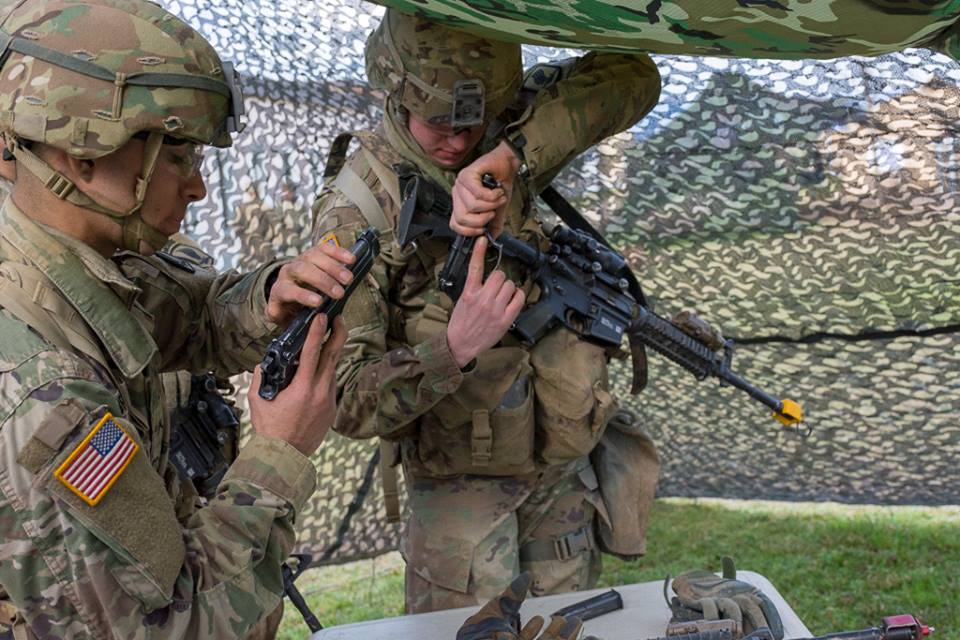
Finally on Wednesday February 15th, after a 12 mile ruck march, 351 of the 727 who started were awarded the EIB. 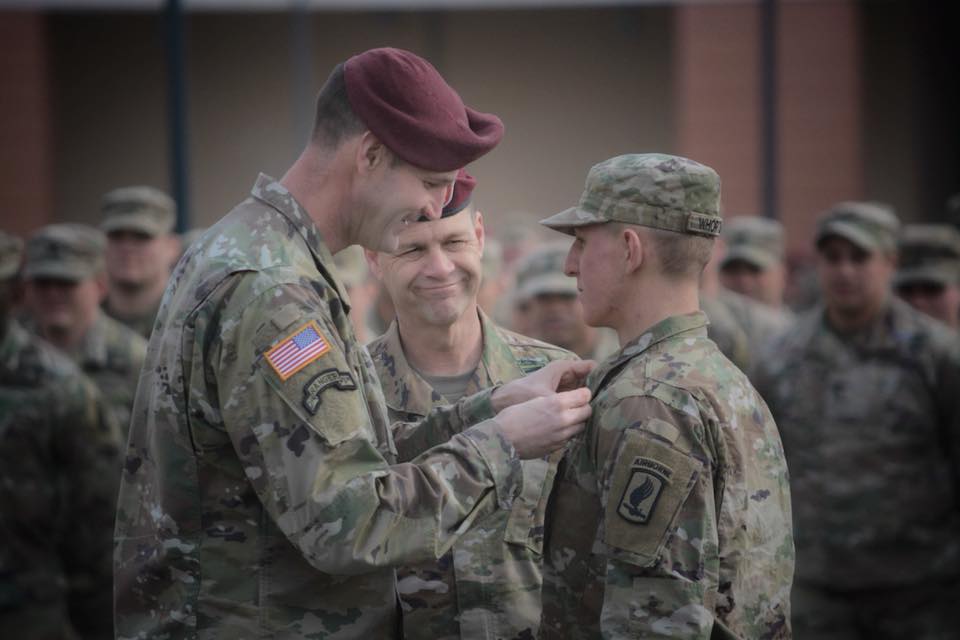
At the end of February First Rock conducted a parachute jump with a follow-on mission of seizing an objective. They said it was to stay sharp and show potential adversaries that they are the best at what they do. Throughout March and into April was exciting training with lots of live fire, close quarter combat drills, recon sniper firing, and breaching on the demolition range and more parachute jumps with objectives to seize.
The month of April and into May was intensive training in Germany starting with a night jump into Hoenfels Training Area in Germany, then load on Blackhawk helicopters and an air assault into the Grafenwoehr Training Area with company and battalion movements and objectives.
On June 1st the battalion “dressed up” and held a formal Battalion Ball.
The guest speaker was Sergeant Major of the Army Daniel Dailey. 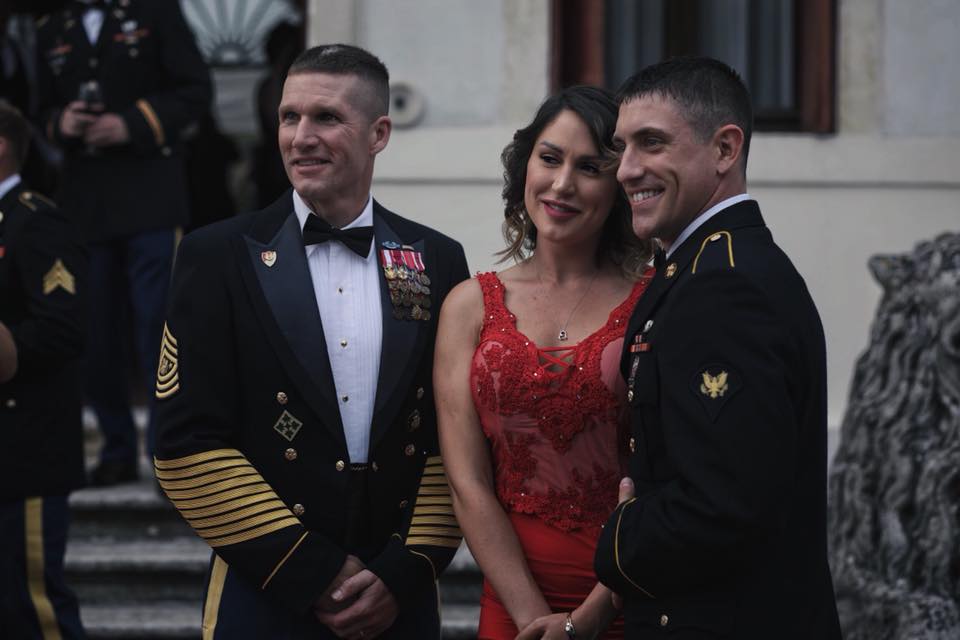
On Monday June 12th, the battalion rigged personnel and equipment, loaded planes and jumped into Spain for two weeks of intensive training with the Spanish army, defense, offense, live fire, and parachute jumps, ending with a day of friendly competitive games between the First Rock SkySoldiers and the Spaniards.
Summer in Europe is when everyone comes and goes. Last summer the battalion commander changed, this summer the Command Sergeant Major changed. New soldiers and families arrive, as others leave. The new arrivals are all excited ready for a new adventure. Those leaving are of mixed emotions between “going home?” and leaving behind some very close friends. Single or unaccompanied soldiers spend 24 months in Europe, while those with families (accompanied) a normal tour is 36 months. Many extend their tour for another year.
One single soldier there said; “Del Din is kind of isolated, but it does have a bar and a Subway, the gym is absolutely outstanding, and parking is right next to the barracks. Lake Garda is great and you can bungie jump at the McDonalds in Austria you will always stop at. BOSS trips out there are on point.” The BOSS (Better Opportunities for Single Soldiers) program was started in 1989. They go to the beach, they go hiking and skiing in the mountains, horseback riding, bike rides, and community cleanup projects to name a few.
When we were there Betty and the kids made a couple trips to Saint Marks Square in Venice, plus we bought a camper and toured Europe. We went to see the leaning tower of Pisa a couple times, we toured the Newschwanstein Castle (the Disney Castle) and several others in Germany. We went on many Sunday rides up in the Alps. Where Germany was densly populated and everything regulated, Italy was more “laid back” taking life as it came.
FLYING IN THE ARMY
This was originally published in The Belle Banner, Belle Missouri September 19th 2018. If you would like to see the current articles as they are published, you may subscribe to The Belle Banner by calling 573-859-3328, or email tcnpub3@gmail.com, or mail to The Belle Banner, PO Box 711, Belle, MO 65013. Subscription rates are; Maries, Osage, and Gasconade County = $23.55 per year, elsewhere in Missouri = $26.77, outside Missouri = $27.00, and foreign countries = $40.00.
You can enlist to be a pilot. I do not recommend anyone just graduating from high school even attempt it. Ninety nine percent of Army pilots come from the enlisted ranks within the Army.
For almost 50 years the Army has had a program called “High School to Flight School”. It was used a lot during the Vietnam War and some did enlist under that program during the height of the Iraq/Afghanistan wars. The Army has three helicopters, the CH-47D Chinook, the UH-60A/L Blackhawk, and the AH-64 Apache Attack Helicopter. Until a couple years ago the Army also had the OH-58D Kiowa Light Armed Reconnaissance Helicopter, but with defense budget cuts of the last administration, they all went to an aircraft graveyard in Arizona. The Army now wishes it had a light armed reconnaissance helicopter.
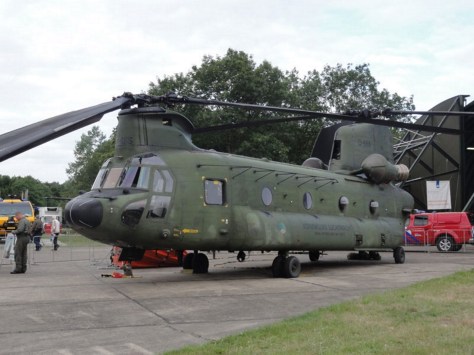


The application process to enlist for flight school is long, it usually takes a year or more. Before a person can enlist for Warrant Officer Flight Training (WOFT) they must have an application for WOFT approved. Applicants must be between 18 and 33, score 110 or better on the General Technical area of the ASVAB, plus a score of 90 or better on the Flight Aptitude Selection Test, pass a flight physical, have normal color vision and vision no worse than 20/50 before correction in each eye, plus meet all the other requirements for enlistment. Being selected for WOFT is highly competitive. Considerations are prior aviation experience, college, age, maturity, physical condition and general life experience.
The application for WOFT for active duty soldiers is the same as for a civilian. Most pilots come from aviation units, aircraft mechanics, crew chiefs, and flight engineers. Many of them can already fly a helicopter. The second group most sought after for pilots is Infantry. Helicopter pilots and crews exist to support combat soldiers. They are delivering them into or picking them up from battle, they are delivering supplies or they are picking up wounded soldiers. A pilot who is a former infantryman has a good understanding of what is happening on the ground.
But, a person graduating from high school can enlist to be a helicopter mechanic. The general aviation maintenance jobs are; MOS 15B Aircraft Powerplant Repairer, 15D Powertrain Repairer, 15F Aircraft Electrician, 15G Structural Repairer, 15H Pneudraulics Repairer, 15N Avionic Mechanic, 15R AH-64 Attack Helicopter Repairer, 15T UH-60 Helicopter Repairer, and 15U CH-47 Helicopter Repairer. The last three are the actual helicopter mechanics. AH-64 Apaches have crew chiefs who are responsible for a particular bird, but they don’t fly because the AH-64 is a two seat aircraft that has two pilots. The UH-60 Blackhawk has two pilots and an onboard Crew Chief, who is a 15T. The CH-47 Chinook has two pilots, a Crew Chief 15U, and a Flight Engineer 15U.
Crew chief’s, Flight Engineers, and Flight Engineer Instructors start as aircraft repairers. In the military people are placed in positions by virtue of rank. The senior person holds the senior job. That is not followed in Army Aviation. In the aviation community people are placed in positions regardless of rank. The Crew Chief of a Chinook may be a Sergeant and the Flight Engineer a Specialist, but the Flight Engineer is in charge of the aircraft. Crew Chiefs conduct preflight and post flight inspections, they make sure their aircraft is maintained, safe, fueled and everything ready to fly. Flight engineers have a much more in depth knowledge of the Chinook systems, hydraulic, pneumatic, electrical, etc, because the Chinook is so much larger and more complicated.
All Army aviation schooling is at the Aviation Center at Fort Rucker, Alabama. The AIT (Advanced Individual Training) for 15U Chinook and 15R Apache is each 17 weeks, 15T Blackhawk is 15 weeks. Like most schools they teach the basics, and the real learning is found in the units.
Supervisors in aviation maintenance units keep checklists of the skills each mechanic has mastered, which helps them to determine who is ready to become a crew chief and who is not. A Specialist Flight Engineer said; “A lot of it has to do with your work ethic. What we look for are the Chinook mechanics out on the line with us, asking us, ‘Do you need any help?’ They come up to us and ask us about flight. The guys who show us they like to work, they like to learn about the aircraft, and usually those who are more squared away than their peers.” Becoming an excellent mechanic is not the only challenge a potential crew chief might face. Crew chiefs often arrive before and leave well after the pilots to ensure the safety of all aboard. Crew members are limited to a 12-hour duty day. In a typical duty day, a crew chief has about two hours to get the aircraft ready, including inspecting the aircraft, gathering gear and maintaining the logbook. If it takes longer than that, the aircraft may not meet its take-off time. After a flight, the crew chiefs must do a post-flight inspection, put away gear, make entries into the logbook and prepare the bird for its next flight. Crew Chiefs generally perform crew-level minor maintenance, basic “keep it flying” maintenance. Big things go back to the Maintenance Company. The Flight Engineer has a much more in depth knowledge of the aircraft systems than a Crew Chief is required to know. One Command Pilot said of Crew Chiefs and Flight Engineers; “These guys are the consummate professionals. We couldn’t do our mission without them”.
Specialist Bayley Deputy the Crew Chief of a UH-60 Blackhawk in the 82nd Combat Aviation Brigade, 82nd Airborne Division, at Fort Bragg, North Carolina says; “Being a Crew Chief is ‘Can you do the job, and can you continue to do the job?’ We repair the helicopter, it’s a very humbling job. You have go above your duties. When you’re in the air it’s not about you anymore, it’s about the pilot and the rest of the crew and the passengers. We also man the machineguns, one on each side. If something happens and we have to put the aircraft down and we have to evade, we’re trained for that. The 82nd Airborne is very serious, but I like that because I want to be with a unit that takes things seriously. We have fun, but we work hard, we make sure that our aircraft is ready to go whenever duty calls.”

The AH-64 Apache Attack Helicopter is just that. The troops in Afghanistan say that Apaches make the Taliban disappear. It has been called a flying tank. It can carry 16 Hellfire missiles, 70 “2.756 inch” rockets, and 1,200 rounds for its 30mm Chain Gun. It can fly 175 MPH, it can do loops, vertical banks, and rollovers. It can hover along inches off the ground and jump over walls and rocks and back around obstacles. It is the most lethal helicopter in the world.
The UH-60 Blackhawk is the tactical workhorse for transporting troops. When deployed, it flies with two Crew Chiefs who each man a machinegun. It can carry 11 combat troops and has a cargo lift capacity of 8,000 pounds. I can cruise at 174 MPH.
The CH-47D Chinook can carry 55 combat troops and can carry inside or sling load up to 26,000 pounds. Assumed by many to be a big cumbersome, slow moving machine, is just the opposite. It is actually the fastest at 195 MPH. When the war heated up in Afghanistan, the Blackhawks had trouble in the extreme high altitudes of the mountains. The more powerful Chinook became the workhorse moving troops, equipment and supplies around the rough terrain.

My first experience with Army aviation was in Vietnam. I was a Staff Sergeant when I went through “P training”, the in-country introductory course in the 101st Airborne Division. I went through with another Staff Sergeant named Krag Bullis who was a helicopter mechanic. We became friends and when we finished P training we went to our units. He was a maintenance platoon sergeant in the 17th Cavalry. Huey helicopters. We were only one camp apart so we got to visit occasionally. He said that he didn’t know how many hours he had unofficially occupied the left seat of a huey, because the unit was short pilots. He could fly as well as any pilot. He arranged for me to hitch hike a couple times on his birds. That was his fourth tour in Vietnam, he didn’t make it back from that one.
I’ve have known a few Medal of Honor winners, and those I knew did what had to be done at the time, but helicopters pilots, as a group, were some of the gutsiest people I saw. There were medivac pilots in the 101st in Vietnam, who would go in and pick up casualties while being shot up while they did it. Medivac birds weren’t armed. If you see the movie “We Were Soldiers” with Mel Gibson and Sam Elliot, it is a very real portrayal of the “Battle of Ia Drang Valley” in November 1965. Two helicopter pilots received Medals of Honor for repeatedly flying ammunition in and casualties out of that battle, while getting their birds shot to pieces.
THANKSGIVING
This was originally published in the Belle Banner, Belle Missouri November 22nd 2017.
Tomorrow is thanksgiving and thanksgiving is a very big deal in the Army. Very few soldiers get to take leave (vacation/time off) at thanksgiving. It is one day and only a month before Christmas. Those who can, take leave at Christmas or New Years. So, in the Army, Thanksgiving is a much more of a big operation than Christmas.
In Vietnam, in late 1965, the 173rd Airborne Brigade discovered a large weapons and ammunition cache at a place called Xom Cat, pronounced Zom Cat. It was identified as being on a major NVA (North Vietnamese Army) infiltration route into that area of South Vietnam. I could let you guess where Special Forces decided to build a new A Camp. One of the first A Detachments in country was re-designated as A-312 and sent to build an A Camp at Xom Cat, accessible only by air. The camp was built practically “under fire”, lost two team members in October 1966. The camp was finally closed in March 1967, but on Thanksgiving Day, November 22, 1966, they had a thanksgiving meal. Sergeant First Class Lonnie Mitchell, at the C-Detachment in Bein Hoa, cooked a big turkey with all the sides and trimmings, packed everything in two mermite containers, loaded them on a helicopter, and flew out to Camp A-312. Mitchell brought paper plates and plastic utensils, since the camp had been living on C-rations and had no mess kits. It was monsoon season and rainy, so the plates got a little soggy, but it was still thanksgiving.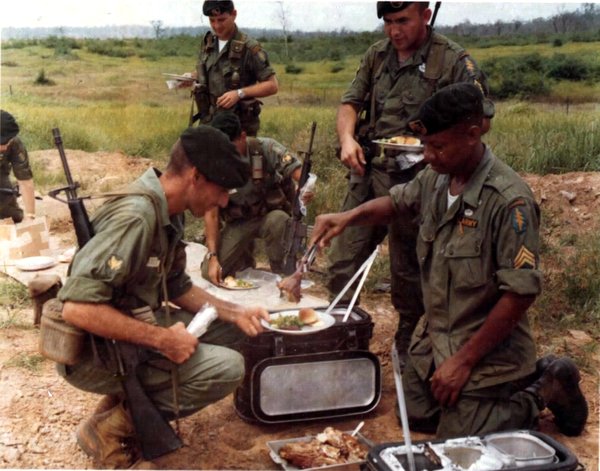
Specialists Josh Korder and John Dever, of the 1st Battalion, 501st Parachute Infantry Regiment, 4th Brigade Combat Team, 25th Infantry Division, have thanksgiving dinner on a watch tower in Afghanistan in 2009. One watches while one eats.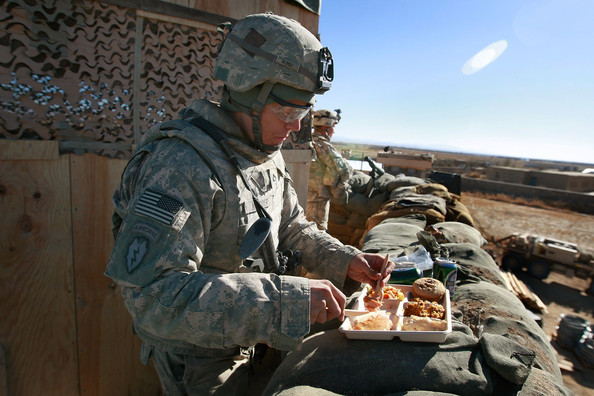
In garrison, Thanksgiving is the biggest day of the year in the Dining Facility (DFAC). The DFAC mangers start thinking about what they are going to do, for Thanksgiving, months ahead. They start ordering all of the thanksgiving food about 30 days out. As they get closer, they create schedules, with shifts, and set up teams. Each team is assigned a specific duty, because they start cooking the night before. The Thanksgiving meal involves slow cooking turkey and ham, along with preparing the rest of the meal of shrimp cocktail, roast beef, barbecued spare ribs, boiled king crab legs, glazed Cornish hens, cornbread dressing, savory bread dressing, baked macaroni and cheese, sweet potatoes, green beans, black-eyed peas, corn on the cob, collard greens, and a variety of cakes and pies, including pumpkin. It is the day the cooks get to show off.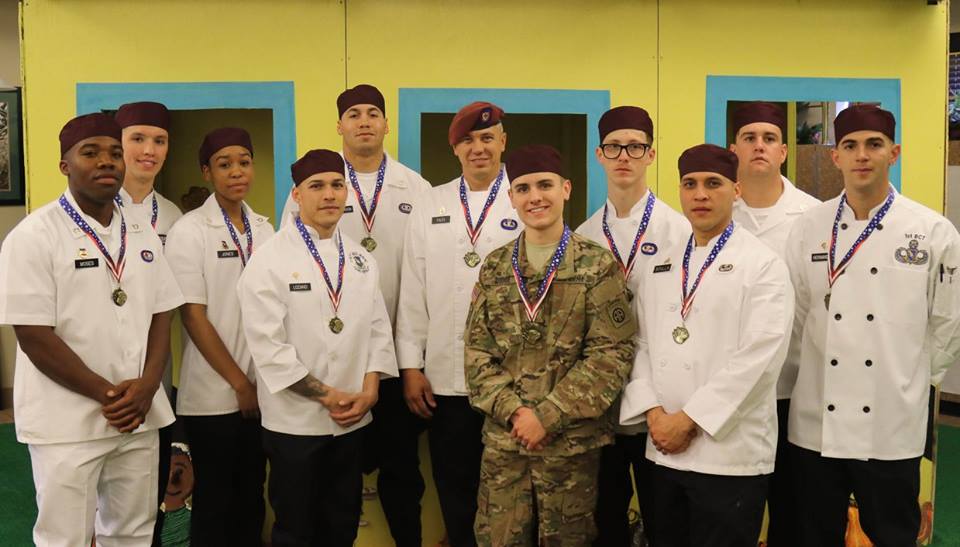
They hand sculpture everything from flying geese to battleships and airplanes out of different food stuffs, plus they create ice sculptures.
When Thanksgiving meal time finally arrives the Chaplain leads a prayer.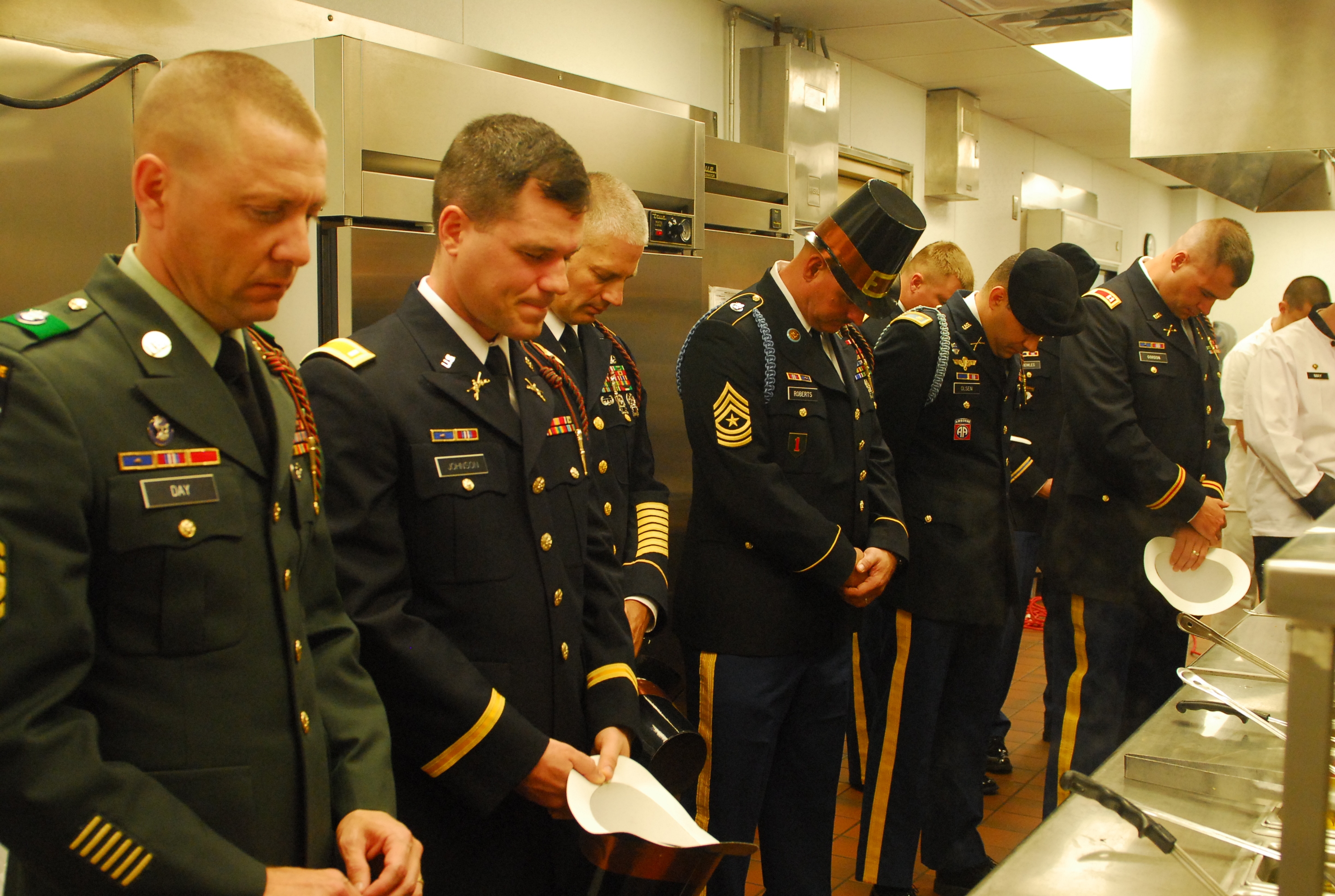
The troops are not required to dress up.
But, the officers, Sergeants Major and First Sergeants wear their dress blues, and they serve the troops.
Some families also attend.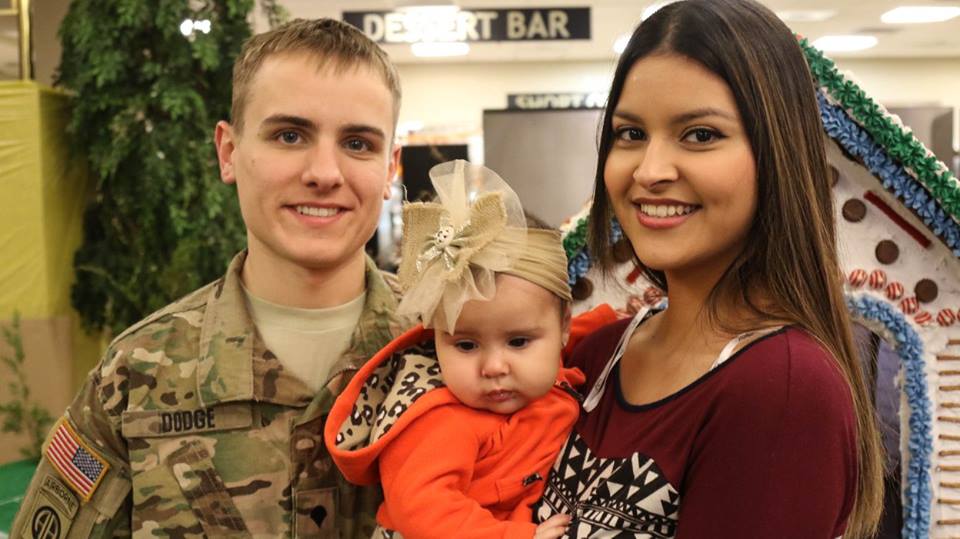
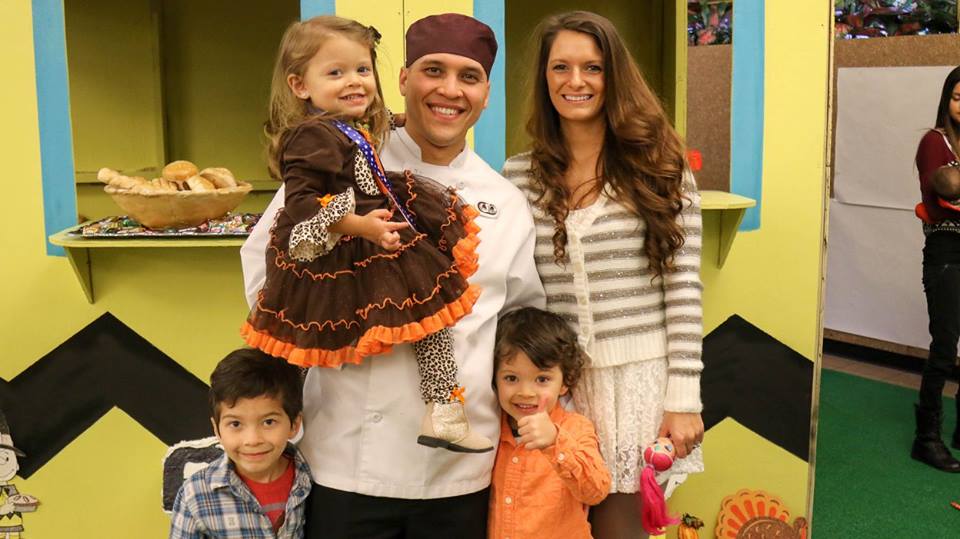
A young soldier said that it was his first Thanksgiving away from home, but this made it like Thanksgiving with his Army family.
A GOOD ARMY JOB
A good job in the Army is one that the soldier enjoys. He or she likes to get up in the morning and go to work. A bad job in the Army could be that very same job, but the soldier hates it, what works for some doesn’t work for everyone. I had a lot of different jobs in the Army. Soldiers can’t move around with ease like that now. So anyone considering enlisting should do a lot of research. There are hundreds of testimonials online pro and con about most Army jobs. Read both and consider the language and the manner in which the soldiers presented their story. Having done that, be real honest with yourself. What are your likes and dislikes.
My personal favorite is the infantry. I always went back to the infantry. I’ve walked until I had blood in my boots and strap sores on my shoulders, I’ve been shot at and mortared, I’ve slept in the mud and the snow and waded through swamps, but it was always together with brothers. Everything else in the military supports the infantry, it is the Army. However, if that sounds to you like misery, then you probably wouldn’t like the infantry.
One of the physically easiest jobs in the Army is a solid desk job, and is continually rated high by the people doing it. That is Human Resource Specialist, in the Adjutant Generals Corps. Army MOS (Military Occupational Specialty) 42A. They qualify with their rifle, go through the gas chamber, and take a PT test once a year, and they do PT (Physical Training) every weekday morning just like every other soldier, but their working day is behind that desk and computer. If they go to the field whether they are in a tent or a mobile shelter, they are behind a desk and a computer. If they deploy they rarely go outside the wire, because their job is behind a desk and a computer. If they are airborne they will probably jump once every three months, to keep up jump pay. Promotions are not fast and they are the ultimate POG’s (Person Other than Grunt), but they do get a lot of satisfaction in performing their work, because their job is taking care of soldiers. Every personnel action that affects a soldier is handled by a Human Resource Specialist. In answer to a question from a future enlistee considering 42A, one 42A said this; “You will be at your desk for majority of your time. 9-5s only happen if your shop is on point. There have been times when the whole unit gets released at 1300 (1:00 PM) but we know to head back to the shop because stuff needs to get done before we go home. The latest I’ve worked was 2300 (11:00 PM). Working late usually happens when your shop needs to get its stuff together. Sucks, but it’s necessary. You network a lot being a 42A, whether it’s in your own battalion or around your brigade. If you learn your job, news will travel fast and you will get the respect of guys in your unit. That goes from the joes on the line to the CSM (Command Sergeant Major). Day to day, it’s not bad. You stay busy and learn a great deal about the Army. Of course you’ll have crappy days, but what job doesn’t have those? One piece of advice that I’ll share with a future 42A – No matter what you’re working on, take care of the Soldiers and treat their paperwork as your own. To you, it’ll just be another action, promotion, leave form or whatever. It’s just another piece of paper in your stack of stuff to do for the day, but that piece of paper might be the whole world to the Soldier at the time. That promotion they’ve been waiting on for months, the leave form to fly home to see their family or the packet to get their family overseas with them. Complete your mission so these guys can focus on their mission.”
MOS 42A Human Resource Specialist encompasses a large area. The Army used to have an MOS for Personnel Specialist, one for Administrative Specialist, and one for Postal Specialist. They were all consolidated into 42A. To be qualified to work in an actual Army Post Office, there is an additional five week school after AIT, for those who want to go that route. MOS 42A requires a Secret Security Clearance, you will be investigated, so reveal everything, even a minor parking ticket. The ASVAB scores required to get this job are not high, but I personally think that they should be higher. To qualify for 42A, ASVAB scores of 100 in General Technical (GT) and 90 in Clerical (CL) are required. GT is Verbal Expression and Arithmetic Reasoning, CL is also Verbal Expression and Arithmetic Reasoning, plus Mathematics Knowledge. In other words – English (Language Arts) and math. If your ASVAB GT and CL scores are not at least 120 you may want to consider another job. This job may not appear to be a brainy job, but it is. The Army Regulations that governs and guides the work that 42A’s perform are several feet thick, when in print. Army Regulation (AR) 614-200 on enlisted personnel management is about 3 inches thick, AR 635-200 on enlisted separations is about the same. I once knew a man who could quote paragraph for paragraph from either. He made Master Sergeant E8 in eight years, can’t be done today.
The AIT (Advanced Individual Training) for MOS 42A is nine weeks long at the Soldier Support Institute at Fort Jackson, South Carolina. Summers are just as hot in South Carolina as in Missouri, but the winters are not nearly as cold. The AIT is not that strict. The dorms are three people to a room with one double bunk and one single, three desks, three closets and a bath/shower. Class is Monday through Friday. A typical day is 5:00 AM wake up, clean area, PT at 6:30 then shower, get dressed and breakfast and be in formation at 8:45. March to class, lunch is in a nearby DFAC (Dining Facility) and released at 5:00 PM. They keep cell phones, ipads, computers, etc just not during duty hours. Civilian clothes when off duty. During the eight weeks and two days of the course, six weeks are spent in class and two weeks in the field. The study includes; Researching Human Resource Publications; Prepare Office Documents Using Office Software; Prepare Correspondence, Identify Human Resource Systems; Maintain Records; Interpret the Enlisted Record Brief & Officer Record Brief; Create Ad Hoc Query; Perform Forms Content Management Program Functions; Prepare Suspension of Favorable Action; Prepare a request for Soldier Applications; Process a DFR (Dropped from the rolls) packet; Process Recommendation for Award; Process Personnel Strength Accountability Updates; Perform Unit Strength Reconciliation; Conduct a Personnel Asset Inventory (PAI); Issue a Common Access Card; Maintain Emergency Notification Data; Prepare a Casualty Report; Create a Manifest; Employ the Deployed Theater Accountability Software (DTAS); Prepare strength accounting reports; Process a Request for Leave, Pass, and Permissive TDY; Perform Personnel Office Computations; Review a Completed Officer and Noncommissioned Officer Evaluation Report (NCOER); Process Enlisted Advancements for PV1 – SPC; Process Semi-Centralized Promotions; Research Finance Actions; Determine Entitlements to Pay and Allowances; and Employ the Very Small Aperture Terminal (VSAT) System.
Army Human Resource Specialists are literally on every US Army post in the world, so they can be assigned anywhere in any type of unit. I always push going airborne, jumping out of airplanes, it’s a blast. Plus enlisting as a 42A with the airborne option, will put that person in an airborne unit, probably in a battalion headquarters, the lowest level at which 42A’s are used. Those are the best units in the Army, the best leaders and the highest morale, plus that is where Human Resource Specialists really learn their job. They deal with soldiers face to face on a daily basis, it pays to be a people person. In the S1 (Administration) Section of a battalion is an Adjutant Generals Corps Captain, and a 42A Sergeant First Class NCOIC (Non-commissioned Officer in charge), plus a Staff Sergeant, two Sergeants, a Specialist, and three Privates First Class. So, for the new enlistee who happens to be in the 17 percent of enlistees who will retire from the Army 20 years later, that is where he or she would want to start.
Monica Brown
 This was originally published in The Belle Banner, Belle Missouri February 21st 2018. If you would like to see the current articles as they are published, you may subscribe to The Belle Banner by calling 573-859-3328, or email tcnpub3@gmail.com, or mail to The Belle Banner, PO Box 711, Belle, MO 65013. Subscription rates are; Maries, Osage, and Gasconade County = $23.55 per year, elsewhere in Missouri = $26.77, outside Missouri = $27.00, and foreign countries = $40.00.
This is the story of a little girl who became a paratrooper and won a medal.
Monica Lin Brown was born May 24th 1988, she was three when her parents divorced. Her brother Justin was a year older. Her mother worked night shifts, as a nurse in hospitals in the Houston, Texas area. Her mother was seriously injured in a car accident and grandma moved in to raise the kids. Kopperl High School near Waco was Monica’s ninth school in eleven years. She played tennis, volleyball, softball, was a cheerleader and ran cross country. Running was her passion. She said; “Running is like meditation for me, I can just think, without anyone talking to me.” Brother Justin had been fascinated with the army since he could remember, and by the time he was 13 he had decided that was what he was going to do. Monica graduated from high school a year early, when she was 17. After graduating from high school, Monica and Justin moved to Lake Jackson, Texas to be near their father’s mother. Monica had become interested in radiology through an aunt who was an X-ray technician. Accompanying her brother to the Army Recruiter’s office in November 2005, she found that she could get that training in the Army. Unfortunately that field was closed, so she enlisted to be a Healthcare Specialist (Combat Medic). She went through basic training at Fort Leonard Wood, then transferred to Fort Sam Houston, Texas (San Antonio), for AIT (Advanced Individual Training) the 16 week 68W course. The first eight weeks is the national EMT course, during which they are National EMT certified, the second eight weeks is army combat medic training. It was there that Monica met a drill sergeant whose impact would help define who she would become in the Army. She said; “She was high-speed and airborne-qualified. Her independence and strong personality set her apart. I wanted to be high-speed like that. She was from the 82nd and had that maroon beret and the Airborne patch. I knew I wanted to be like her.” After AIT and Airborne School she was assigned to the Forward Support Company which was attached to the 4th Squadron, 73rd Cavalry, 4th Brigade Combat Team of the 82nd Airborne Division.
Soon after her arrival, her unit started preparing for deployment to Afghanistan. On February 7th 2007 she arrived at FOB (Forward Operating Base) Salerno. At that time all the medical facilities were in tents, the operating room, CT machines, everything. At first she didn’t leave the base. She said; “The first actual patient I worked on was an Afghani man who had a gunshot to his leg. My reaction was ‘My gosh, this is a real person and these are real injuries, this isn’t training anymore.’ That’s when the switch flipped and I think everything changed over from training to me really liking my job.” Then in March a small outpost occupied by Charlie and Delta Troops of the 4th 73rd Cav requested a female medic. Brown got the assignment. It was little more than a cluster of tents walled off with dirt filled barriers and no running water. Brown’s aid station was an 8-by-5 foot area barely big enough for a stretcher. “I loved it,” she said. She went on some resupply and humanitarian missions with Delta Troop. Any treatment of an Afghanistan woman had to be by another woman.
Charlie Troop was running combat patrols and in April its medic went on leave. At that time women weren’t supposed to be assigned with front line units, but PFC (Private First Class) Monica Brown was the only available medic. Charlie Troop received orders to go on a Search and Capture mission. They would be out for five nights. The patrol consisted of four up-armored Humvees and one Afghan National Army (ANA) pickup truck. Having spent the night just outside the small village of Jani Khel, Charlie Troop was informed on Wednesday morning, April 25th 2007 that two Taliban activists lived in the village. They spent the day searching the village and found nothing, the bad guys had gone. At dusk they started moving out of the village, one by one turning off of the road into a dry river bed adjacent to the road.
PFC Brown was riding in the Humvee with the Platoon Sergeant, Staff Sergeant (SSG) Jose Santos. She didn’t hear the explosion, but the .50 cal gunner on her Humvee yelled down “Two one’s hit. I see smoke and a tire rolling through the field.” The trail Humvee, with five soldiers inside, had rolled over a pressure plate IED (Improvised Explosive Device). Looking back they saw the Humvee engulfed in a fireball as its fuel tank and fuel cans ignited. PFC Brown instinctively grabbed her bag and her weapon and opened the door. The .50 cal gunner yelled down “Shut the door”, as incoming machinegun fire started pinging the Humvee. They were caught in an ambush. As the .50 cal gunner turned around and started putting suppressive fire at the enemy, SSG Santos yelled “Let’s go Doc”. With SSG Santos a couple steps ahead, they ran through the heavy silt of the river bed about 300 meters (that’s about 1000 feet) through machinegun and rifle fire to the burning vehicle. Four of the injured had crawled or been thrown from the vehicle, the fifth, Specialist Larry Spray was caught inside by his boot and was on fire. Sergeant Zachary Tellier managed to pull him out.
Exhausted when arriving, Brown saw that all five of the soldiers were stumbling, burned and cut. Specialists Stanson Smith and Larry Spray were critical. Spray had severe burns and Smith was in shock from a severe laceration on his forehead blinding him. Brown and one of the lessor injured grabbed Smith by his body armor and dragged him into a ditch about 15 yards away. Sergeant Tellier got Spray to the cover. The other vehicles were turning around to form a crescent formation and began to return fire. As soon as they got to the ditch, the enemy started dropping mortar rounds around them. Brown threw her body over Smith, shielding him and yelled to another soldier to “cover up” the other casualty, as more than a dozen rounds landed around them. Then the ammunition inside the burning Humvee started exploding, 60mm mortars, 40mm grenade rounds and rifle ammunition. Again, Brown lay over the wounded. Lieutenant Robbins, the Platoon Leader, moved his Humvee near the injured and was incredulous that Brown had survived. He said, “I was surprised I didn’t get killed and she’d been there for 10 to 15 minutes or longer. There was small arms fire coming in from two different machine-gun positions, mortars falling, a burning Humvee with 16 mortar rounds in it, chunks of aluminum the size of softballs flying all around. It was about as hairy as it gets.” SSG Santos drove the ANA pickup over to get the wounded, he would later recall that bullets were flying within inches of Brown, but she was focused on the casualties. Lieutenant Robbins said of her calm demeanor under fire, “She was focused on the patients the whole time. She did her job perfectly.” Brown and SSG Santos hoisted Smith onto the truck, while Spray crouched behind the back window and Brown dived onto a bench in the back. There, she put pressure on Smith’s head, which was bleeding heavily, and also held the hand of Spray, who was charred and shaking. She told Spray “Talk to him”, trying to keep Smith conscious. Spray, his face contorted with pain and fear, responded, “It’s going to be okay”. SSG Santos drove across the river and stopped behind one of the Humvees, there Brown set up her Casualty Collection Point. Smith was bleeding heavily and slipping in and out of consciousness, Spray had extensive burns on his legs, chest and back. Brown bandaged Smith, started IV’s on both, and covered Spray’s burns with gauze and put him in a hypothermia bag. She soon had them stabilized and prepped for medevac, but it was another 45 minutes before the helicopters arrived. Eighteen year old Monica Brown recalled; “When the medevac bird was taking off and everything was quiet, my ears were still ringing. I couldn’t hear anything. I was walking through the field back to the Humvees, through shin-high green grass, blowing because the bird was taking off. I remember thinking, ‘Did that just really happen? Did I do everything right?’ When I got back to the trucks the guys were all hugging me and thanking me.”
Staff Sergeant Aaron Best, who was Lieutenant Robbins .50 cal gunner that day, said; “I’ve seen a lot of grown men who didn’t have the courage and weren’t able to handle themselves under fire like she did. She never missed a beat.”
Two days later she was abruptly pulled from the field. She had attracted too much attention.
Specialists Smith and Spray were flown back to the US and recovered from their wounds.
On March 21st 2008, the Army flew Monica’s brother Justin to Bagram Air base to stand beside her as Vice President Dick Cheney presented nineteen year old, five foot two, 120 pound, Combat Medic, Army Specialist Monica Lin Brown the Silver Star, making her the second and last female to be awarded the Nation’s third highest award for valor in combat, since World War II.
Monica said she never expected to be in a situation like that and credits her training and instructors for her actions that day. She said; “I realized that everything I had done during the attack was just rote memory.”
All the major news services did stories on Monica, but unfortunately notoriety sometimes attracts the wrong kind of attention. Some scammers from some country in Africa used her pictures and story in a money scam, so she has since dropped completely out of the public eye. She was promoted to Sergeant, before she left the Army, but she only left temporarily. In December 2010 she was in the Bachelor of Science Nursing program at University of North Carolina-Pembroke and was in the Army ROTC program. My guess is that she is now a Captain in the Army Nurse Corps.
 What Life in the Army is really like.